Background of the Angola Crushing Equipment Order
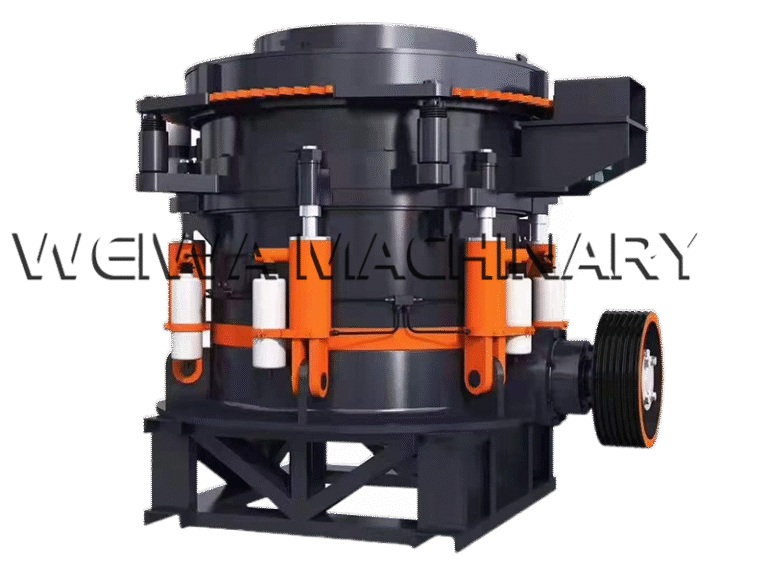
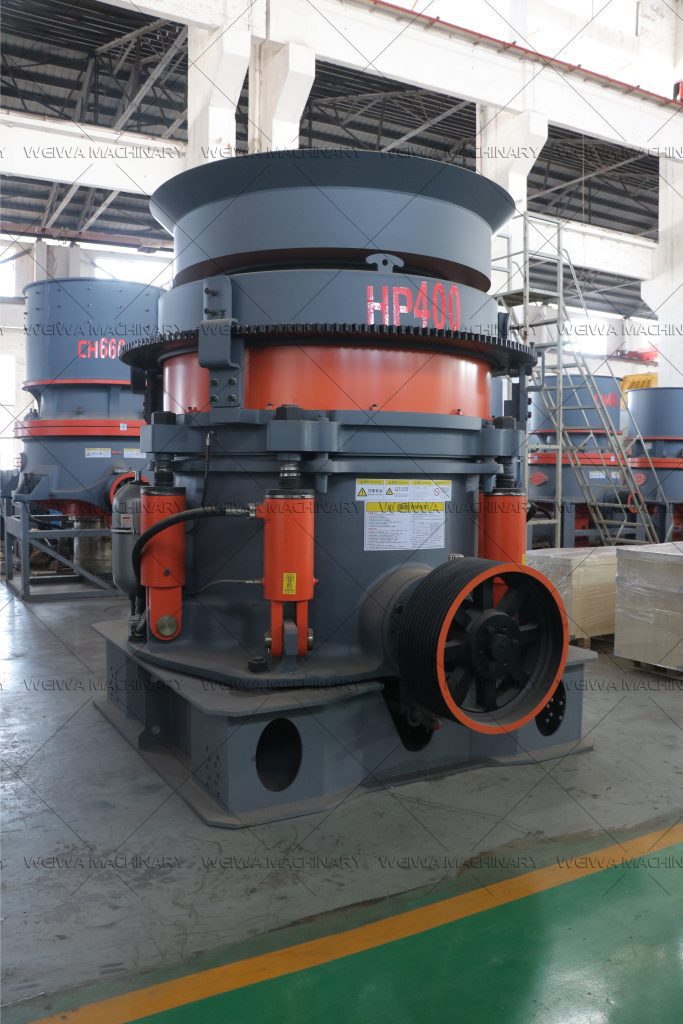
The Angolan client operates a granite and basalt aggregate plant serving road base and concrete batching projects in the Bengo and Luanda regions. Their existing primary crusher was a C-type jaw crusher, but they lacked a secondary unit capable of producing well-shaped fine aggregates with consistent gradation. After evaluating several suppliers, the customer selected Weiwa Machinery’s PYH multi-cylinder hydraulic cone crusher for its laminating crushing principle, hydraulic setting adjustment, and overload protection system suitable for abrasive African stone types. The order included one standard cavity cone crusher, a vibrating feeder, discharge conveyor, and a local-voltage control cabinet rated for 380V/50Hz with tropicalized cooling fans.
Before container loading at our Gongyi workshop, the machine underwent a no-load run-in of more than two hours. Bearing temperature, lubrication oil flow, and hydraulic pressure were recorded and handed over with the English operation manual, foundation drawing, and general arrangement diagram. Photographs of the painted unit, wooden crate reinforcement, and desiccant placement inside the container were shared with the Angola team to confirm export packing standards.
Why Cone Crusher Is the Preferred Secondary Crusher in Angola?
Angola’s emerging construction aggregate and dimension stone sectors process predominantly granite, gneiss, quartzite, and occasionally limestone. These hard to very hard rocks require a cone crusher in Angola applications that delivers high reduction ratio without excessive wear or frequent downtime. Jaw crushers alone cannot achieve the cubic particle shape required by modern asphalt and high-strength concrete specifications, which is why a cone crusher for Angola secondary or tertiary stage is almost always specified in new plant designs.
Laminating Crushing and Particle Shape Improvement
Unlike impact crushers that rely on blow-bar strike, a cone crusher compresses material between a rotating mantle and a stationary concave. When the chamber is correctly selected, inter-particle comminution—also called laminating crushing—occurs. This mechanism produces more elongated-to-cubical particles, reduces flaky output, and allows tighter control over the 5–20 mm fraction so valued in Angola’s road base courses. Our field tests confirm that replacing an old spring crusher in Angola plants with a modern hydraulic cone crusher typically raises the percentage of cubical aggregates by 12 to 18 percent.
Adaptability to Variable Feed Size and Abrasive Stone
In many Angola quarries, blast fragmentation is inconsistent, sometimes sending oversize boulders or fine slurry into the secondary stage. A hydraulic cone crusher equipped with a tramp-release system lets un-crushable tramp iron pass safely without breaking the main shaft. The same hydraulics allow remote closed-side-setting changes so the operator can widen the gap when dealing with wet, sticky fines or narrow it for fine sand making—flexibility that legacy spring crusher models rarely offer.
On-Site Trial Run Observations After Arrival in Angola
Within ten days of customs clearance, our technical engineer joined the client’s team for mechanical installation, lubrication line connection, and PLC commissioning. The cone crusher was fed with minus-150 mm granite from the existing jaw crusher in Angola stockpile. Below are the key trial-run findings documented during the first 48 hours of loaded operation.
Throughput and Discharge Uniformity
Running at approximately 75 percent of nameplate speed with a closed side setting of 19 mm, the unit processed an average of 145 tonnes per hour with peak surges to 168 tph. The minus-20 mm product accounted for roughly 82 percent of total output. Sieve analysis showed a well-graded curve within the EN 12620 envelope for 0/20 concrete aggregate. The customer noted that previous attempts with a locally sourced second-hand cone crusher for Angola resale unit could not sustain this consistency beyond a few shifts due to rapid concave wear and unstable eccentric movement.
Lubrication Temperature and Ambient Condition Response
Ambient temperatures at the site reached 34°C in the afternoon. The thin-oil lubrication station maintained crusher bearing housing temperature at 58–62°C thanks to the oversized radiator and thermostatically controlled cooling fan we specified for Africa-bound units. This thermal stability is critical because overheated bronze bushings in older crusher designs often trigger unexpected shutdowns that delay production in remote Angola locations.
Noise Level and Operator Impressions
Measured at a distance of one meter from the crusher house exterior, A-weighted sound pressure level stayed below 85 dBA, which complies with typical occupational safety expectations. The local operator commented favorably on the simplified HMI screen that displays real-time hydraulic pressure, oil tank level, and bearing temperature—features absent on many budget cone crusher in Angola classified advertisements.
Cone Crusher Selection Considerations for Angola Projects
Choosing the right cone crusher for Angola deployment involves more than matching catalogue capacity figures. Our pre-sales team normally evaluates four project-specific variables before recommending chamber type, motor power, and auxiliary configuration.
Material Hardness and Abrasion Index
Granite and quartzite common in the Dande and Lobito corridors register high abrasion indices. For such cases we advise a multi-cylinder hydraulic cone crusher with Mn18Cr2 mantle and concave liners, plus a scheduled liner change plan based on tonnage rather than calendar time. Softer limestone deposits in interior provinces may alternatively be served by a single-cylinder cone crusher to reduce CAPEX while still delivering acceptable shape.
Required Finished Product Grading
If the plant must produce both 0/10 mm manufactured sand and 10/20 mm coarse aggregate, a short-head cavity cone crusher in closed circuit with a double-deck screen is preferable. Where only road base 20/40 mm chips are needed, a standard coarse cavity on the secondary crusher in Angola line suffices and reduces liner consumption per tonne.
Power Supply and Spare Parts Logistics
Although most industrial zones near Luanda and Benguela enjoy stable three-phase supply, voltage drop during peak grid load can affect motor starting torque. We equip Angola-bound cone crusher packages with star-delta or soft starters and label all terminal blocks in English and Portuguese upon request. Regarding wear parts, we encourage clients to stock one set of mantle and concave per operating unit and offer consolidated sea-freight shipments to minimize lead time.
Foundation and Site Preparation
A cone crusher transmits dynamic cyclic loads to its foundation. Our general arrangement drawing specifies reinforced concrete mass foundations with minimum thickness and anchor bolt patterns. Skimping on foundation stiffness often causes frame cracking—a recurrent issue we have observed on improvised installations of used crusher in Angola yards.
Common Misconceptions About Crushers in the Angola Market
During client consultations we frequently encounter misunderstandings that can affect equipment lifespan and total cost of ownership.
Bigger Feed Opening Always Means Higher Capacity
A larger feed opening on a cone crusher does not automatically increase throughput if the drive power, eccentric throw, or chamber profile is mismatched to the feed size distribution. Over-feeding a cone crusher for Angola granite, for instance, can cause packing in the crushing chamber and elevated horsepower draw without proportional output gain.
Impact Crusher Replaces Cone Crusher in All Cases
Horizontal shaft impactors are excellent for limestone and recycling but accelerate wear dramatically on high-silica basalt or granite. In such contexts a cone crusher in Angola plants remains the economical long-term choice despite higher upfront cost compared to a basic impact crusher.
All Cone Crushers Are Interchangeable
Spring cone crusher, single-cylinder hydraulic, and multi-cylinder hydraulic units differ substantially in automation capability, tramp protection, and stroke length. Substituting one type blindly into an existing flowsheet—especially where screening and conveyors were sized around a particular reduction ratio—risks bottlenecks upstream and downstream.
Maintenance Best Practices for Cone Crusher in Angola Conditions
Consistent preventive maintenance is the single biggest factor influencing the mean time between failures of any cone crusher. We recommend the following routine adapted to Angola site realities.
Daily Checks
Operators should log hydraulic pressure, oil temperature, return filter condition, and unusual noise at each shift start. Verify that the grease seal of the eccentric bushing receives fresh lubricant at the interval stated in the manual—typically every eight operating hours for heavy-duty crusher in Angola schedules.
Monthly Inspections
Measure mantle and concave liner wear using template gauges. Compare gap readings with the expected wear curve for your stone type. Inspect the drive V-belt tension and check for cracks in the bowl liner locking bolts. Tighten any loose fasteners on the frame and ladder platform.
Major Overhaul Planning
Plan liner replacement during low-demand periods. Keep a calibrated dial indicator to check main shaft float after reassembly. Flush the lubrication reservoir and replace the filter cartridge per the service schedule. Document each intervention so trends in bearing temperature or oil contamination become visible over time.
The Growing Demand for Cone Crusher for Angola Infrastructure
Angola’s post-war reconstruction phase has evolved into a sustained program of highway widening, dam construction, and urban residential expansion. Each of these sectors consumes vast quantities of specification aggregates. International contractors working on World Bank–funded road projects increasingly stipulate cubical aggregate shape and tight grading envelopes—specifications that push contractors toward proven cone crusher in Angola configurations rather than relying solely on jaw and impact crusher combinations.
Weiwa Machinery anticipates continued growth in requests for complete crushing lines that pair our PE-series jaw crusher with PYH or SMH hydraulic cone crusher models, circular vibrating screens, and enclosed belt conveyors. Our experience shipping to Namibe, Lobito, and Luanda ports allows us to assist with bill of lading preparation, certificate of origin, and packing list in line with Angolan customs requirements.
Conclusion and Next Steps
The successful dispatch and trial run of this Weiwa cone crusher in Angola demonstrates that properly specified laminating crushing equipment can markedly improve product quality, reduce recirculating load, and extend wear-part life even under abrasive African stone conditions. Whether you are upgrading an existing crusher in Angola plant or planning a greenfield aggregate line, our engineering team is ready to model your feed material, propose chamber options, and provide on-site commissioning support.
For a personalized proposal on a cone crusher for Angola application—including capacity calculation, layout drawing, and freight estimate to Luanda or Lobito—please contact our international sales department today.
About Weiwa Machinery
Weiwa Mining Machinery (Weiwa Machinery) is a professional manufacturer of crushing and screening equipment with more than 30 years of industry experience. Headquartered in Gongyi City, Henan Province, China, we design and produce jaw crusher, cone crusher, impact crusher, vibrating feeder, screen, and complete stationary or mobile crushing plants. Our machines are exported to over 120 countries and regions including Angola, Indonesia, Philippines, Russia, Peru, and Kenya. Every Weiwa unit is engineered for durability, easy maintenance, and competitive cost per ton.
Contact Us:
Email: [email protected]
WhatsApp / Phone: +86 18439853888
Address: Dahuangye Industrial Zone, Gongyi City, Henan Province, China