
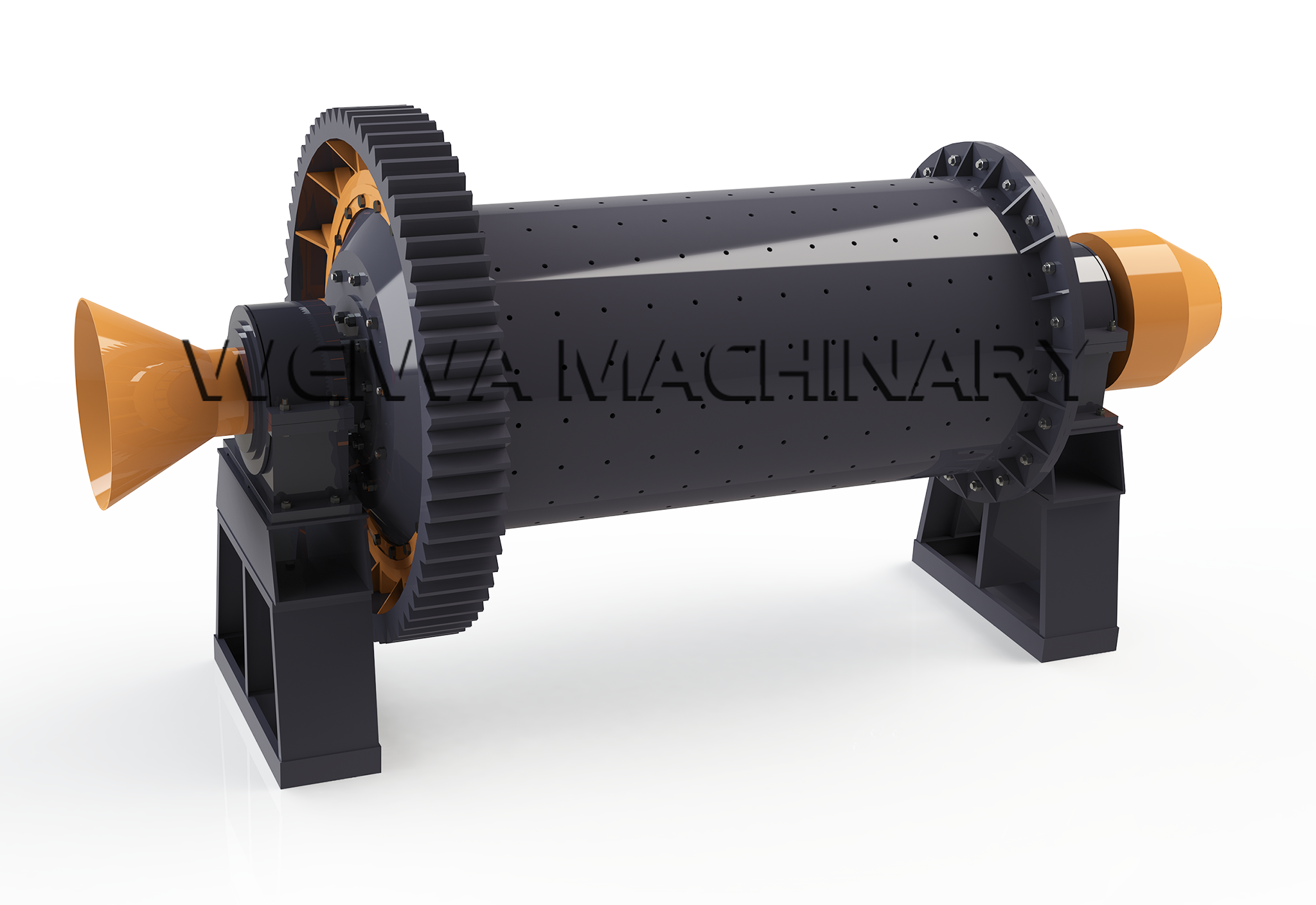

By Weiwa Machinery – Your Trusted Partner in Industrial Grinding Solutions Since 1990s
In the world of industrial processing, efficient material grinding is a cornerstone of many manufacturing operations. Whether you’re dealing with minerals, chemicals, ceramics, or even food products, achieving the desired particle size is crucial for product quality and performance. One of the most versatile and widely used machines for this purpose is the ball mill.
At Weiwa Machinery, with over three decades of experience in industrial equipment manufacturing, we have helped countless clients optimize their grinding processes using high-performance ball mills.
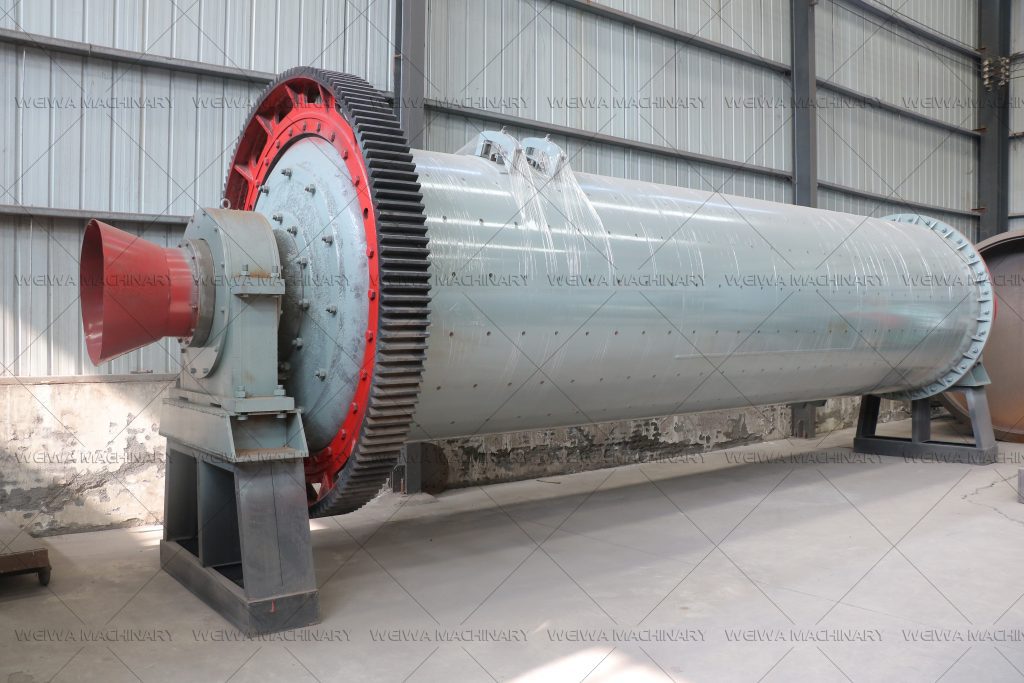
What Is a Ball Mill?
A ball mill is a type of grinding mill that uses rotating cylinders filled with grinding media—such as steel balls, ceramic balls, or natural stones—to reduce the size of materials through impact and attrition. The cylinder rotates around a horizontal axis, causing the grinding media to cascade and grind the material fed into the mill.
The fundamental principle behind a ball mill is mechanical comminution, where the energy generated by the rotating drum transfers to the grinding media, which then crushes or grinds the material into finer particles.
How Does a Ball Mill Work?
The operation of a ball mill is relatively straightforward but highly effective:
- Material Feeding – The raw material is introduced into the rotating cylinder through a feed chute.
- Grinding Media Action – As the cylinder rotates, the grinding media (balls) are lifted to a certain height and then cascade down, impacting and grinding the material.
- Particle Size Reduction – The continuous impact and friction between the media and the material reduce the particle size to the desired level.
- Discharge – The ground material is discharged through a discharge port, either by gravity or through a classifier system for further refinement.
Ball mills can operate in batch or continuous modes, depending on the application. They are available in various sizes, from small lab-scale mills to large industrial units capable of processing several tons per hour.
Key Applications of Ball Mills
Ball mills are versatile machines used across a wide range of industries. Their ability to grind materials to very fine consistencies makes them indispensable in many processes. Below are some of the most common applications:
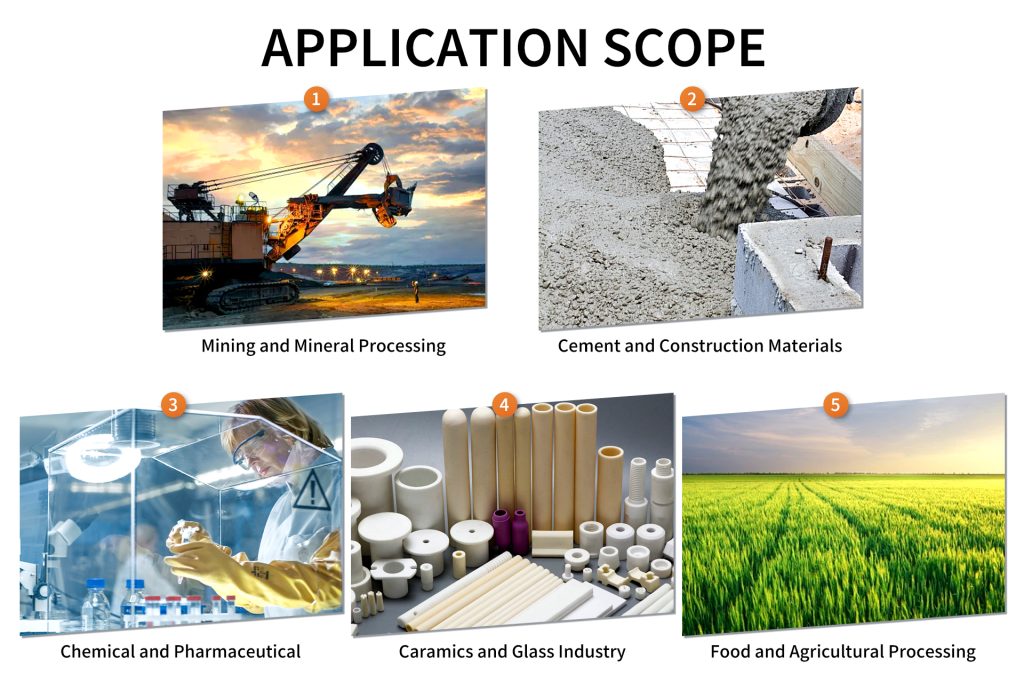
1. Mining and Mineral Processing
In the mining industry, ball mills are used to grind ores (such as copper, gold, iron, and coal) into fine powders for further processing, such as flotation, leaching, or smelting. The efficiency of ball mills in reducing particle size directly impacts the recovery rates of valuable minerals.
2. Cement and Construction Materials
Ball mills are a critical component in cement plants, where they are used to grind clinker, gypsum, and other additives into a fine powder to produce cement. The fineness of the ground material significantly affects the strength and quality of the final cement product.
3. Chemical and Pharmaceutical Industries
In chemical manufacturing, ball mills are used to grind raw materials, intermediates, and final products to achieve precise particle sizes. In the pharmaceutical industry, they are employed to produce fine powders for drug formulations, ensuring uniformity and consistency.
4. Ceramics and Glass Industry
Ball mills are used to grind ceramic raw materials, glazes, and glass frits to achieve the desired fineness for production. The uniform particle size distribution is essential for the quality and durability of ceramic and glass products.
5. Food and Agricultural Processing
Though less common, ball mills are also used in the food industry to grind spices, pigments, and other materials. They are also used in agricultural applications for grinding fertilizers and feed additives.
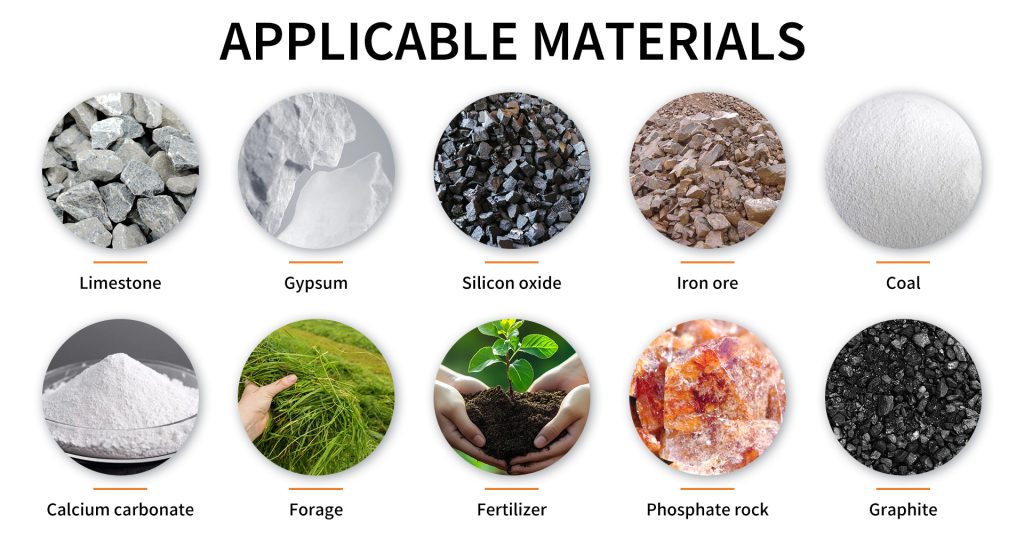
Materials Suitable for Ball Milling
Ball mills are versatile machines that can process a wide variety of materials across many industries. The key to successful ball milling is matching the right material with the appropriate mill configuration. Here’s a concise overview of materials that work well in ball mills:
Types of Ball Mills
Not all ball mills are the same. Depending on the application, different types of ball mills are used to achieve optimal results.
1. Dry Ball Mills vs. Wet Ball Mills
- Dry Ball Mills are used when the material to be ground is dry and does not require liquid for processing. These are common in mining and cement industries.
- Wet Ball Mills use water or other liquids to facilitate grinding. This is essential in applications where the material needs to be mixed with a liquid, such as in mineral processing or chemical manufacturing.
2. Overflow Ball Mills and Grate Discharge Ball Mills
- Overflow Ball Mills allow the material to overflow from the discharge port, making them suitable for fine grinding.
- Grate Discharge Ball Mills use a grate at the discharge end to control the flow of material, which helps in achieving a more uniform grind and higher throughput.
3. Laboratory Ball Mills
These are small-scale ball mills used in research and development labs for testing and small-batch production. They are essential for product development and quality control.
Key Components of a Ball Mill
Understanding the components of a ball mill is essential for optimizing its performance. The main parts include:
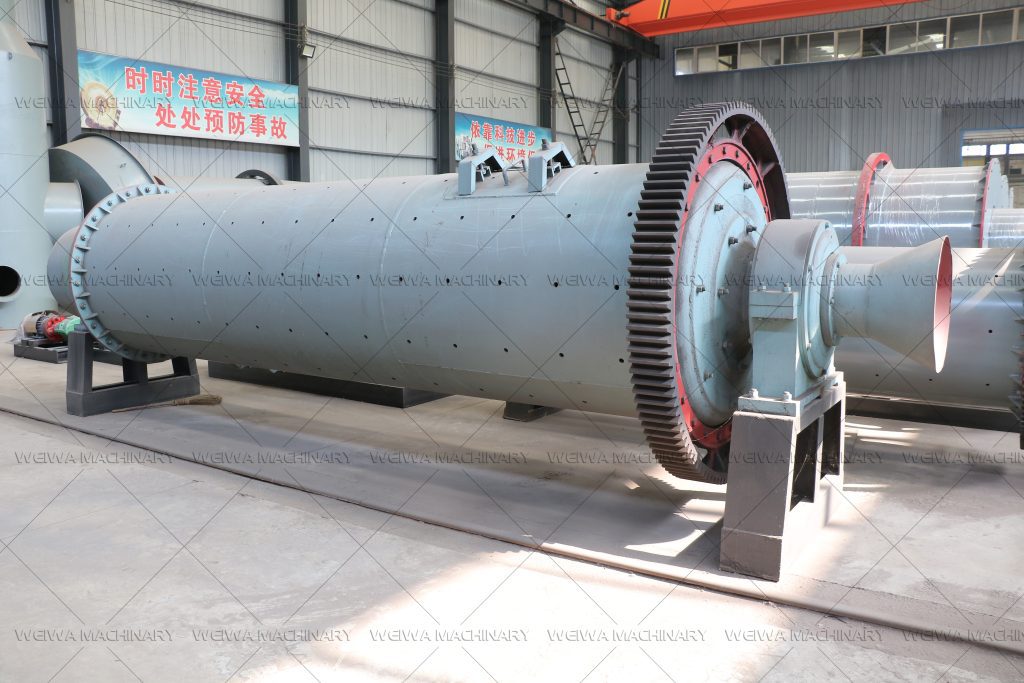
1. Cylinder (Drum)
The rotating cylinder is the core of the ball mill, where the grinding takes place. It is typically made of steel and lined with wear-resistant materials to extend its lifespan.
2. Grinding Media
The grinding media (balls) are the primary agents of size reduction. Common materials include steel, ceramic, and natural stones, chosen based on the application and material being ground.
3. Drive System
The drive system includes the motor, gearbox, and couplings that rotate the cylinder. The speed of the mill is carefully controlled to ensure optimal grinding efficiency.
4. Feeding and Discharge Mechanisms
These mechanisms control the intake of raw material and the discharge of ground product. Proper design ensures smooth operation and minimizes downtime.
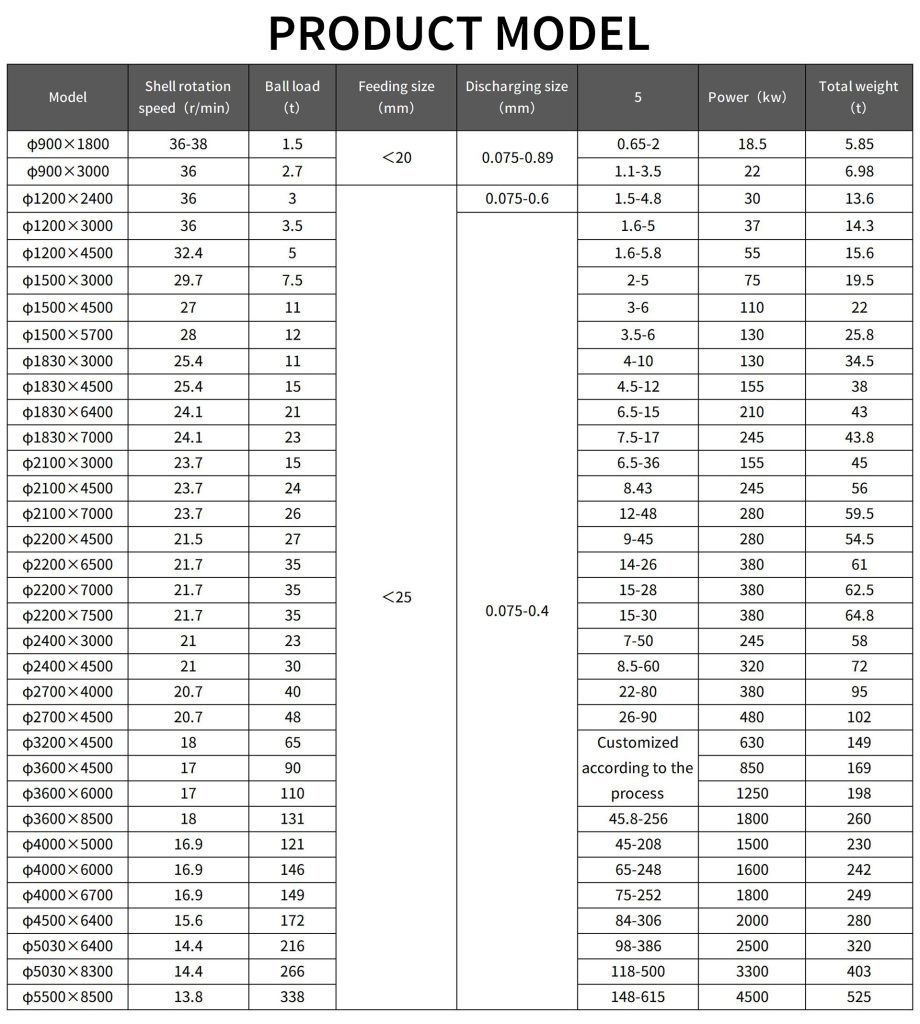
Technical Specifications and Models of Weiwa Ball Mills
At Weiwa Machinery, we offer a wide range of ball mill models designed to meet diverse industrial needs. Our ball mills are engineered for high efficiency, durability, and ease of maintenance, with customizable options to suit specific applications. Below are some of our key technical specifications and popular models:
Factors Affecting Ball Mill Performance
To achieve the best results from a ball mill, several factors must be considered:
1. Grinding Media Size and Type
The size and material of the grinding media directly impact the efficiency of the mill. Smaller media are better for fine grinding, while larger media are suitable for coarse grinding.
2. Mill Speed
The rotational speed of the mill affects the trajectory of the grinding media. Operating at the optimal speed ensures maximum impact and grinding efficiency.
3. Feed Size and Material Properties
The hardness, moisture content, and size of the feed material influence the grinding process. Proper pre-crushing may be required for optimal results.
4. Lining and Wear Parts
The lining of the cylinder and wear parts must be made of durable materials to withstand the abrasive nature of the grinding process.
Maintenance and Safety Considerations
Like any industrial machinery, ball mills require regular maintenance to ensure safe and efficient operation. Key maintenance practices include:
- Regular Inspection of the cylinder, bearings, and drive system.
- Lubrication of moving parts to reduce wear and prevent failures.
- Monitoring of Grinding Media levels and replacing worn-out media.
- Safety Protocols to protect operators from potential hazards, such as high temperatures and rotating parts.
At Weiwa Machinery, we provide comprehensive maintenance guidelines and support to ensure our clients get the most out of their ball mills.
Why Choose Weiwa Machinery for Your Ball Mill Needs?
With over 30 years of experience in the industrial machinery sector, Weiwa Machinery has established itself as a trusted name in the design, manufacturing, and supply of high-quality ball mills. Our commitment to innovation, reliability, and customer satisfaction has made us a preferred partner for clients across the globe.
Here’s what sets us apart:
1. Decades of Expertise
Our team of engineers and technicians brings decades of hands-on experience in grinding technology, ensuring that every ball mill we produce meets the highest standards of performance and durability.
2. Customized Solutions
We understand that every application is unique. That’s why we offer customized ball mill solutions tailored to your specific requirements, whether you need a dry mill, wet mill, or a specialized unit for a niche application.
3. Quality Assurance
Quality is at the heart of everything we do. Our ball mills are built using premium materials and undergo rigorous testing to ensure long-lasting performance in even the most demanding environments.
4. Global Reach, Local Support
With a strong global presence and a network of service partners, we provide comprehensive support to our clients, from installation and commissioning to ongoing maintenance and troubleshooting.
Conclusion
Ball mills are indispensable tools in a wide range of industries, offering an efficient and reliable way to achieve fine particle size reduction. Whether you’re in mining, cement production, chemicals, or ceramics, understanding the fundamentals of ball mill operation and selecting the right equipment is crucial for success.
At Weiwa Machinery, we’ve been at the forefront of industrial grinding technology for over 30 years, helping clients optimize their processes with high-performance ball mills. With our expertise, quality craftsmanship, and commitment to customer satisfaction, we’re ready to be your partner in achieving your grinding goals.
Contact us today to learn more about our ball mill solutions and how we can support your operations.