Loading the Charcoal Ball Press Machine for Indonesia
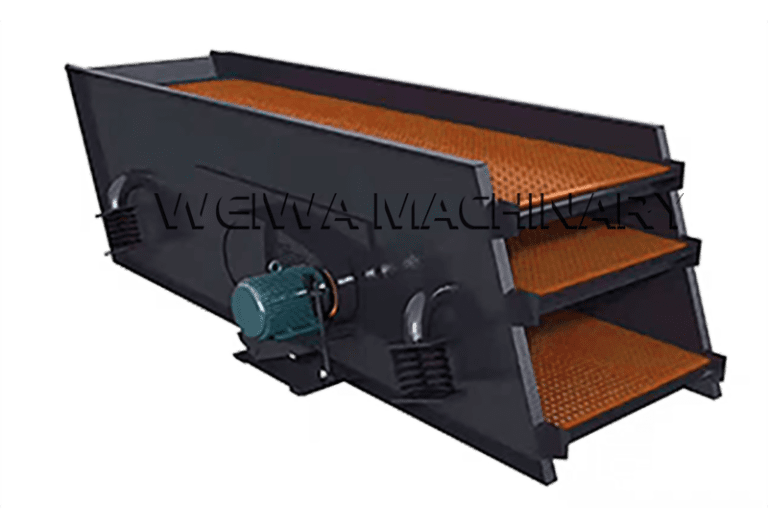
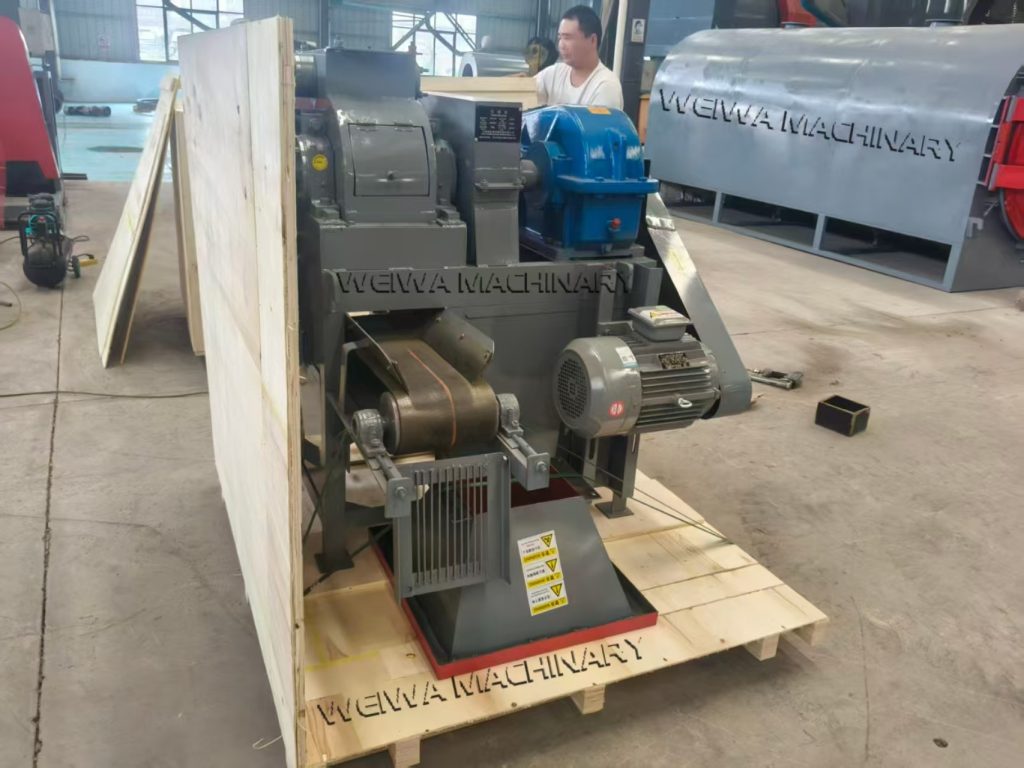
The exported equipment included a charcoal ball press machine (model with alloy steel rollers for round ball molds), a double-shaft mixer, bucket elevator, vibrating screen, and a mesh belt dryer specially configured for tropical humidity conditions. Before loading, our QC team ran a no-load test on the ball charcoal briquettes machine to confirm roller synchronization and hydraulic pressure stability.
Each component of the charcoal briquette machine production line was film-wrapped and reinforced with steel frames inside the container to prevent seawater corrosion during ocean freight to Indonesia. Our engineer also provided an Indonesian-language operation manual and a full set of design drawings for the customer’s factory layout — a standard part of Weiwa Machinery’s pre-sales customization and after-sales service.
This is not the first time Weiwa Machinery has exported a charcoal ball press machine to Southeast Asia. However, the Indonesian market deserves special attention due to its unique combination of raw material abundance, growing domestic demand for clean fuel, and strategic location for re-export.
Why Making Charcoal Balls in Indonesia Is a High-Potential Business?
Abundant Biomass Raw Materials Across the Archipelago
Indonesia produces massive volumes of coconut shells, palm kernel shells (PKS), sawdust, rice husks, and cashew nut shells annually. After carbonization, these become high-quality charcoal powder — the ideal feedstock for making charcoal balls using a ball charcoal briquettes machine. Converting this waste into uniform charcoal balls not only reduces disposal costs but creates a value-added fuel product for local BBQ, shisha, and industrial heating markets.
Rising Domestic and Export Demand for Charcoal Briquettes
Within Indonesia, the food service industry, households, and metal-processing workshops are shifting from loose wood charcoal to high-density briquettes for longer burn time and lower smoke. Regionally, markets in the Middle East, Europe, and North America import Indonesian-made shisha and BBQ charcoal briquettes. Equipping a local plant with a reliable charcoal briquette machine and charcoal ball press machine positions Indonesian manufacturers to serve both domestic and international buyers.
Government Push Toward Cleaner, Renewable Energy
Indonesian policies encouraging reduced dependency on fossil fuels and better utilization of agricultural waste indirectly support the adoption of biomass briquette technology. A properly configured ball charcoal briquettes machine line enables entrepreneurs to qualify for green-energy-related incentives in certain provinces, while also appealing to eco-conscious B2B clients abroad.
What Is a Ball Charcoal Briquettes Machine?
A ball charcoal briquettes machine — technically called a charcoal ball press machine or charcoal briquette roller press — is an industrial device that compresses finely crushed charcoal or coal powder into spherical (or oval/pillow-shaped, depending on mold) briquettes under high mechanical or hydraulic pressure.
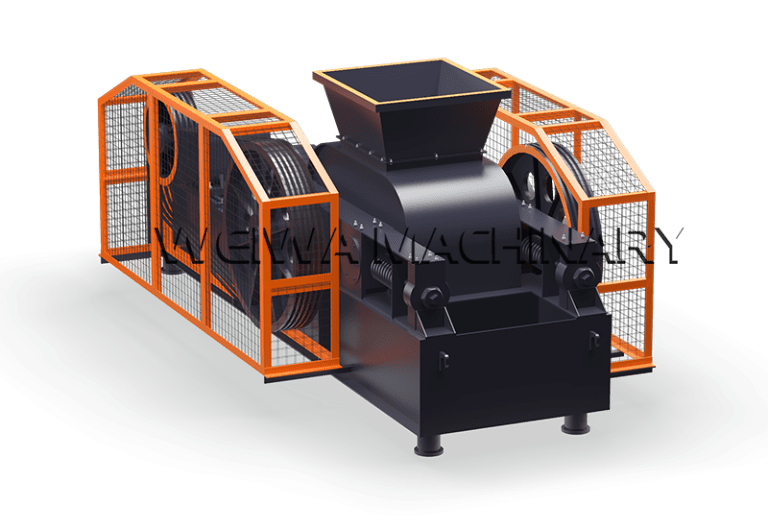
The core working principle is straightforward. Pre-treated charcoal powder (usually mixed with a small percentage of natural binder such as cassava starch or molasses and adequate water) is fed into the hopper of the charcoal ball press machine. Two counter-rotating rollers with machined pockets (molds) draw the material in and compress it into dense balls. Upon passing the roller split line, the finished charcoal balls drop onto a discharge conveyor for screening and drying.
Key Components of a Charcoal Ball Press Machine
The main frame of the charcoal briquette machine carries the roller assembly and transmission system. The pressing rollers — typically made of 65Mn or 9Cr2Mo alloy steel, surface-hardened — determine mold shape and wear life. The reduction gearbox and electric motor provide the torque needed for continuous high-pressure forming. In our hydraulic-type ball charcoal briquettes machine, an auxiliary hydraulic unit maintains constant pressure and allows pressure adjustment via the control panel, which is particularly useful when making charcoal balls of different densities for shisha vs. BBQ markets.
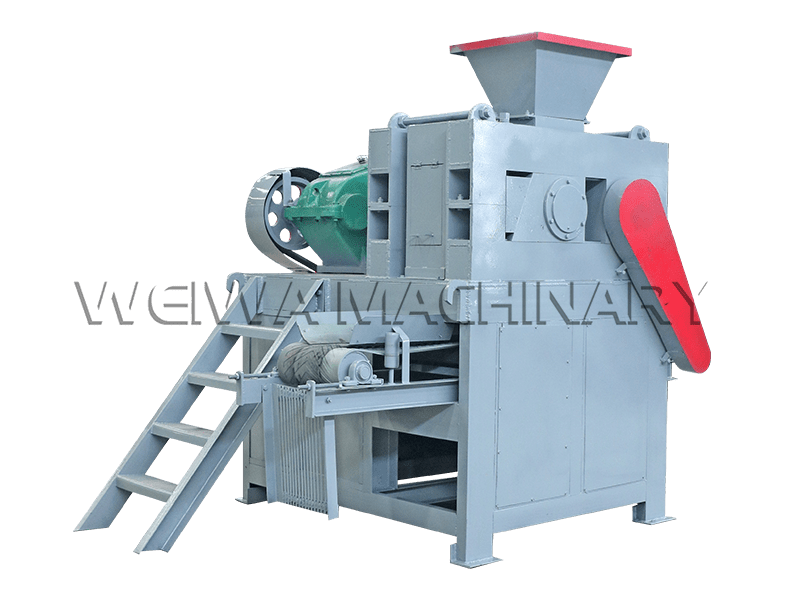
Common Specifications in Weiwa’s Charcoal Ball Press Machine Series
Weiwa Machinery’s charcoal ball press machine models range from small 290 mm roller diameter units (approx. 1–2 t/h) to large 750–1000 mm models (8–20+ t/h). Roller pocket size for making charcoal balls typically varies from 25 mm to 60 mm diameter, customizable per customer request. Power ranges from 5.5 kW to 90 kW depending on model. All charcoal briquette machine models undergo a load test using similar material to the client’s feedstock before shipment.
A Complete Charcoal Briquette Machine Production Line for Making Charcoal Balls
A charcoal ball press machine alone is insufficient for commercial-scale output. A standard briquette line supplied by Weiwa Machinery for Indonesia consists of:
1. Carbonization Furnace (Optional New or Retrofit)
To produce charcoal powder from coconut shell, wood, or PKS. Continuous or batch-type carbonization furnaces are selected based on daily capacity requirement and local emission regulations.
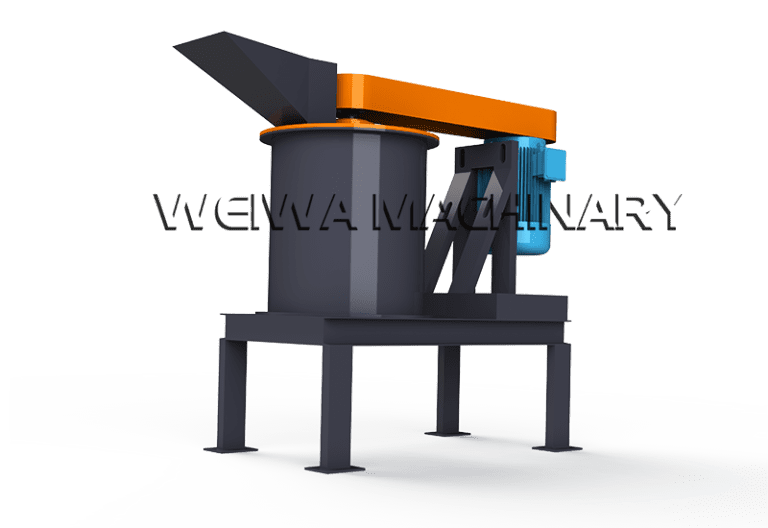
2. Charcoal Crusher / Hammer Mill
Reduces carbonized material to uniform powder (usually ≤3 mm) suitable for the binder-mixing stage prior to the ball charcoal briquettes machine.
3. Double-Shaft Mixer with Binder Dosing System
Evenly blends charcoal powder with predetermined amounts of binder and water. Homogeneous mixing is critical for the charcoal ball press machine to form high-strength balls without excessive fines.
4. Conveying Equipment
Bucket elevators and belt conveyors transfer material between stages, minimizing manual handling and dust.
5. Charcoal Ball Press Machine (Core Equipment)
The charcoal briquette machine that actually forms the charcoal balls. Equipped with chosen molds — round balls being the most popular for Indonesia’s shisha and premium BBQ segments.
6. Vibrating Screen
Separates qualified balls from broken pieces or unformed powder, returning undersized material to the mixer for re-pressing in the ball charcoal briquettes machine cycle.
7. Dryer (Mesh Belt or Rotary)
Newly pressed balls contain moisture from the binder and must be dried to ≤8% before packaging. In humid regions like Indonesia, we recommend a multi-layer mesh belt dryer with heat source adapted to local availability (electric, biomass-fired, or gas).
8. Cooling and Packaging Unit
Cooled briquettes are weighed and packed in PVC bags, cartons, or jumbo bags per market requirement.
Weiwa Machinery provides a complete flow diagram and 3D factory layout drawing so that customers know exactly how to arrange the charcoal briquette machine line within their available floor space — a service highly appreciated by our Indonesian partners.
Advantages of Choosing Weiwa Machinery’s Charcoal Ball Press Machine for Indonesia
30+ Years of Manufacturing Experience
Founded in the 1990s, Weiwa Machinery has accumulated over three decades of expertise in designing and producing charcoal briquette machines, carbonization furnaces, and related biomass equipment. Our engineers understand how local raw materials — especially Indonesian coconut shell charcoal — behave during pressing, and we tune roller gap, pressure, and binder ratio accordingly.
Customization for Local Requirements
Mold shape, roller diameter, drive configuration, and even control system language can be customized. For making charcoal balls in Indonesia, many clients choose 30–40 mm round molds for shisha export and 45–50 mm for BBQ domestic market. We also offer stainless-steel contact parts for food-grade applications upon request.
Durable Construction Suited to Tropical Conditions
Our ball charcoal briquettes machine frames are sandblasted and coated with anti-corrosion paint. Bearings and seals are selected for high-temperature, high-humidity environments. Hydraulic units are equipped with cooling accessories when specified for Southeast Asian climates.
Professional After-Sales Support and Spare Parts
Weiwa Machinery assigns a dedicated after-sales engineer to each export order. Remote video guidance for installation, operation training for your staff, and prompt supply of wearing parts (rollers, bearings, couplings) ensure your charcoal ball press machine keeps running. Our 24/7 customer service team responds to inquiries in English and Bahasa Indonesia through email and WhatsApp.
Frequently Asked Questions About Making Charcoal Balls
Do I Need a Binder When Using a Ball Charcoal Briquettes Machine?
For most commercial charcoal balls, a small amount of natural binder (starch, molasses, or gum arabic) improves green strength and reduces breakage during drying and transport. Some high-pressure charcoal ball press machines can form binderless briquettes from very dry, fine anthracite or metallurgical coke, but for typical coconut shell charcoal, a 4–8% starch binder is recommended for best quality.
Can One Charcoal Ball Press Machine Make Different Ball Sizes?
Yes — by changing the roller set (mold). Roller assemblies on Weiwa’s charcoal briquette machine are bolt-mounted and can be swapped. Many Indonesian customers keep one spare roller set for a second ball diameter to serve different market segments.
What Is the Difference Between a Mechanical and Hydraulic Charcoal Ball Press Machine?
Mechanical charcoal ball press machines use a fixed gear-driven roller gap and are cost-effective for medium-pressure applications. Hydraulic types add an adjustable hydraulic system that compensates for material fluctuations and achieves higher, more consistent pressure — advantageous for premium shisha charcoal balls requiring exact density and low reject rates.
Partner with Weiwa Machinery for Your Charcoal Briquette Project in Indonesia
The recent shipment of our ball charcoal briquettes machine and full charcoal briquette machine production line to Indonesia reflects Weiwa Machinery’s ongoing mission: to deliver rugged, efficient, and well-supported briquetting solutions to entrepreneurs worldwide. Whether you plan to start making charcoal balls in Indonesia for the first time or upgrade an existing plant with a high-performance charcoal ball press machine, our team is ready to assist — from raw material analysis and line design to installation guidance and spare parts supply.
Weiwa Machinery brings more than 30 years of experience in charcoal and biomass machinery manufacturing. We offer customized design drawings for your site layout, on-site or remote operation training, and a professional after-sales team available 24/7. Our equipment has been exported to over 120 countries and trusted by more than 2,000,000 customers globally.
Contact us today for a customized quotation and free factory layout plan:
Email: [email protected]
WhatsApp / Phone: +86 18439853888
Let Weiwa Machinery power your charcoal briquette business in Indonesia with a proven charcoal ball press machine and complete production line solution.