
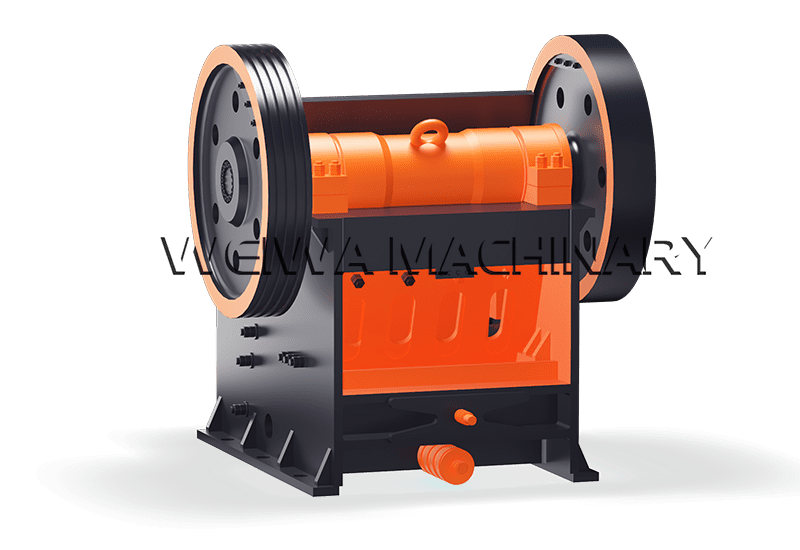

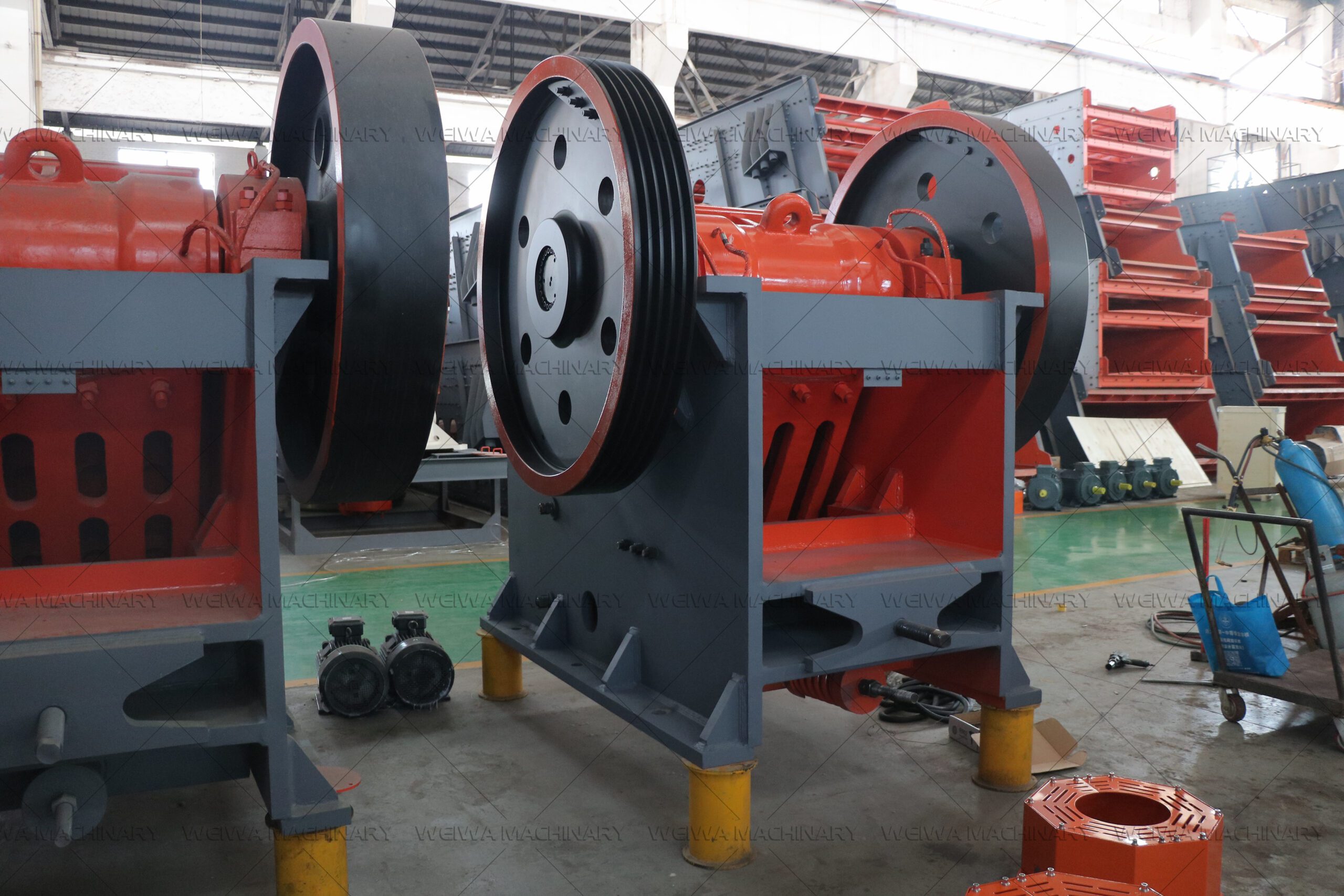
 Basic Definition of a Jaw Crusher
A jaw crusher is a mechanical device that crushes materials through compression, named for its operational resemblance to the human jaw’s biting motion. It is the most widely used primary crushing equipment in industries such as mining, construction, and metallurgy. Its primary function is to reduce large chunks of ore, rock, or construction waste into smaller sizes, preparing them for subsequent processing (e.g., grinding, screening).
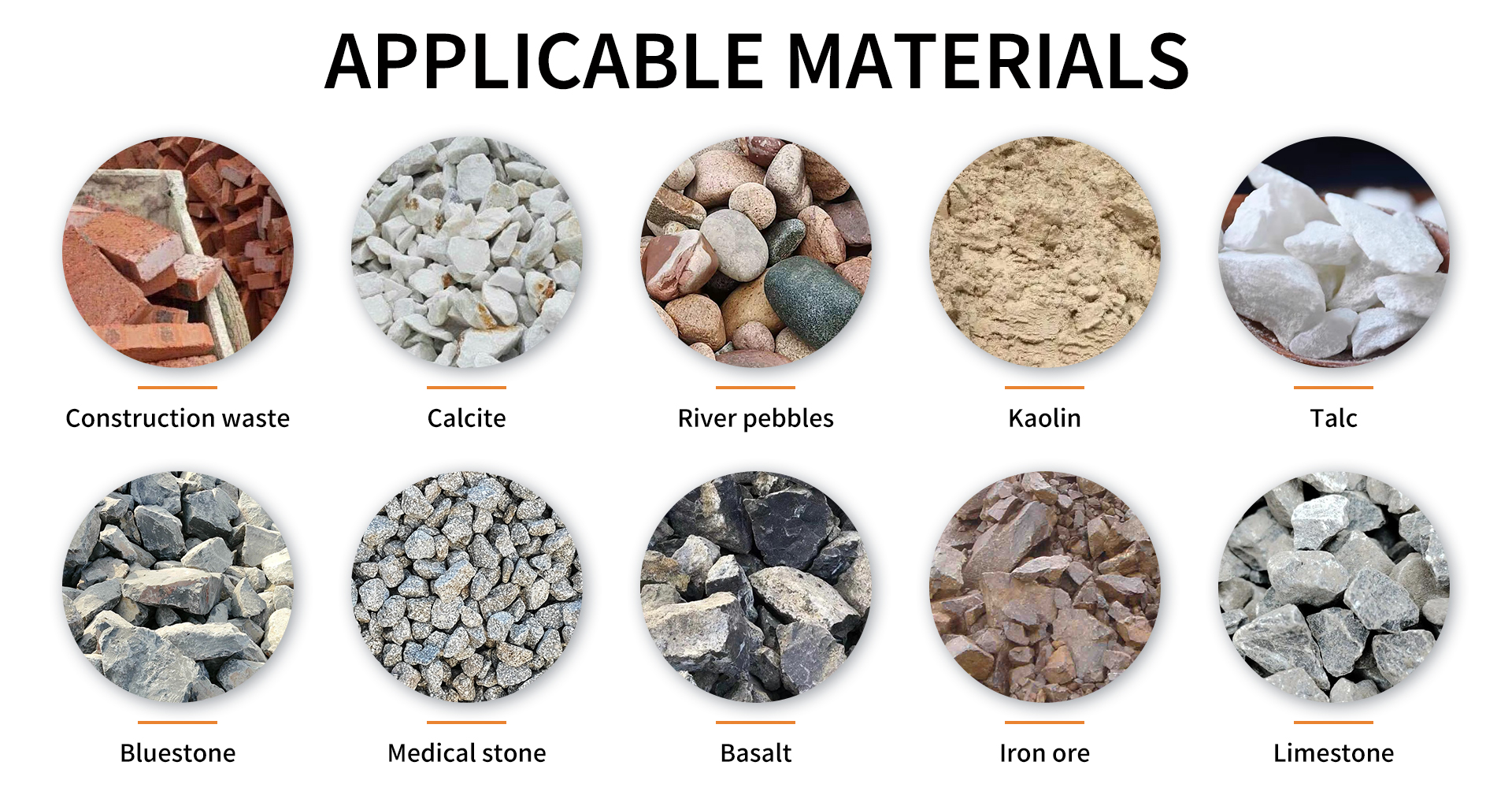
Raw Materials Processed by Jaw Crushers
As a versatile primary crusher, its high-strength crushing chamber and wear-resistant design accommodate a wide range of raw materials with varying hardness and particle sizes. Commonly processed types include:
- Construction & Demolition Waste: Concrete blocks, asphalt debris, demolished building rubble (key equipment for recycled aggregate production).
- Minerals: Iron ore (hardness 5.5–6.5), limestone (hardness 3–4), basalt (hardness 6–7), granite (hardness 6–7), river pebbles (hardness 6–7).
- Industrial Minerals: Calcite (hardness 3), kaolin (hardness 2–2.5), talc powder (hardness 1–2.5), bluestone (hardness 3–4).
Note: By adjusting the nip angle (≤25°) between the fixed and movable jaws and the discharge opening size, the crusher can be tailored to specific material requirements.
Jaw Crusher Working Principle
1. Core Components
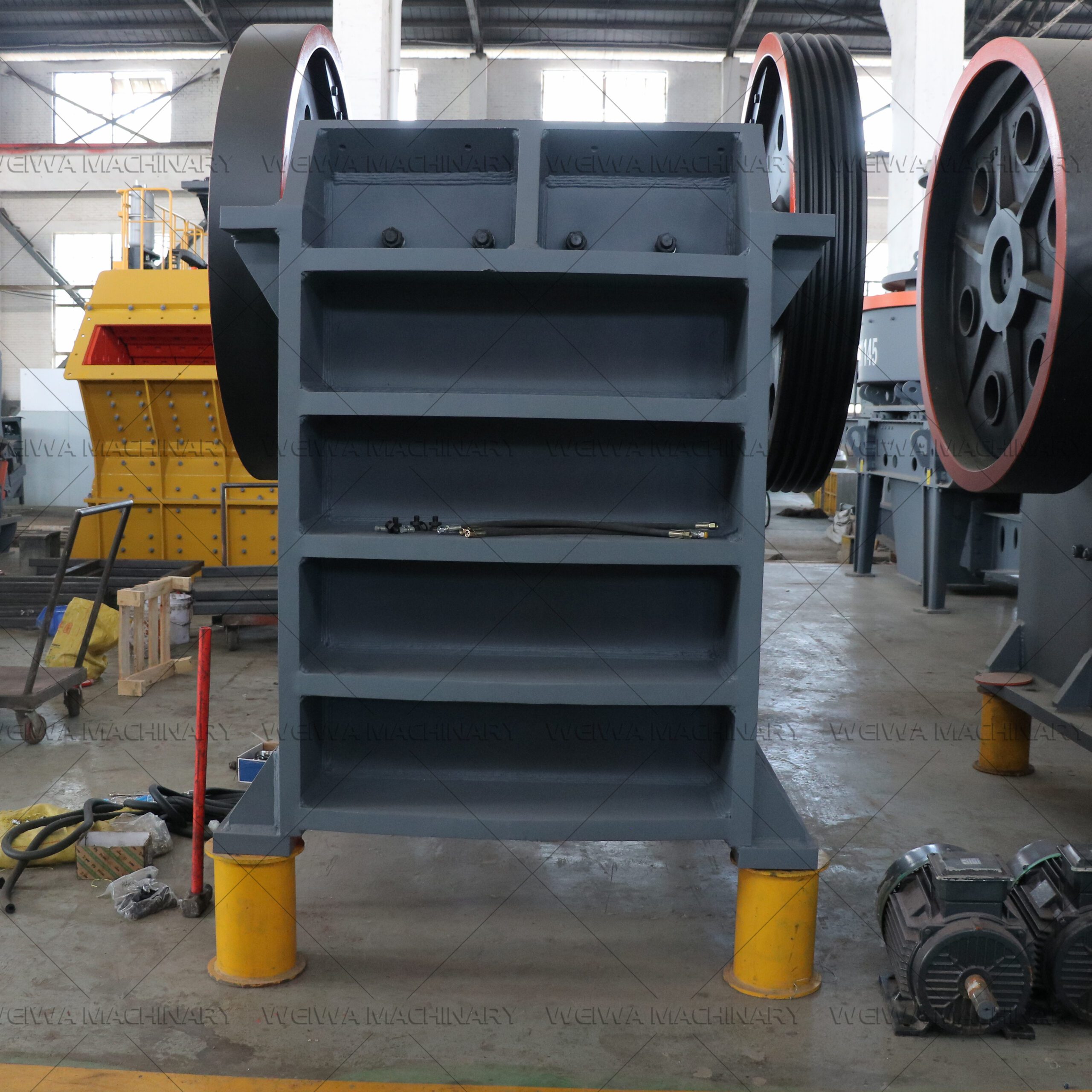
The main structural elements of a jaw crusher include:
- Fixed Jaw Plate – Mounted on the frame, remaining stationary.
- Moving Jaw Plate – Oscillates back and forth to apply crushing pressure.
- Eccentric Shaft – Drives the reciprocating motion of the moving jaw.
- Flywheel – Stores kinetic energy to ensure smooth operation.
- Toggle Plate – Transmits power and adjusts the discharge opening size.
2. Crushing Process
Raw material enters the crushing chamber through the feed opening. The moving jaw, actuated by the eccentric shaft, executes a periodic reciprocating motion:
- When approaching the fixed jaw – The material is compressed, bent, and fractured.
- When retracting – Smaller crushed particles discharge through the bottom opening.
This cycle repeats until all material is reduced to the desired size.
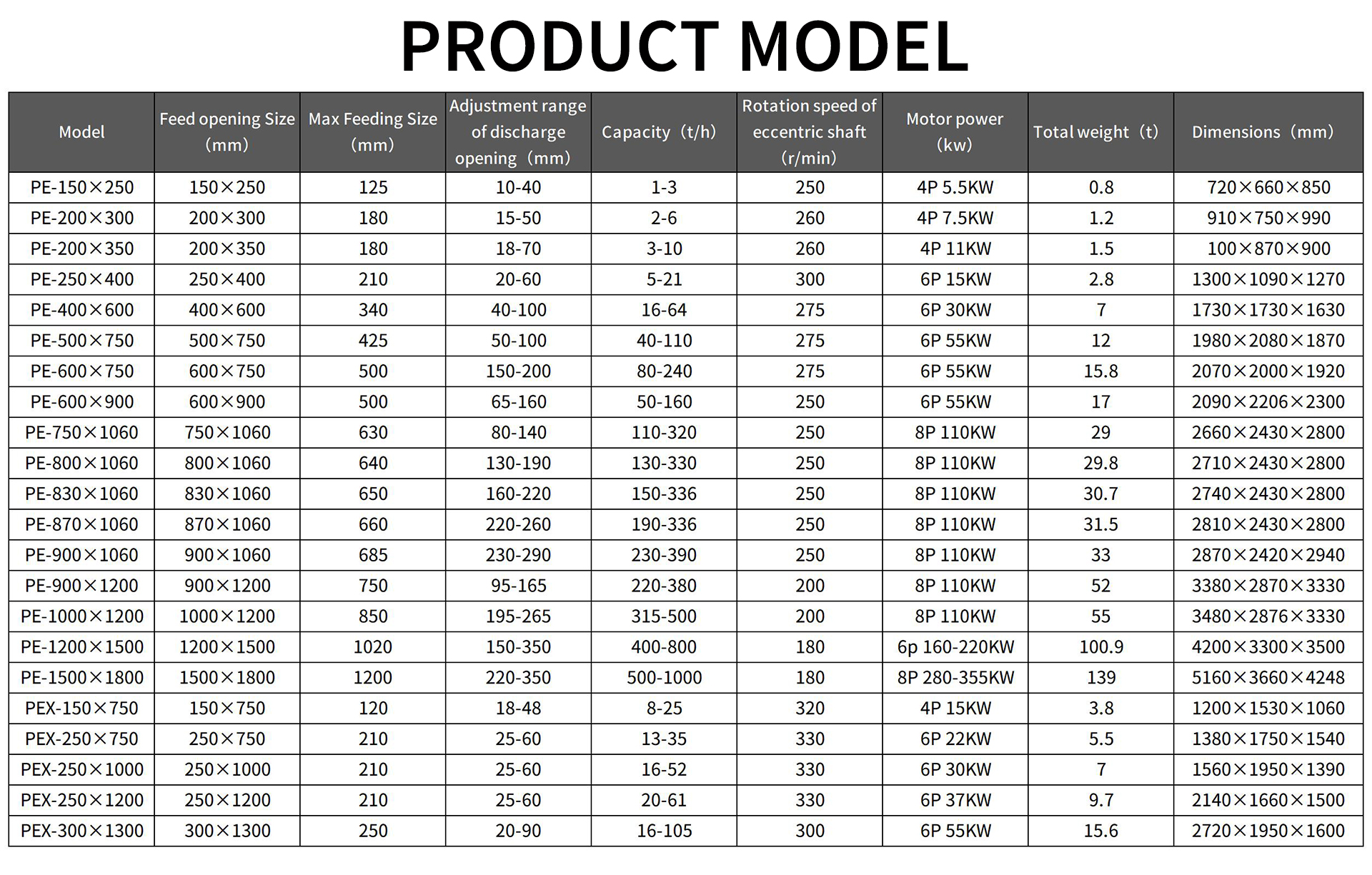
Key Technical Specifications of Jaw Crushers
The performance of industrial-grade jaw crushers is directly influenced by core technical parameters, as detailed below:
Compact Jaw Crusher Advantages
Simple operation and convenient maintenance
The jaw crusher is equipped with a wedge block discharge port adjustment device, which makes the discharge port adjustment simpler, safer and faster;
Reasonable structure and wear-resistant parts
The internal structure of the equipment is precise, and each component is made of wear-resistant and pressure-resistant materials, which enhances the pressure resistance and wear resistance of the parts;
Deep cavity crushing, high output and low energy consumption
The crushing cavity is deep and dead, which improves the feeding capacity and output. The material will not be blocked in the crushing cavity, the crushing ratio is large, and the product particle size is uniform;
Application Scenarios of Jaw Crushers
Jaw crushers are versatile primary crushing equipment widely used across industries to process a broad range of raw materials. Their high crushing ratio, robust structure, and adaptability to hard/abrasive materials make them indispensable in the following scenarios:
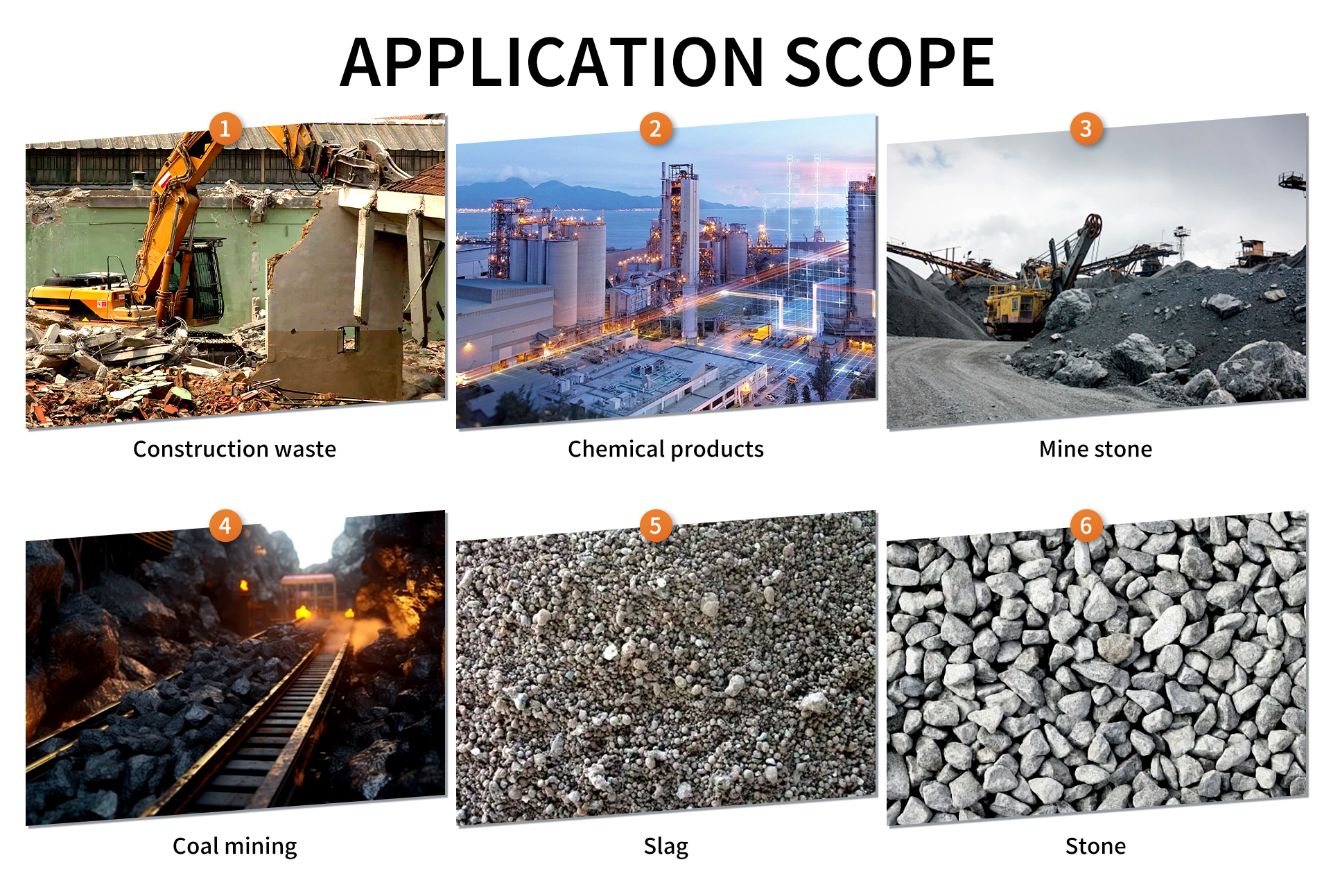
1. Construction & Demolition Waste (CDW) Recycling
- Materials: Concrete blocks, asphalt pavement, bricks, and mixed construction debris.
- Purpose: Crush oversized waste into reusable aggregates (e.g., 0–40mm) for producing recycled concrete, road base materials, or fillers.
- Advantage: Jaw crushers’ high impact resistance and adjustable discharge size ensure efficient reduction of reinforced concrete and asphalt layers.
2. Chemical & Industrial Mineral Processing
- Materials: Soft-to-medium-hard minerals like kaolin (clay), talc, gypsum, phosphates, and limestone (for chemical lime production).
- Purpose: Primary crushing of raw materials for fertilizers, ceramics, glass, or chemical intermediates.
- Advantage: The simple crushing mechanism and easy-to-clean design prevent contamination, ideal for hygiene-sensitive chemical applications.
3. Mining Stone (Ore & Hard Rock)
- Materials: Hard minerals such as iron ore, copper ore, gold ore, granite, basalt, and quartzite.
- Purpose: Reduce large ore blocks (up to 1m³) to feedable sizes (10–50cm) for ball mills, flotation cells, or magnetic separators.
- Advantage: High-manganese steel jaw plates and reinforced frames withstand the extreme hardness and abrasiveness of mining ores.
4. Coal Mining & Processing
- Materials: Raw coal seams, coal gangue (waste rock from coal extraction).
- Purpose: Crush coal to uniform sizes (5–50mm) for power plants, coking ovens, or coal briquetting; process gangue into construction aggregates.
- Advantage: Wear-resistant liners and impact-absorbing toggle plates minimize downtime when handling abrasive coal impurities.
5. Slag Recycling (Metallurgical Byproducts)
- Materials: Iron slag (from steel furnaces), copper slag, and nickel slag.
- Purpose: Crush slag into recycled aggregates for road construction, cement additives, or metal recovery.
- Advantage: High-temperature resistance (up to 300°C short-term) and crushing force optimization handle the density and irregular shapes of metallurgical slag.
6. Natural Stone Processing (Dimension Stone & Aggregates)
- Materials: Limestone, sandstone, river pebbles, marble, and bluestone.
- Purpose: Produce construction aggregates (for roads, railways, and concrete), crushed stone for landscaping, or raw blocks for monuments.
- Advantage: Adjustable discharge settings ensure precise control over particle size for different end-use requirements (e.g., 0–10mm sand vs. 20–40mm road base).
Why Are Jaw Crushers the “Cornerstone” of Industry?
- First-Stage Processing Essential – They serve as the primary crusher in most production lines, reducing oversized material to manageable dimensions.
- Proven Reliability – Simple design, low operating costs, and high durability make them globally indispensable.
- Technological Advancements – Modern jaw crushers incorporate automation, wear-resistant materials, and optimized designs for enhanced efficiency and longevity.
Conclusion
A jaw crusher is a compression-based mechanical device engineered to reduce large materials into smaller fragments. Its simple structure, adaptability, and high reduction ratio make it indispensable across mining, construction, metallurgy, and recycling sectors. As the initial processing unit in crushing workflows, it ensures downstream operations receive appropriately sized feedstock.
For detailed guidance on model selection, technical specifications, or application case studies, feel free to inquire further.
(Pro Tip: When purchasing, key parameters such as feed opening size, discharge granularity, and motor power should be carefully evaluated! )