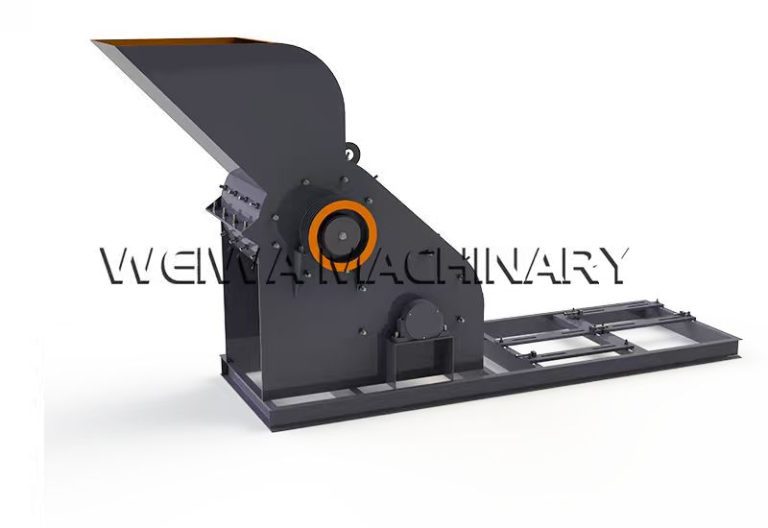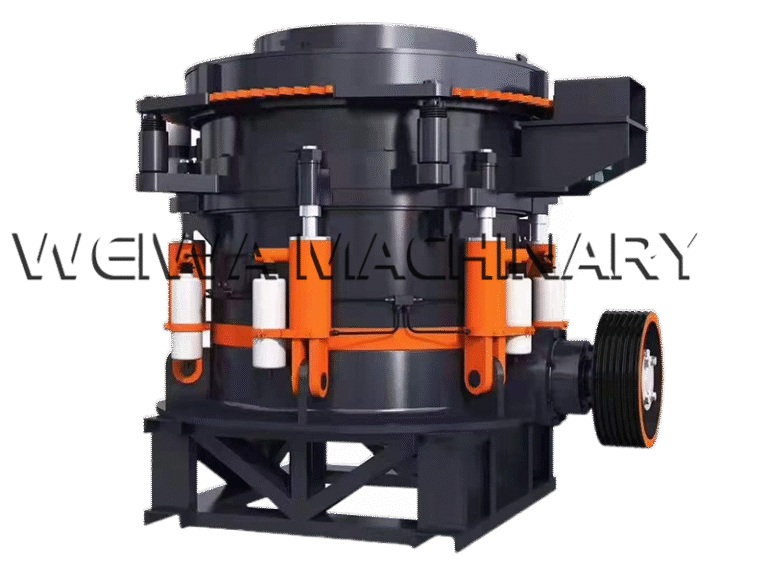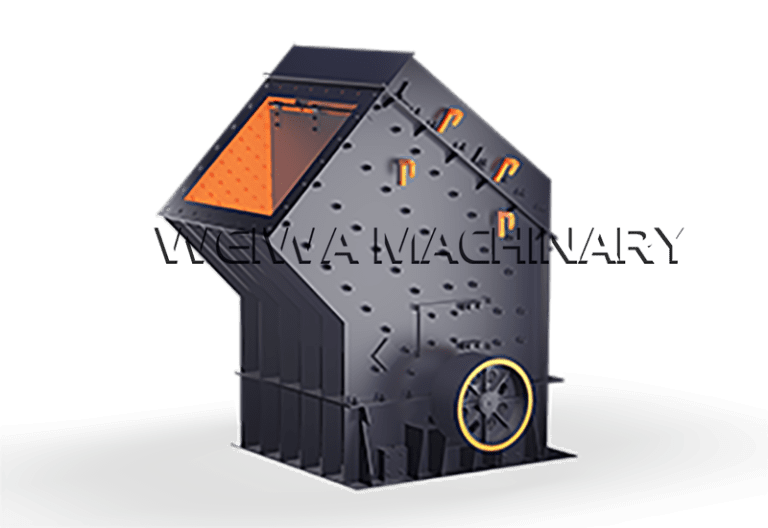
Last week, Weiwa Machinery completed the factory loading and container shipment of a full set charcoal ball press machine production line for our valued client in Lagos, Nigeria. This Ball Charcoal Briquettes Machine order includes a double-roller briquette press, crusher, double-shaft mixer, hopper, and mesh belt dryer — all carefully inspected, painted with anti-rust coating, and packed for ocean freight to West Africa. For Nigerian entrepreneurs exploring making charcoal balls as a profitable clean-energy business, this dispatch represents not only a successful factory-to-port delivery but also the growing momentum of the Charcoal Briquette Machine industry across Africa, especially for those making charcoal balls in Nigeria.
Shipment Scene at Weiwa Machinery Factory
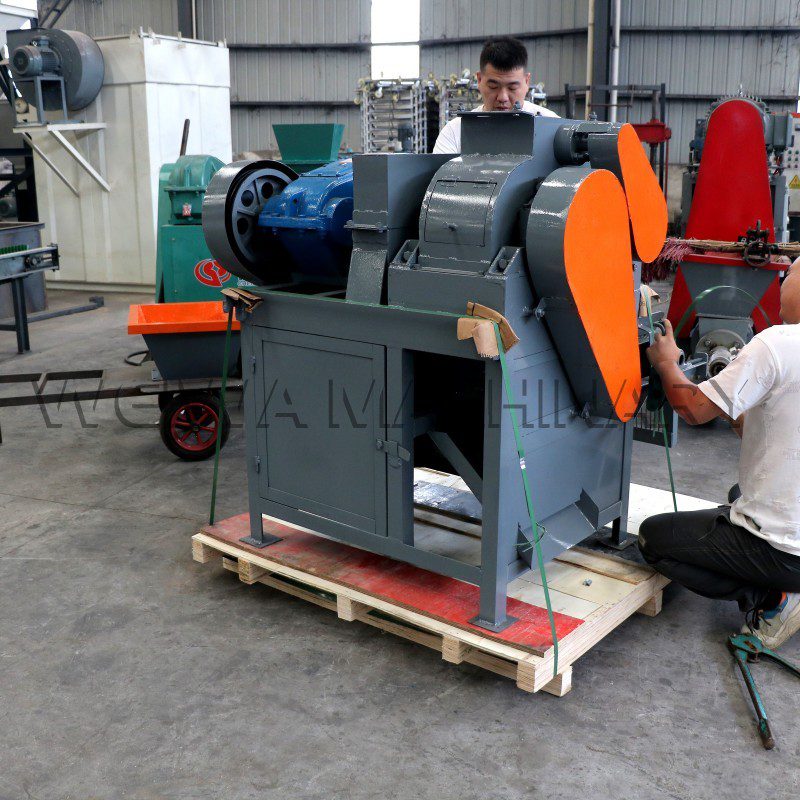
The morning of the shipment began in our heavy-equipment workshop where technicians performed a final no-load running test on the charcoal ball press machine. The rollers — the core wearing part of any Ball Charcoal Briquettes Machine — were checked for indentation depth, pressure balance, and gap alignment to guarantee uniform ball shape after arrival. Our quality control engineer verified motor power, reducer lubrication, and safety guards before issuing the factory inspection report accepted by the client.
After passing the test, the Charcoal Briquette Machine main unit was wrapped in stretch film and placed on a reinforced wooden pallet to prevent humidity damage during sea transit. Auxiliary equipment including the vertical crusher for charcoal chunks and the twin-shaft mixer for binder blending were loaded sequentially into the 20-foot container. Each component was marked with numbered tags corresponding to the English installation manual provided in the documentation pack. Our export team photographed every step — from workshop loading to sealed container — so the Nigerian customer could track the condition of their charcoal ball press machine prior to customs clearance.
This is not the first time Weiwa has dispatched making charcoal balls equipment to Africa. Over the past three decades, our Charcoal Briquette Machine lines have been installed in Nigeria, Kenya, Ghana, Tanzania, and South Africa. However, demand from Nigerian buyers has accelerated sharply in the last twenty-four months due to local energy challenges and abundant biomass waste resources.
Why Making Charcoal Balls in Nigeria Is a High-Potential Green Business
Nigeria is the most populous country in Africa with more than two hundred million residents, yet a large portion of the population still depends on firewood and raw lump charcoal for daily cooking. These traditional fuels drive deforestation, emit high levels of smoke indoors, and fluctuate in price due to seasonal supply shortages. Converting loose charcoal dust and agro-waste into densified balls via a Ball Charcoal Briquettes Machine addresses all three problems at once — it recycles waste, reduces forest cutting, and creates a higher-calorific longer-burning fuel.
The practice of making charcoal balls in Nigeria is gaining traction among small-to-medium enterprise owners because raw materials are inexpensive and widely available. Sawdust from timber markets in Ogun State, rice husk from Kano mills, coconut shell charcoal powder from coastal areas, and even fine coal slack from local depots can all serve as feedstock for a charcoal ball press machine. When compressed into uniform balls by a Charcoal Briquette Machine, these wastes become marketable BBQ briquettes, household cooking fuel, or industrial smelting辅助 material with export potential to neighboring countries.
Market research indicates Nigerian urban consumers are increasingly willing to pay for cleaner-burning, odorless grilling fuel — particularly the hospitality sector, suya vendors, and middle-class households in Lagos, Abuja, and Port Harcourt. A properly sized Ball Charcoal Briquettes Machine line with a capacity between five hundred kilograms per hour and two tons per hour can typically achieve payback within twelve to eighteen months depending on local briquette pricing and distribution channels.
What Is a Ball Charcoal Briquettes Machine?
A Ball Charcoal Briquettes Machine, also referred to as a charcoal ball press machine or Charcoal Briquette Machine with roller type design, is a piece of mechanical equipment that uses hydraulic or mechanical pressure to compress powdered carbonaceous material into regularly shaped balls or ovals. The key working principle involves a pair of counter-rotating rollers engraved with hemispherical or customized molds. When charcoal or coal powder is fed evenly between the rollers, the narrowing pocket forces particles together under extreme pressure — typically ranging from twenty-five to fifty megapascals in our Weiwa heavy-duty models — causing them to bond physically and, when a natural binder is added, chemically as well.
Main Components of a Complete Briquette Production Line for Making Charcoal Balls
To run a commercial operation for making charcoal balls in Nigeria, the Ball Charcoal Briquettes Machine is normally integrated with upstream and downstream equipment:
The first stage is crushing. Raw charcoal lumps, coconut shell charcoal, or agrowaste-derived biochar must be reduced to a fine powder — usually below three millimeters — by a hammer mill or vertical crusher. Uniform particle size is critical because oversized granules prevent proper compaction inside the charcoal ball press machine rollers and may cause incomplete molding or broken balls.
The second stage is mixing. The powdered material is conveyed into a twin-shaft mixer where a predetermined percentage of water and binder — commonly cassava starch, molasses, bentonite clay, or a combination — is blended thoroughly. Proper moisture content for most Charcoal Briquette Machine lines falls between eight and twelve percent. Too dry and the balls crumble; too wet and they stick to the molds of the Ball Charcoal Briquettes Machine or require excessive drying time.
The third stage is briquetting itself. The conditioned mixture drops from the mixer into a storage hopper equipped with a variable-speed screw feeder that regulates material flow into the charcoal ball press machine. Inside, the dual rollers compress the feed into balls of standard diameters such as thirty, forty, or fifty millimeters. Weiwa Charcoal Briquette Machine rollers can be custom-engraved for oval, pillow, square, or logo-embedded shapes per customer request.
The fourth stage is drying. Freshly pressed balls retain residual moisture and are relatively fragile. A mesh belt dryer or tunnel dryer removes surface and internal moisture gradually at controlled temperatures — normally below three hundred degrees Celsius — to avoid cracking. Well-dried briquettes from a Ball Charcoal Briquettes Machine exhibit high compressive strength, low ash content, and extended burn duration compared to loose charcoal powder.
Technical Advantages of Weiwa Charcoal Ball Press Machine for Nigeria Conditions
Weiwa charcoal ball press machine models designated for African clients feature reinforced alloy steel rollers with heat treatment to resist abrasive charcoal dust wear. The main frame uses thickened channel steel to absorb vibration during continuous operation. An adjustable pressure spring allows operators to fine-tune roller gap according to feedstock characteristics — an important flexibility when making charcoal balls in Nigeria from varying raw material blends such as sawdust char versus coconut shell char. The electric control cabinet integrates overload protection and emergency stop functions labeled in English. Spare roller sleeves, binder formulation guidance, and foundation drawing are included with every Charcoal Briquette Machine export order.
Nigeria Market Deep Dive – Opportunities for Charcoal Briquette Machine Investment
Several macroeconomic and environmental factors converge to make Nigeria one of the most promising destinations for Ball Charcoal Briquettes Machine deployment in Sub-Saharan Africa. First, the country generates millions of tons of agricultural residue annually — rice husk in the north, palm kernel shell in the south, cassava peel in the west — most of which is either burnt openly or left to decay. Second, chronic power shortages push households and small eateries to rely heavily on solid fuel for cooking, creating entrenched demand for affordable alternatives. Third, government agencies and NGOs increasingly promote clean cooking initiatives that align with briquetted biochar as a smoke-reduced substitute for firewood.
For an entrepreneur entering the sector with a charcoal ball press machine, typical business models include direct retail of bagged BBQ balls to supermarkets and open markets, wholesale supply to suya grills and bakeries, contract briquetting for existing charcoal wholesalers who accumulate waste dust, or even toll-processing services charging a fee per ton of pressed material. All these models leverage the core asset — a reliable Charcoal Briquette Machine line from Weiwa Machinery — and benefit from the low cost of locally sourced feedstock.
It is worth noting that Nigerian clients who combine the Ball Charcoal Briquettes Machine with a small-scale carbonization furnace can add even more value by producing their own charcoal from sawdust or groundnut shell before briquetting, thereby controlling raw material quality and further reducing dependency on purchased lump charcoal.
Quality Inspection and Packaging Before Shipping the Charcoal Briquette Machine to Nigeria
Returning to the shipment highlighted in this article, before the container left our Weiwa factory in Zhengzhou, China, the complete Charcoal Briquette Machine line underwent a multi-point checklist: roller surface smoothness, chain tension, bearing temperature simulation, paint thickness, nameplate accuracy in English, and spare parts inventory — belts, pressure springs, socket wrenches, and extra roller indenters. Each charcoal ball press machine is coated with rust-inhibitor oil on exposed screw threads and shafts. The dryer section, which occupies the largest footprint, was partially disassembled and bundled with steel straps to optimize container space.
We also provided the Nigerian buyer with a foundation drawing showing pit dimensions, anchor bolt positions, and recommended workshop layout for ergonomic material flow when making charcoal balls in Nigeria. Upon vessel departure, the customer received the bill of lading, commercial invoice, packing list, and certificate of origin enabling smooth customs clearance at Apapa or Tin Can Island port. Our after-sales engineer scheduled a WhatsApp video call window for the week following expected arrival to guide local technicians through reassembly and trial run of the Ball Charcoal Briquettes Machine.
After-Sales Support Installation Training and Customization by Weiwa Machinery
Choosing a Charcoal Briquette Machine is not only about equipment price but also about the engineering partnership behind it. Weiwa Machinery has accumulated more than thirty years of professional experience in the briquetting and beneficiation machinery field. Our design team prepares customized plant layout drawings adapted to your available workshop area, power supply specification — whether three-phase four-wire or diesel-generator supported — and targeted hourly output. We can enlarge hopper capacity, change ball size and shape on the charcoal ball press machine roller, or add a secondary screening unit to separate qualified balls from fines for re-pressing.
After-sales service includes twenty-four-hour email and instant-message response, provision of exploded-view parts diagrams, video troubleshooting sessions, and optional dispatch of field service technicians for on-site installation and operator training when project scale justifies it. Spare parts for the Ball Charcoal Briquettes Machine — especially rollers and reducer oil seals — are stocked in our warehouse for fast international courier shipment. We also advise on binder recipes suitable for Nigerian raw materials whether you are making charcoal balls in Nigeria from pure hardwood charcoal dust or a biomass-charcoal blend.
Contact Weiwa Machinery for Charcoal Ball Press Machine Quotation and Free Plant Design
If you are evaluating a Charcoal Briquette Machine investment for Nigeria or another market, Weiwa Machinery welcomes your inquiry. Tell us your expected capacity, preferred briquette shape, raw material type, and available workshop size — our sales engineers will recommend the most cost-effective Ball Charcoal Briquettes Machine configuration and issue a detailed proposal with technical datasheet, layout diagram, and FOB or CIF quotation.
Email: [email protected]
WhatsApp / WeChat: +86 18439853888
Weiwa Machinery — over 30 years of expertise in briquette and beneficiation equipment, serving customers in more than 120 countries with customized design, factory inspection, and complete after-sales support. Let our charcoal ball press machine help you turn local waste into value-added fuel balls and build a sustainable briquette business in Nigeria.