Understanding the Rotary Dryer
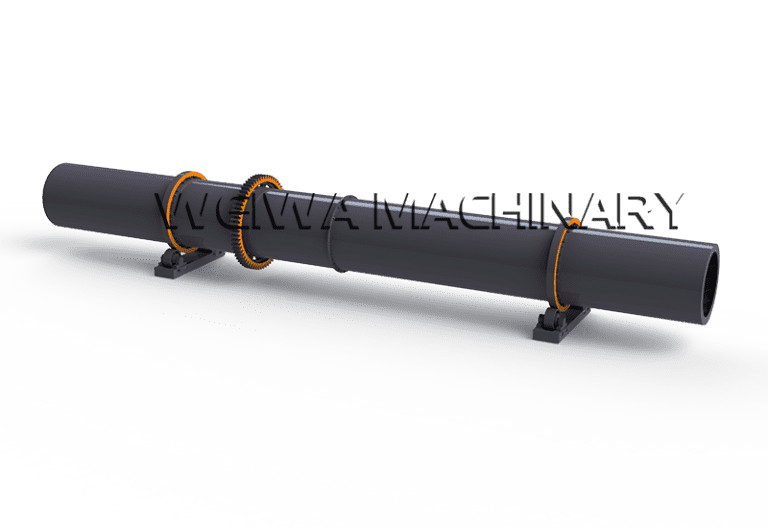
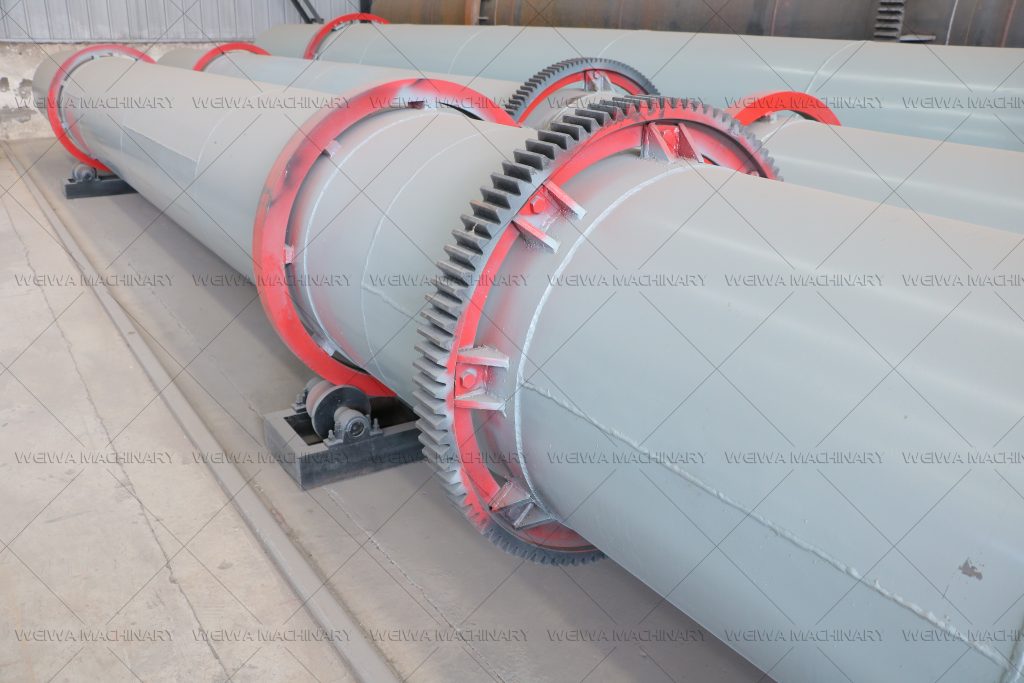
A rotary dryer or tumble dryer is an industrial drying machine consisting of a slightly inclined rotating cylindrical drum through which wet bulk material passes while being exposed to a heated gas stream. In European industrial terminology both “rotary dryer” and “tumble dryer” are used to describe the same category of rotating drum drying equipment—there is no technical distinction in this context and both refer to the rotary drum dryer. The drum is normally fabricated from high-strength steel plate, often fitted with a refractory or wear-resistant liner for abrasive materials, and internally equipped with lifting flights (also called lifters or baffles) that repeatedly pick up the material and shower it through the hot air stream. This cascading action maximizes the contact surface area between the material and the drying medium, which is the fundamental reason rotary dryers achieve such uniform and efficient moisture removal.
The inclined angle—usually between three and six degrees—allows gravity combined with the rotational motion to convey the material from the feed end to the discharge end. Hot air or combustion gases, generated by a furnace or burner system, may enter the drum in co-current (parallel) or counter-current flow relative to the material direction, depending on the thermal sensitivity of the product being dried. Evaporation occurs primarily by convection heat transfer, and the moist air is drawn out of the system by an induced draft fan, typically passing through a cyclone separator and/or baghouse dust collector before being released to the atmosphere in compliance with EU environmental standards.
Why Rotary Dryers Are Widely Adopted in Italy’s Industrial Sectors?
Italy has a diversified base of industries that require reliable bulk material drying: construction aggregates and silica sand in the north, ceramics and tile production in the Emilia-Romagna and Tuscany regions, biomass and wood-based biofuel production across Lombardy and Piedmont, and fertilizer or organic waste processing in the agricultural south. Each of these sectors benefits from the core strengths of a rotary drum dryer:
Sand and Aggregate Drying for Italian Construction and Foundry Plants
In Italy’s sand washing and classification plants, natural or manufactured sand often retains 8% to 18% surface moisture after dewatering screens or hydrocyclones. This moisture level is too high for dry mortar production, foundry sand preparation, or asphalt mixing. A rotary dryer for sand drying reduces moisture content uniformly to below 0.5%–1.0% in a single pass. Italian sand producers particularly value the rotary dryer’s ability to handle variable feed moisture and particle size distribution without clogging or excessive product degradation. Our supplied rotary dryers to Italian clients use specially angled lifting flights designed to prevent over-throw of fine sand while ensuring complete curtain formation, which translates into lower specific fuel consumption per ton of dried sand.
Mineral and Limestone Drying in Italian Quarrying Operations
Limestone, dolomite, kaolin and other industrial minerals quarried in Italy frequently require pre-drying before grinding or calcination. A rotary tumble dryer accepts these materials even when they contain up to 10%–15% initial moisture and discharges them at a controlled final moisture specification. The robust design of the rotary drum—supported by two riding rings and driven through a girth gear and pinion—ensures long-term reliability under the heavy loads typical of mineral processing lines. Weiwa rotary dryers destined for Italian mineral plants are supplied with temperature monitoring at both inlet and outlet, enabling operators to adjust burner output in real time to accommodate fluctuations in feed rate or moisture.
Biomass and Wood Residue Drying for Italian Bioenergy Producers
Biomass pellet plants in Italy process sawdust, wood chips, olive pomace, rice hulls and straw—all of which must be dried to a narrow moisture window (typically 10%–14%) prior to pelletizing. A rotary dryer configured for biomass applications handles these fibrous, sometimes sticky materials with minimal plugging. Italian bioenergy clients working with Weiwa Machinery often opt for a biomass-fired hot air furnace that burns residual wood waste or olive pruning residues, creating a circular economy model similar to those seen in farm-based drying projects across Southern Europe. During our trial run at a Northern Italy biomass facility, the rotary drum dryer reduced sawdust moisture from an average of 42% down to 11% consistently at a throughput of 3.5 tonnes per hour, with the outlet temperature automatically regulated to avoid scorching the lignocellulosic fibers.
Fertilizer and Organic Waste Dehydration for Italian Agribusiness
Italian livestock farms and organic fertilizer producers dry animal manure, digestate solids, and composted organic matter to stabilize the product for bagging or land application. The rotary dryer’s tolerance for variable feed consistency—including occasional clumps or higher moisture spikes—makes it preferable to belt or tray dryers in this context. Our Italy-project tumble dryers for organic fertilizer are equipped with a steam-prevention exhaust hood and high-efficiency bag filter to capture fine particulate, meeting Italian environmental emission requirements for agro-industrial plants.
Weiwa Machinery Rotary Dryer Trial and Commissioning Experience in Italy
One of the most instructive aspects of serving the Italian market is the emphasis clients place on pre-delivery verification and on-site trial performance. Weiwa Machinery approaches every Italy order with a structured three-phase validation process: factory acceptance test (FAT) in China, sea freight with protected anti-corrosion coating, and on-site commissioning with trial runs using the customer’s actual raw material.
For a recent project with an Italian aggregate producer in the province of Vicenza, the client provided a sample of washed river sand with 12%–15% initial moisture and requested a guaranteed final moisture below 0.8% at 20 tonnes per hour. Prior to shipment, we conducted a FAT on a similar-spec rotary dryer using locally sourced sand in our Zhengzhou testing bay, confirming the flight design and burner modulation curve. Upon arrival in Italy, our engineers supervised the installation and performed a cold-run check of all rotating parts, then initiated a hot trial. The rotary drum dryer reached stable operating temperature within 25 minutes. Over a continuous four-hour trial, the discharge moisture averaged 0.52% with a thermal efficiency of approximately 68% when fired with natural gas—well within the client’s acceptance criteria. The Italian technical team noted the even temperature distribution along the drum length and the minimal carry-over of fine sand into the primary cyclone, which they attributed to the optimized lifter geometry we had specified for fine-material drying.
In a separate engagement with a biomass cooperative in the Po Valley region, the trial focused on drying a blend of poplar wood chips and sawdust. The material exhibited variable moisture (28%–48%) due to seasonal storage conditions. Our rotary tumble dryer was equipped with a variable frequency drive on the main drum motor, allowing the residence time to be extended from 12 to 22 minutes simply by reducing the rotation speed. During the trial, the operator adjusted the drum RPM and burner setpoint twice to accommodate a sudden jump in feed moisture, and the system maintained discharge moisture between 10% and 12% throughout an eight-hour production shift. This flexibility—mechanical simplicity combined with adjustable process parameters—is precisely why rotary dryers remain the first-choice continuous drying system for Italian industrial users dealing with heterogeneous bulk feeds.
Key Design and Configuration Options for Rotary Dryers Supplied to Italy
While the basic principle of the rotary drum dryer is universal, Weiwa Machinery customizes each unit according to the material characteristics, local fuel availability, space constraints, and applicable Italian or EU regulations. The following design elements are most frequently discussed during project engineering with our Italy-based customers:
Drum Dimension and Residence Time Calculation
The diameter and length of the rotating drum determine the available heat transfer surface and the nominal residence time. For high-tonnage sand drying in Italy we typically supply drums ranging from Ø1.5m×12m up to Ø2.8m×24m, with length-to-diameter ratios between 4:1 and 8:1. The residence time is calculated based on the required evaporation load, specific heat of vaporization, and the allowable temperature rise of the material. Our engineering team prepares a mass and energy balance sheet for every quotation so that Italian clients can verify the thermal sizing before placing an order.
Flight (Lifter) Pattern Optimization
Internal flights are not generic—they are designed according to material density, particle size, stickiness, and the target fill percentage of the drum (usually 10%–15% for free-flowing sand, lower for cohesive materials). For Italian biomass applications we use a combination of spoon-type and ladder-type flights to prevent mat formation on the drum wall, whereas for silica sand we employ forward-angled rectangular flights that create a thin, uniform curtain. Incorrect flight design is a common cause of poor drying uniformity and high fuel consumption in retrofitted dryers; Weiwa addresses this at the design stage rather than leaving it to chance.
Heat Source Compatibility – Gas, Coal, Biomass or Waste Heat
Italy’s industrial zones have varying access to natural gas, solid fuel, or waste-heat recovery from adjacent processes. Our rotary dryer systems can be matched with a direct-fired hot air furnace burning natural gas (common in Northern Italy), a coal-fired furnace with secondary dust removal (still permitted in certain non-urban locations with appropriate filtration), or a biomass furnace using wood chips or olive stones (popular in agricultural cooperatives). Where available, we also engineer the inlet ducting to accept pre-heated air from kiln or boiler exhaust, recovering waste heat and reducing net fuel cost—a feature highly appreciated by cost-conscious Italian plant managers.
Dust Collection and Environmental Compliance
Italian environmental law requires particulate emissions from industrial dryers to be well-controlled. Weiwa rotary dryer packages for the Italy market routinely include a primary cyclone followed by a pulse-jet baghouse dust collector with PTFE-coated filter bags, achieving stack emissions below 30 mg/Nm³. The negative-pressure design of the entire air circuit prevents fugitive dust escape from the drum or transfer points. We also offer optional scrubbers for applications involving volatile or odorous off-gases, such as sludge or organic waste drying.
Automation and Safety Instrumentation
The control cabinet supplied with our rotary dryers features a PLC with HMI touchscreen, allowing operators to set target outlet temperature, monitor drum RPM, burner status, induced-draft fan amperage, and inlet/outlet thermocouple readings. Over-temperature protection, emergency stop, and interlock sequences between the induced draft fan and the burner comply with CE safety standards, which is mandatory for machinery imported into Italy and the wider European Economic Area.
Comparing Rotary Dryer Suitability for Common Italian Industrial Materials
It is worth noting that the rotary dryer—also called tumble dryer in some English-language procurement documents—is not a one-size-fits-all black box; rather, its flexibility is derived from configurable parameters. Italian clients evaluating drying equipment often ask whether a rotary drum dryer is appropriate for their specific raw material. Below we summarize the typical applicability based on our Italy-market experience.
For silica sand and construction sand, the rotary dryer is the industry standard across Europe and Italy alike, offering continuous high-capacity drying with tight moisture control. For limestone, gypsum and kaolin the rotary dryer handles the abrasive nature of these minerals well, provided the drum shell thickness and liner material are correctly specified. For wood chips, sawdust and other biomass, the rotary dryer’s ability to process coarse and fine fractions simultaneously—without the bridging problems common in static bed dryers—makes it the preferred option for pellet plant pre-drying. For organic fertilizers and manure-based substrates, the rotary dryer accommodates the variable moisture and occasional fibrous clumps characteristic of agricultural waste streams. Even for certain food-grade by-products such as spent grain or fruit pomace, a sanitary-design rotary dryer with polished internal surfaces and stainless-steel contact parts can be supplied, although food applications require additional hygienic certification.
Materials that are extremely heat-sensitive with low degradation temperatures (below 60°C) or those that must retain crystal water may not be suitable for a direct-fired rotary dryer; in such cases an indirect-heated rotary calciner or a low-temperature belt dryer would be recommended. Part of Weiwa Machinery’s consultative sales process for Italian inquiries includes a frank discussion of material thermal properties so that the proposed dryer type—rotary drum dryer versus alternative—matches the actual process requirement.
How to Select the Right Rotary Dryer Model for Your Italian Plant?
When Italian engineers or purchasing managers approach Weiwa Machinery for a rotary dryer quotation, we request the following baseline data so that our thermal calculation is accurate: the name and description of the material to be dried, the feed moisture percentage (typical range and peak), the target final moisture percentage, the desired hourly throughput in tonnes per hour (wet basis or dry basis, clarified upfront), the available or preferred heat source (natural gas, diesel, coal, biomass, waste heat), the ambient temperature range at the plant site, any space or height restrictions in the equipment layout, and the local emission limit for particulate matter if known. With this information we return a proposal that specifies drum dimensions, installed power, recommended burner capacity in kcal/h or kW, estimated fuel consumption per tonne of evaporated water, foundation load diagram, and a preliminary general arrangement drawing.
Selecting the correct model is not simply a matter of matching a catalogue capacity label. A rotary dryer rated “20 t/h” for sand with 10% moisture to 0.5% will not necessarily achieve 20 t/h on a material with 25% initial moisture or a different specific heat characteristic. Our Italy-market proposals therefore always state the assumed material properties and invite the client to confirm or adjust them. This transparency has been a key factor in the successful commissioning of multiple Weiwa rotary drying lines across Italian aggregate, biomass and mineral plants.
Why Italian Clients Partner with Weiwa Machinery for Rotary Drying Systems?
Weiwa Machinery is not merely an equipment vendor; we position ourselves as a drying process partner. With over three decades in the design, fabrication and export of industrial rotary dryers worldwide—and a growing footprint of installations in Europe including Italy—we bring to the table proven mechanical design, thorough thermal engineering, and responsive after-sales support. All our rotary dryers destined for the Italian market are built under ISO-quality controlled procedures, undergo running-in tests before leaving the factory, and are accompanied by full documentation including CE declaration of conformity, general arrangement drawings, foundation plans, electrical schematic diagrams, spare parts lists and an operation & maintenance manual in English (with Italian translation available on request).
Spare parts such as riding rings, thrust rollers, girth gears, pinions, and standard seal assemblies are stocked for fast dispatch. For Italian customers requiring on-site service, we arrange technical visits or provide remote guidance via video call for commissioning, troubleshooting and operator training. Many of our Italy clients have reported that the combination of competitive pricing compared to Western-European OEMs, coupled with customization depth and reliable delivery schedules, makes Weiwa Machinery a pragmatic and trustworthy choice for rotary drum dryer procurement.
Contact Weiwa Machinery for Rotary Dryer & Tumble Dryer Inquiry
If your Italian plant requires a new rotary dryer, a replacement drum, or an upgrade to an existing tumble dryer drying line—for sand, aggregate, minerals, biomass or organic waste—our engineering team is ready to discuss your project and provide a tailored solution.
Weiwa Machinery
Dahuangye Industrial Zone, Gongyi City, Henan Province, China
Email: [email protected]
WhatsApp / Tel: +86 18439853888
Website: https://crushmixplant.com
We have been at the forefront of industrial drying technology for over 30 years and have supplied rotary drying systems to more than 120 countries. Let Weiwa Machinery help you achieve stable moisture control, energy-efficient operation and reliable throughput in your Italian drying application.