Vietnam’s Infrastructure Growth Creates Unprecedented Demand for Quality Aggregate
Vietnam stands at the center of Southeast Asia’s most dynamic construction boom. The country’s building construction market is projected to grow at a compound annual growth rate exceeding seven percent through 2032, driven by public infrastructure investment, rapid urbanization, and an expanding industrial base. In 2024 alone, Vietnam launched thirteen major transport infrastructure projects with a combined value exceeding one billion US dollars, and the construction industry is expected to expand by six percent in real terms during 2025. Behind every kilometer of highway, every high-rise foundation, and every new industrial park lies a fundamental requirement that shapes the quality and cost of every project: consistently high-quality aggregate.
For Vietnamese quarry operators, concrete batching plant managers, and construction material suppliers, the crushing equipment they choose directly determines their competitiveness in this fast-moving market. A comprehensive crusher offers a particularly compelling solution — combining high reduction ratios, fine output control, and lower operating costs in a single machine. At Weiwa Machinery, we have spent over thirty years engineering crushing solutions that meet the specific demands of emerging markets, and our experience with comprehensive crusher in Vietnam deployments has produced measurable results that Vietnamese operators can trust.
The relationship between infrastructure investment and aggregate demand in Vietnam is straightforward. Every million dollars spent on concrete-intensive construction consumes roughly eight to ten thousand tons of crushed stone. With Vietnam’s construction spending accelerating — buoyed by foreign direct investment in manufacturing, urbanization pushing housing demand, and government-led transport corridors connecting economic zones — the daily throughput requirements at Vietnamese quarries have risen sharply. Equipment that cannot maintain consistent output under these conditions becomes a liability. A well-designed comprehensive crusher for Vietnam operations addresses this challenge by delivering stable throughput across shifts, handling the medium-hard limestone and dolomite common to Vietnamese geology, and producing the fine fractions that modern concrete mix designs demand.
Understanding the Comprehensive Crusher and Why It Suits Vietnamese Material Conditions
A comprehensive crusher — also known in the industry as a compound crusher or vertical shaft compound crusher — is a fine crushing machine that combines impact and compression principles in a single vertical chamber. Unlike a conventional jaw crusher that performs only primary reduction or a cone crusher that specializes in secondary crushing, a comprehensive crusher achieves high reduction ratios in one pass. Raw material enters from the top feed hopper, encounters a high-speed rotor equipped with wear-resistant hammers, and undergoes repeated impact against both the rotor elements and the fixed liner plates lining the chamber walls. The material cascades downward through successive impact zones, with particle size reducing at each stage, until it discharges through the bottom grate at the target gradation.
This multi-stage internal mechanism explains why the comprehensive crusher has gained traction among Vietnamese quarry operators. Vietnamese limestone — the predominant raw material for construction aggregate across the country — typically falls in the medium-hardness range with compressive strengths between eighty and one hundred forty megapascals. It is abrasive enough to wear down poorly designed equipment but not so hard that it demands the extreme compressive forces of a heavy-duty cone crusher. The impact-dominant crushing action of a comprehensive crusher matches this material profile efficiently: the rotor hammers shatter the limestone along its natural cleavage planes, producing cubical particles with fewer elongated or flaky grains than compression-only crushers typically yield. For concrete production, this particle shape advantage translates directly into better workability and lower cement demand in the mix.
Another factor that makes the comprehensive crusher in Vietnam particularly relevant is the moisture sensitivity of local raw material. During Vietnam’s monsoon season, quarried limestone often carries elevated surface moisture that can blind screens and clog conventional fine crushers. The vertical flow path and high rotor speed inside a comprehensive crusher generate sufficient internal airflow and particle collision energy to process moderately moist feed without the bridging and blockage problems that plague horizontal impactors under similar conditions. Vietnamese operators who have switched from traditional hammer crushers to Weiwa’s comprehensive crusher models consistently report fewer stoppages for cleaning during the wet months, which translates into more productive operating hours over the full calendar year.
Technical Architecture of the Weiwa Comprehensive Crusher
Weiwa Machinery engineers each comprehensive crusher with a focus on three operational priorities that matter most to Vietnamese quarry owners: throughput reliability, wear-part longevity, and output gradation control. Understanding how these priorities are built into the machine helps buyers evaluate equipment beyond surface-level specifications.
Rotor and Hammer Assembly Design
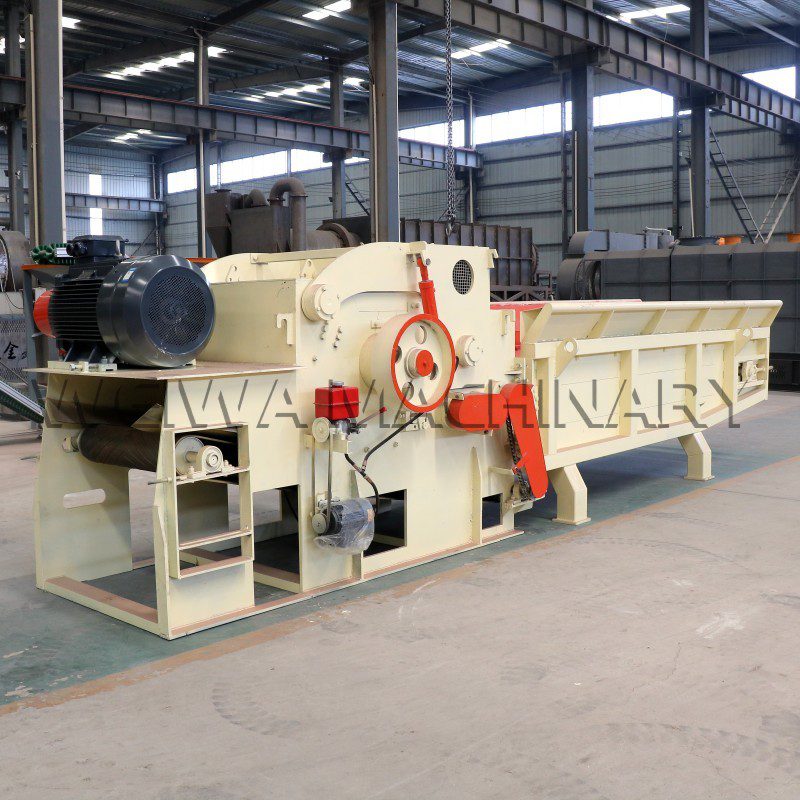
The rotor forms the energetic core of the comprehensive crusher. Weiwa uses a dynamically balanced forged steel rotor body with precision-machined hammer mounting slots. Each hammer is cast from high-chromium alloy steel — a material selection that extends service life significantly when crushing Vietnamese limestone compared to standard manganese steel hammers. The hammers are arranged in a staggered multi-row configuration around the rotor circumference, which distributes impact forces evenly and prevents the kind of concentrated wear that creates imbalance and vibration over time. For Vietnamese operations running single-shift production of eight to ten hours daily, a single set of Weiwa hammers typically delivers between four hundred and six hundred operating hours before rotation or replacement becomes necessary — roughly double the interval that operators using lower-grade hammer materials report.
Crushing Chamber and Liner Configuration
The internal chamber of the comprehensive crusher is lined with replaceable wear plates positioned at calculated angles to maximize both particle fracturing and material flow. The upper zone of the chamber features impact liners with a stepped profile that catches material flung outward by the rotor and redirects it back into the hammer path for secondary collision. The middle and lower zones transition to a more vertical liner geometry that guides material steadily toward the discharge grate. All liner plates are secured with accessible bolt connections, meaning Vietnamese maintenance crews can replace worn sections during scheduled downtime without specialized tools or extended production interruptions.
Adjustable Discharge Control
One of the most practical features of the Weiwa comprehensive crusher for Vietnamese aggregate producers is the adjustable discharge grate. By swapping grate bars with different gap widths — or adjusting the clearance between the rotor hammer tips and the grate surface — operators can shift the output particle size distribution to match different product specifications. A typical Vietnamese quarry producing both concrete aggregate and road base material can run the same machine with different grate configurations rather than investing in separate fine crushers for each product. The adjustment procedure is mechanical and straightforward, requiring no electronic calibration or specialized technician support.
Drive System and Power Efficiency
Weiwa matches each comprehensive crusher model to a direct-drive electric motor sized for the intended throughput. The absence of belt drives eliminates slippage losses and reduces the number of routine maintenance points. For Vietnamese sites where power supply stability varies — a genuine concern in rural quarry locations — the direct-drive configuration also simplifies the integration of backup generator power. Rated motor power across the Weiwa comprehensive crusher range spans from thirty to two hundred fifty kilowatts, with corresponding throughput capacities from approximately five tons per hour for the smallest model up to two hundred tons per hour for the largest configuration. A mid-range model processing Vietnamese limestone at around fifty to eighty tons per hour typically consumes electricity at a rate that makes the per-ton crushing cost competitive with any fine crushing technology available in the market.
Trial Run Results: Comprehensive Crusher Performance in Vietnam Field Conditions
The most convincing evidence for any crushing equipment comes not from specification sheets but from actual operating data collected at customer sites. Weiwa Machinery has conducted structured trial runs of its comprehensive crusher models at multiple Vietnamese quarry locations, with measurements taken under normal production conditions to assess throughput, power consumption, output quality, and wear rates.
Test Site Profile
One representative trial was conducted at a limestone quarry in northern Vietnam, approximately ninety kilometers from Hanoi. The quarry produces aggregate for a nearby concrete batching plant and for independent construction material traders serving local infrastructure projects. The raw material is a medium-gray crystalline limestone with an average compressive strength of one hundred ten megapascals, quarried by drilling and blasting and fed to the primary jaw crusher for initial reduction to approximately one hundred millimeters before entering the comprehensive crusher as secondary and tertiary feed.
Before installing the Weiwa comprehensive crusher, this quarry used a combination of a secondary impact crusher and a tertiary vertical shaft impactor to produce fine aggregate. The operator reported that the two-machine setup consumed excessive floor space, required two separate power connections, and doubled the number of wear-part inventory items needed on site. Consolidating secondary and tertiary crushing into a single comprehensive crusher was the primary motivation for the trial.
Throughput and Consistency Measurements
Over a continuous five-day production run — totaling approximately forty-eight operating hours — the Weiwa PFL-1250 comprehensive crusher maintained an average throughput of sixty-two tons per hour when processing limestone feed with a top size of eighty millimeters. Hourly output varied by less than eight percent across the measurement period, with the lowest hour at fifty-seven tons and the highest at sixty-six tons. This consistency reflects the stable rotor speed and predictable material flow characteristics of the vertical chamber design. For the quarry owner, stable throughput means reliable delivery commitments to the concrete plant, which in turn means fewer penalties for late or short shipments.
Final product sizing was measured by sieve analysis at the discharge point, with sampling conducted every two hours. The target specification called for a product with at least eighty-five percent passing five millimeters and a maximum particle size of ten millimeters. Across all samples, the comprehensive crusher consistently met this target, with an average of eighty-nine percent passing five millimeters and no sample exceeding the ten-millimeter upper limit. The uniformity of output — measured as the coefficient of variation across samples — was better than that produced by the previous two-machine setup, which the quarry’s quality control technician attributed to the single-pass nature of the comprehensive crusher process versus the two-stage variability inherent in running separate secondary and tertiary machines with independent wear states.
Power Consumption Analysis
A dedicated power meter recorded electrical consumption at the comprehensive crusher motor input throughout the trial. Average power draw was ninety-four kilowatts while crushing at the sixty-two-ton-per-hour throughput, yielding a specific energy consumption of approximately one point five kilowatt-hours per ton of product. This figure compared favorably to the combined consumption of the previous secondary impact crusher and tertiary vertical shaft impactor, which together drew roughly two point one kilowatt-hours per ton for the same output specification. Over a year of typical production — assuming two thousand operating hours — this efficiency difference alone saves the quarry approximately seventy-two thousand kilowatt-hours, which at Vietnamese industrial electricity rates represents a meaningful reduction in operating cost.
Wear Part Observation
At the conclusion of the five-day trial, the hammer set and liner plates were inspected and measured for wear. Hammer tip wear averaged two point three millimeters across the set, with maximum wear on any single hammer not exceeding three point one millimeters. Liner plate thickness reduction was negligible — under one millimeter across all plates — which is consistent with the expectation that liners in a comprehensive crusher processing medium-hard limestone will outlast multiple hammer sets before requiring replacement. Based on these measured wear rates, the quarry’s maintenance planner estimated a hammer rotation interval of approximately five hundred hours and a full hammer replacement interval exceeding one thousand hours under their operating conditions. Liner plate life was projected at over four thousand hours.
Customer Operational Feedback
Beyond the quantitative measurements, the quarry’s production manager provided qualitative feedback that Weiwa considers equally valuable. He noted that the comprehensive crusher occupied roughly sixty percent of the floor space previously required by the two-machine setup, freeing room for an additional stockpile area. The single-point feeding arrangement simplified the upstream conveyor layout, eliminating a diverter chute that had been a recurring source of blockages during wet weather. Noise levels at the operator station, measured informally with a handheld meter, were lower than the previous setup — a benefit the production manager attributed to the enclosed vertical chamber design versus the more open rotor configuration of a horizontal impactor. Dust emissions also appeared subjectively reduced, though formal dust monitoring was not part of the trial scope.
Comparing Comprehensive Crusher Performance with Alternative Fine Crushing Technologies
Vietnamese buyers evaluating comprehensive crusher options inevitably compare them against cone crushers, vertical shaft impactors, and hammer crushers — all of which compete for the same fine crushing applications in quarry and construction material production. Each technology has strengths, and the right choice depends on the specific material, throughput requirement, and product specification. Understanding how a comprehensive crusher stacks up helps buyers make an informed decision.
A standard cone crusher excels at producing consistent cubical aggregate from hard and abrasive rock, and its crushing mechanism — compression between a rotating mantle and a stationary concave — generates relatively low wear rates on very hard stone. However, cone crushers require a larger footprint, a taller feed height that often demands additional conveyor lift, and a more complex lubrication and hydraulic system that adds maintenance complexity. For Vietnamese quarries processing medium-hard limestone at throughputs under one hundred fifty tons per hour, a comprehensive crusher typically offers a lower capital cost, simpler installation, and adequate wear-part life at a lower overall cost per ton.
A vertical shaft impactor, or VSI, produces excellent particle shape and is widely used for manufactured sand production. Its rock-on-rock crushing action is ideal for shaping aggregate and producing fine fractions for concrete sand. The trade-off is that a VSI typically achieves lower reduction ratios than a comprehensive crusher, meaning it often requires a secondary crusher upstream to reduce feed to a manageable top size. This two-stage requirement adds capital cost and complexity. In applications where the feed has already been reduced by a primary jaw crusher and the target is fine aggregate in the zero-to-five-millimeter range, a comprehensive crusher can often replace both the secondary cone or impact crusher and the tertiary VSI in a single machine.
A horizontal hammer crusher shares the impact crushing principle with the comprehensive crusher but differs in chamber geometry and material flow. Hammer crushers with bottom grates can produce fine output similar to a comprehensive crusher, but their horizontal rotor orientation means that material passes through the crushing zone only once before gravity carries it to the grate. In a vertical comprehensive crusher, material can undergo multiple impact events as it cascades downward, which tends to produce more uniform particle size reduction and better control over the top size of the product. Hammer crushers also tend to be more sensitive to moisture in the feed because the horizontal grate can blind more easily when wet fines accumulate. Vietnamese operators who have used both types report fewer wet-weather issues with vertical comprehensive crusher configurations.
Maintenance Practices That Extend Comprehensive Crusher Service Life in Vietnam
The operating environment in Vietnamese quarries — characterized by high ambient temperatures, seasonal humidity, and variable dust conditions — places specific demands on equipment maintenance. A comprehensive crusher that receives consistent preventive care will deliver reliable production for years, while one that is run-to-failure will accumulate avoidable downtime and repair costs. Weiwa Machinery provides detailed maintenance schedules with every machine, and the following practices reflect what our most successful Vietnamese customers have adopted.
Rotor balance is the single most important factor for comprehensive crusher longevity. When hammers wear unevenly — which happens naturally if feed distribution across the rotor width is not uniform — the resulting imbalance creates vibration that accelerates bearing wear and can eventually cause shaft or housing damage. Vietnamese operators should check hammer wear patterns weekly, measuring tip-to-rotor-center distance on every hammer and rotating or replacing hammers in sets rather than individually to maintain balance. A simple jig or template that allows quick go/no-go wear measurement makes this check fast enough to perform during a brief production pause.
Bearing temperature monitoring provides early warning of lubrication problems or impending bearing failure. Weiwa comprehensive crusher models are equipped with bearing housing temperature sensor ports. Connecting a basic thermocouple and display — or integrating the signal into the plant’s control system — gives operators real-time visibility into bearing condition. A gradual temperature rise over several days usually indicates lubricant degradation or contamination, while a sudden spike suggests an acute problem that demands immediate shutdown and inspection. Vietnamese quarries that have adopted bearing temperature monitoring report catching bearing issues before they escalate into catastrophic failures that would have cost days of lost production.
Liner and grate inspection intervals should be tied to production hours rather than calendar dates, since wear accumulates with throughput, not with time. A quarry running a comprehensive crusher for ten hours daily, five days per week, accumulates approximately two thousand six hundred hours annually. At this utilization rate, a monthly liner inspection — approximately every two hundred twenty operating hours — provides adequate frequency to catch developing wear before it exposes the crusher shell to direct material impact. Grate bars, which experience more direct abrasion from discharging material, benefit from inspection every one hundred operating hours.
Spare parts inventory discipline distinguishes professional Vietnamese quarry operations from reactive ones. Weiwa recommends that every comprehensive crusher owner maintain at minimum one complete set of hammers, a set of grate bars, and a bearing kit on site at all times. The carrying cost of this inventory is trivial compared to the cost of lost production while waiting for parts to ship from the manufacturer. For Vietnamese customers, Weiwa maintains expedited shipping arrangements that can deliver parts within five to seven business days, but even this lead time represents fifty to seventy lost operating hours for a single-shift quarry — more than enough to justify the modest cost of keeping critical spares in the on-site storeroom.
How Chinese Manufacturing Quality Standards Support Comprehensive Crusher Reliability
The reputation of Chinese-manufactured crushing equipment has evolved substantially over the past two decades, and Weiwa Machinery has been part of that evolution. Today’s comprehensive crusher from a certified Chinese manufacturer reflects quality management practices that meet international standards. Weiwa Machinery holds ISO 9001 certification for quality management systems, CE marking for European market compliance, and GOST certification for Russian and CIS market access. These certifications are not merely wall decorations — each requires annual surveillance audits that verify manufacturing process control, material traceability, and dimensional inspection protocols are being followed consistently.
For the Vietnamese buyer evaluating a comprehensive crusher, these certifications provide an objective benchmark for comparing suppliers. A manufacturer that invests in maintaining ISO 9001 certification has documented quality procedures for incoming material inspection, in-process dimensional verification, welding procedure qualification, rotor balancing, and final assembly testing. Before any Weiwa comprehensive crusher leaves the factory, the rotor assembly undergoes dynamic balancing to a grade that ensures smooth operation at rated speed, and the complete machine is run under no-load conditions to verify bearing temperatures, vibration levels, and noise within specification. These pre-shipment checks catch assembly issues that would otherwise surface during customer commissioning and cause delay.
The foundry and fabrication capabilities behind a comprehensive crusher also matter for Vietnamese buyers who plan to operate the equipment for ten years or more. High-chromium hammer castings require precise control of alloy composition and heat treatment to achieve the hardness and toughness combination that delivers long service life. Shell fabrication demands proper weld procedures and post-weld stress relief to prevent cracking under cyclic loading. Weiwa manufactures its critical wear components and structural fabrications in-house rather than outsourcing to uncontrolled third-party workshops, which gives us direct quality oversight of the entire manufacturing chain from raw material to finished comprehensive crusher.
The Vietnamese Buyer’s Guide to Selecting the Right Comprehensive Crusher Model
Choosing the correct comprehensive crusher model for a specific Vietnamese application requires matching machine specifications to the production context. Throughput capacity is the most obvious selection factor, but it should not be the only one. Feed material characteristics, desired product specification, available installation space, and electrical supply constraints all influence which model will perform optimally.
Feed size is the starting point for model selection. A comprehensive crusher is designed to accept material below a specified maximum feed size, and consistently exceeding this limit accelerates hammer and liner wear while reducing throughput. Vietnamese quarries that feed the comprehensive crusher from a primary jaw crusher set to approximately eighty to one hundred millimeters closed-side setting typically achieve the best balance of throughput and wear-part life. Quarries attempting to feed larger material — for example, skipping the primary crushing stage and feeding blast-run rock directly — will experience sharply higher operating costs and should reconsider their process flow rather than selecting a larger comprehensive crusher model.
Throughput requirement determines the model size. Weiwa offers comprehensive crusher configurations spanning from approximately five tons per hour to two hundred tons per hour when processing medium-hard limestone. A quarry supplying a single concrete batching plant operating at sixty cubic meters per hour of concrete output needs roughly forty to fifty tons per hour of fine aggregate, which a mid-range Weiwa comprehensive crusher handles comfortably. Quarries serving multiple concrete plants or producing aggregate for both concrete and asphalt applications may need a larger model or multiple machines. Weiwa’s application engineers work with Vietnamese customers to size equipment based on both current demand and a realistic projection of growth over the next three to five years, avoiding the common mistake of buying a machine that is too small on day one and too large after factoring in realistic utilization rates.
Electrical infrastructure at the quarry site may constrain model selection in rural Vietnamese locations where utility supply capacity is limited. A larger comprehensive crusher requires a proportionally larger motor and higher starting current, which may necessitate a transformer upgrade or a soft-starter installation. Weiwa provides detailed electrical load data for every model so that Vietnamese buyers can verify compatibility with their site infrastructure before purchase. In cases where utility power is unreliable, the direct-drive motor configuration of the comprehensive crusher simplifies generator sizing because there is no additional starting load from belt-driven components.
Space constraints influence the choice between a standalone comprehensive crusher and integrated alternatives. The vertical configuration of the machine means it occupies a relatively small footprint for its capacity — typically less than half the floor area required by a horizontal impactor of equivalent throughput. For Vietnamese quarries located in narrow valley sites or operating within existing building envelopes, this compact layout can be the deciding factor. The top-feed, bottom-discharge flow path also simplifies conveyor routing, since feed enters from above and product exits directly below, allowing a straight-line material flow without the sideways discharge that horizontal-shaft machines require.
Comprehensive Crusher Driving Vietnam’s Infrastructure Development
The connection between a comprehensive crusher operating in a Vietnamese quarry and the infrastructure projects it supports is direct and measurable. Vietnam’s national highway expansion program, which aims to complete over two thousand kilometers of expressway by 2030, consumes enormous quantities of crushed aggregate for road base, sub-base, and asphalt concrete. A single kilometer of four-lane expressway requires approximately thirty thousand tons of aggregate across all layers. At a typical quarry production rate of sixty tons per hour from a single comprehensive crusher, supplying the aggregate for one kilometer of expressway represents roughly five hundred operating hours of fine crushing — about two and a half months of single-shift production.
Urban construction in Hanoi, Ho Chi Minh City, and Vietnam’s growing secondary cities generates equally significant aggregate demand. High-rise residential and commercial buildings use crushed stone both as concrete aggregate and as fill material. The trend toward higher-strength concrete mixes in Vietnamese construction — driven by seismic design requirements and the push for taller buildings — increases the proportion of fine aggregate in the mix design and raises the quality standard for particle shape and gradation consistency. A comprehensive crusher producing cubical fine aggregate with tight gradation control directly supports this trend, helping concrete producers achieve specified strength targets with lower cement content than would be required with poorly shaped or inconsistently graded aggregate.
Beyond construction aggregate, Vietnamese industrial mineral processing also benefits from comprehensive crusher technology. Cement plants, of which Vietnam has over eighty with a combined capacity exceeding one hundred million tons annually, use fine crushers to prepare raw meal from limestone and clay before grinding. The ability of a comprehensive crusher to reduce limestone from approximately eighty millimeters to below five millimeters in a single pass makes it an attractive option for cement raw material preparation, particularly for smaller and medium-scale plants where the investment in a large ball mill pre-grinding circuit is difficult to justify. Vietnam’s cement industry, which is among the world’s largest exporters, depends on cost-efficient raw material processing to maintain competitiveness, and crushing equipment choice has a direct impact on per-ton production cost.
Why Vietnamese Buyers Choose Weiwa Machinery for Comprehensive Crusher Supply?
A purchasing decision for a comprehensive crusher in Vietnam involves more than comparing price lists and specification sheets. The Vietnamese market has access to equipment from Chinese, Korean, European, and domestic manufacturers, and buyers weigh multiple factors — purchase price, delivery timeline, after-sales support, spare parts availability, and the supplier’s track record in the market — before committing. Weiwa Machinery has earned the trust of Vietnamese customers through consistent performance across all these dimensions.
Direct Manufacturer Pricing Without Intermediary Markup
Weiwa Machinery sells directly from our manufacturing base in Gongyi, Henan Province, to end users worldwide, including Vietnam. There is no distributor, agent, or trading company adding margin between the factory and the customer. For Vietnamese buyers, this means the factory-direct price for a comprehensive crusher reflects the actual manufacturing cost plus a reasonable margin, not a price inflated by multiple layers of intermediary markup. Direct communication with our engineering team also means that Vietnamese customers can discuss their specific application requirements with the people who design and build the equipment, rather than relaying questions through a sales representative who may lack deep technical knowledge.
Proven Delivery and Installation Support in Southeast Asia
Shipping a comprehensive crusher from China to Vietnam is logistically straightforward, with multiple options including sea freight to Hai Phong or Ho Chi Minh City ports and overland trucking through border crossings in northern Vietnam. Weiwa’s export logistics team handles documentation, customs clearance support, and transport coordination so that Vietnamese buyers receive their equipment on schedule. For installation and commissioning, Weiwa offers both remote guidance — via video call and detailed installation manuals provided in English — and on-site technician dispatch when the customer prefers hands-on support. Our technicians have commissioned comprehensive crusher installations across Southeast Asia, including multiple sites in Vietnam, and understand the practical challenges of quarry installation in the region.
Spare Parts Availability and Responsive After-Sales Service
The long-term cost of owning a comprehensive crusher depends heavily on spare parts pricing and availability. Because Weiwa manufactures wear parts in-house — including hammers, liner plates, and grate bars — we control both quality and cost, and we maintain inventory of common parts for all current comprehensive crusher models. Vietnamese customers can order replacement parts directly through our sales team via email or WhatsApp, and standard wear-part orders ship within three to five business days. For urgent requirements, we can arrange expedited air freight that delivers critical parts to major Vietnamese airports within three to four days. Weiwa also provides detailed wear-part drawings and specifications so that Vietnamese customers who have local machining capability can manufacture simple items like liner plates locally if they choose, reducing their dependence on imported parts for non-critical components.
Experience Across Vietnamese Geology and Operating Conditions
Every quarry has unique characteristics, but Vietnamese quarries share common features — medium-hard limestone, seasonal moisture, variable feed quality from different blast zones, and ambient conditions that range from dry and dusty in the dry season to wet and muddy during the monsoon. Weiwa has accumulated enough installation and service history in Vietnam to understand these patterns and to configure comprehensive crusher installations that account for them. Our application engineers can discuss feed characteristics, desired output specification, site elevation, power supply details, and production targets with a Vietnamese customer and recommend a configuration that reflects what has worked at similar sites, rather than proposing a generic solution that may need modification after installation.
About Weiwa Machinery
Weiwa Machinery is a large-scale mining equipment manufacturer and exporter headquartered in the Dahuangye Industrial Zone, Gongyi City, Henan Province, China. With over thirty years of industry experience, the company has grown into a trusted supplier of stone crushers, sand making machines, ore beneficiation equipment, powder grinding mills, briquette machines, and complete production line solutions. Our product range includes jaw crushers, hammer crushers, impact crushers, cone crushers, comprehensive crushers, two-stage crushers, ball mills, rotary dryers, vibrating screens, and supporting conveying and feeding equipment.
Every Weiwa product is manufactured under an ISO 9001 certified quality management system and holds CE and GOST certifications for international markets. We serve customers in over one hundred twenty countries and regions, with more than two million end users relying on Weiwa equipment for their production needs. Our engineering team provides customized crushing solutions tailored to specific raw material characteristics, throughput requirements, and site conditions, and our after-sales support includes installation guidance, operator training, and responsive spare parts supply.
Weiwa Machinery is committed to the principle of green and intelligent mining machinery manufacturing. We invest continuously in research and development to improve the efficiency, durability, and environmental performance of our equipment, and we maintain direct communication between our factory engineers and our customers to ensure that every machine meets the demands of real-world production environments.
Contact Weiwa Machinery
- Email: [email protected]
- Phone / WhatsApp: +86 18439853888
- Address: Dahuangye Industrial Zone, Gongyi City, Henan Province, China
- Website: https://crushmixplant.com