The Philippines is undergoing one of the most significant infrastructure transformations in its modern history. Billions of pesos are flowing into road construction, bridge rehabilitation, urban housing, and coastal development projects from Luzon to Mindanao. Behind every cubic meter of concrete and every kilometer of new highway lies a critical upstream requirement: reliable, high-output aggregate processing. It is in this environment that the comprehensive crusher has emerged as one of the most strategically valuable pieces of equipment a Philippine operator can invest in.
At Weiwa Machinery, we have spent more than three decades engineering crushing solutions for demanding markets across Asia, Africa, and Latin America. Over the past several years, the Philippines has become one of our most active markets — and for good reason. Our clients in the archipelago have found that the comprehensive crusher uniquely matches the local combination of diverse raw materials, island logistics constraints, and the pressure to maximize output per machine.
Understanding the Comprehensive Crusher and Its Core Mechanism
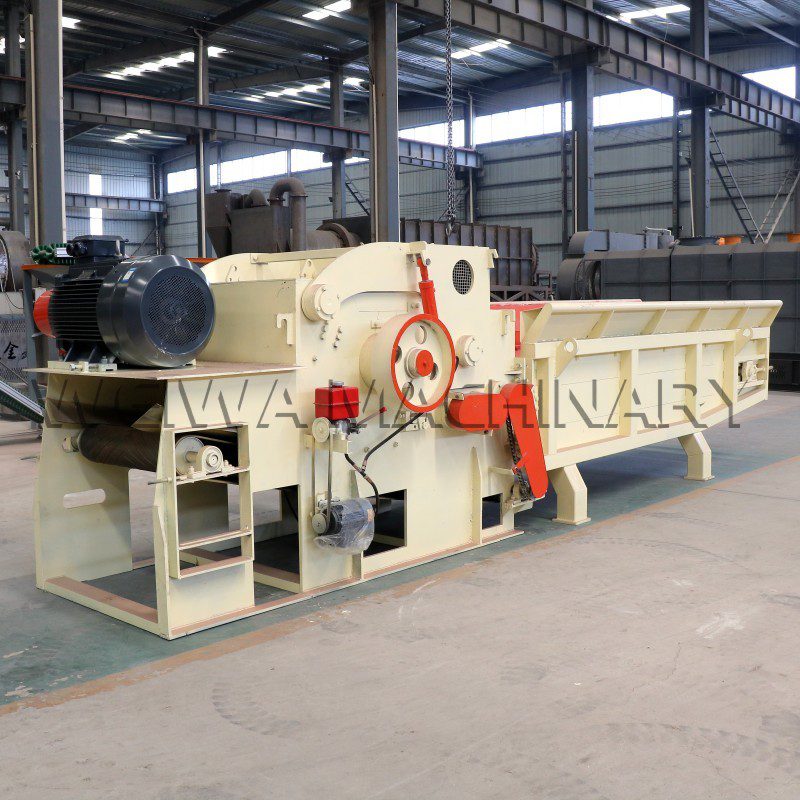
Before evaluating any machine’s performance in a specific market, it is worth understanding what that machine is actually doing inside its housing. The term “comprehensive crusher” is sometimes used loosely in the industry, which can create confusion when operators are comparing equipment. At Weiwa Machinery, we define a comprehensive crusher as a single-rotor impact-compression crusher that integrates the crushing principles of both impact force and compressive stress within one chamber, producing fine to medium aggregates in a single pass.
How Impact and Compression Work Together
In a conventional single-function crusher — whether a jaw crusher or a standard impact crusher — one dominant force handles all size reduction. A jaw crusher relies almost entirely on compressive force applied between two plates, which works well for hard primary crushing but produces irregular particle shapes. A standard impact crusher delivers high-speed hammer blows to the material, which generates excellent shape but can struggle with very hard or abrasive rock without excessive wear.
The comprehensive crusher solves this trade-off by combining both mechanisms in sequence. Material enters the hopper and falls into the crushing chamber, where the high-speed rotor first delivers impact force through hammer bars mounted on the rotor body. The fractured material then travels outward and meets the internal impact plates — sometimes called curtains or liners — where compressive stress and secondary impact further reduce particle size and refine shape. The material circulates within the chamber until it is fine enough to pass through the adjustable discharge gap at the bottom. This multi-force process is what gives the comprehensive crusher its name: it is truly comprehensive in the crushing physics it applies.
The result is a machine that achieves a high reduction ratio — the ratio between the feed size and the final output size — in a single operational stage. For many Philippine clients, this means the comprehensive crusher effectively replaces both a secondary jaw crusher and a tertiary impact crusher in a traditional three-stage line, reducing capital expenditure, footprint, and complexity.
What Materials Can a Comprehensive Crusher Handle
One of the most practical questions Philippine operators ask us is: “Will this machine work on my material?” The comprehensive crusher is designed for soft to medium-hard materials, typically covering a Mohs hardness range of approximately 1 to 6. In the Philippine context, this includes limestone — the dominant aggregate material across most provinces — as well as river gravel, construction and demolition recycled concrete, clinker in cement manufacturing, gypsum, coal gangue, and certain types of volcanic rock found across the archipelago.
It is important to note that the comprehensive crusher is not the right first-stage machine for very hard, high-abrasion materials such as granite or basalt when those are the primary feed. For such materials, a jaw crusher or a cone crusher is typically the appropriate primary solution. The comprehensive crusher is most powerful as a secondary or combined secondary-tertiary machine in mixed-material environments, which — as we will discuss — describes the Philippine market very well.
The Philippines Crusher Market — Why Demand Is Surging
To understand why Weiwa Machinery has prioritized the Philippine market and why the comprehensive crusher has found such strong resonance there, it helps to look at the macro environment driving equipment demand.
Infrastructure Growth Driving Aggregate Demand
The Philippine government’s infrastructure spending has accelerated consistently over recent years, with the “Build, Better, More” program extending investments initiated under earlier national development plans. Road construction, dam rehabilitation, airport expansion in secondary cities, and mass transit projects in Metro Manila and Cebu have created a sustained and growing demand for crushed aggregate. Concrete is the primary construction material of choice in the Philippines — a consequence of typhoon-resilience requirements that make reinforced concrete the standard — and every cubic meter of concrete requires substantial volumes of fine and coarse aggregate.
Beyond government infrastructure, the private construction sector in the Philippines is equally active. Real estate development, industrial park expansion, and the growth of logistics infrastructure driven by e-commerce have kept quarry operators and aggregate producers working at full capacity. Many of our Philippine clients told us that before adopting our comprehensive crusher, their biggest bottleneck was not raw material availability but processing capacity. Their quarries had enough rock; their crushing lines were simply not producing fast enough or fine enough.
The Unique Geological and Climate Challenges in the Philippines
The Philippines presents a set of operating conditions that are distinct from those in, say, a continental Asian market. The archipelago’s geology is highly varied: a quarry in Cebu may process pure white limestone with relatively low abrasion, while a site in Pampanga near Pinatubo’s lahars may encounter volcanic-origin gravel with very different hardness and particle characteristics. A quarry on Mindanao may work with river-deposited mixed rock that includes stones of varying mineralogy in a single feed.
This material diversity is one of the key reasons the comprehensive crusher is such a natural fit. Its ability to adjust the discharge gap — and therefore the output size — without major mechanical reconfiguration means that a single machine can serve meaningfully different material types across an operator’s operations.
Climate also plays a significant role in equipment selection. The Philippines has a tropical wet climate with a pronounced rainy season that, in many regions, can last five to six months. High ambient humidity, monsoon rains, and the risk of flooding at quarry sites create real mechanical challenges. Equipment must be robust enough to handle wet or damp feed material without clogging. The comprehensive crusher’s open rotor design and large discharge area provide natural resistance to wet-feed issues that can cause blockages in tighter-tolerance machines like cone crushers. Philippine clients have also commented on the importance of ease of maintenance under field conditions: when a spare part needs to be replaced in the middle of a rainy season at a remote site, simplicity matters enormously.
Why a Comprehensive Crusher Is the Right Choice for the Philippines?
Given the market context above, the match between the comprehensive crusher’s engineering characteristics and the Philippine operator’s practical needs is not coincidental — it is structural.
Versatility That Matches Filipino Project Diversity
Philippine quarry and aggregate businesses frequently do not serve a single customer type. A mid-sized operation might supply both a highway contractor who needs 20mm crushed aggregate and a concrete batching plant that wants 10mm material and manufactured sand. Serving both customers from the same machine requires flexible output settings — which the comprehensive crusher provides through its adjustable gap mechanism — and a consistent particle shape that gives concrete producers the surface texture they need for good cement bonding.
Unlike a jaw crusher, which tends to produce flaky, elongated particles that can reduce concrete strength, the comprehensive crusher’s impact-plus-compression mechanism produces a more cubical particle. Cubical aggregate is preferred by engineers both because of its packing efficiency in concrete mixes and because it meets international aggregate shape standards that are increasingly required by large infrastructure contractors working in the Philippines under multilateral funding requirements.
The ability of a single comprehensive crusher to deliver both secondary crushing and shaping in one pass has proven especially valuable for smaller Filipino operators who cannot justify the investment in a full three-stage crushing plant but still need to meet the quality standards demanded by professional construction clients.
Energy Efficiency Under Tropical Conditions
Energy cost is a significant operational concern across the Philippines. The country has among the highest industrial electricity rates in Southeast Asia, and for quarry operators running diesel generators at remote sites, fuel cost is an even more acute pressure. The comprehensive crusher’s single-rotor, single-stage design means that the total installed power required to achieve a given output tonnage is substantially lower than running two or three separate crusher stages.
In practical terms, when our Philippine clients have replaced a two-stage system — a primary jaw crusher followed by a secondary impact crusher — with a single comprehensive crusher handling secondary and tertiary work together, they typically report energy savings in the range of 15% to 25% per tonne of finished aggregate. Over the operating lifetime of the equipment, this energy efficiency advantage translates into a material reduction in cost per tonne and a faster return on the equipment investment. In a high-electricity-cost environment like the Philippines, this factor alone can tip the purchasing decision in favor of the comprehensive crusher.
Machine Trial Results — Weiwa Comprehensive Crusher in Action in the Philippines
At Weiwa Machinery, we do not ask clients to purchase equipment on specifications alone. For our Philippine market, we have conducted and documented multiple field trials in which our comprehensive crusher units were shipped to actual operating sites and run under real production conditions. The results of these trials have informed our product configuration specifically for Philippine applications.
Pre-Trial Setup and Client Requirements
One representative case involved a quarry client in a limestone-rich province in the central Philippines. The client operated an existing jaw crusher for primary crushing and was looking for a secondary-tertiary solution that could produce two grades of output — a 10-20mm aggregate and a minus-5mm manufactured sand fraction — from a feed coming out of the primary crusher at approximately 80-100mm top size.
The client’s production target was 80 tonnes per hour of combined finished aggregate, with a requirement that no more than 5% of the final product exceed the specified top size. They were also firm on their power constraint: the available generator set at the site was rated for the motor load we recommended, and any solution that required additional generator capacity was off the table.
Before the trial, our technical team visited the site to take material samples for laboratory crushing tests at our facility in China, assess the site layout for installation, and document the power supply specifications. Based on the sample results — which showed the limestone at a medium hardness with a Mohs value around 3.5 and a moderate moisture content from on-site water management — we configured a comprehensive crusher unit sized for the client’s capacity requirement and adjusted the rotor speed and discharge gap settings accordingly.
Performance Data from the Field Test
The machine trial ran over three consecutive working days under full production conditions, with the client’s existing jaw crusher feeding the comprehensive crusher at its normal operating rhythm. The results across the trial period were consistent and exceeded the client’s baseline requirements in several respects.
On throughput, the comprehensive crusher delivered an average of 86 tonnes per hour of combined output across the three days, comfortably above the 80 tonne target, with the machine operating at approximately 78% of its rated capacity. This headroom is important: it means the machine is not being pushed to its limit to meet the production target, which directly benefits component wear life and long-term reliability.
On product quality, the 10-20mm fraction showed a cubical shape index consistently within specification, with flakiness and elongation values well within what the client’s downstream concrete batching customers require. The minus-5mm fraction — the manufactured sand component — showed a gradation curve that matched the FM (fineness modulus) range preferred for concrete sand production in the Philippine market. Oversize content in the 10-20mm fraction was measured at 3.2% on average, below the client’s 5% ceiling.
On energy consumption, the comprehensive crusher ran at an average power draw of 87% of nameplate motor rating under load — a normal and healthy operating figure — and the total specific energy consumption of 1.6 kWh per tonne of finished output came in below the client’s existing two-machine benchmark of 2.1 kWh per tonne, confirming the energy efficiency advantage in real field conditions.
Wear part performance was also tracked. After three full trial days and approximately 2,000 tonnes of processed limestone, the hammer bars showed wear that, extrapolated linearly, would suggest a service life consistent with our pre-sale estimates. The client’s site team was trained on the inspection procedure for wear parts during the trial, and they were able to conduct the inspection and measurement independently by the end of the trial period.
Client Feedback and Operational Takeaways
The client’s plant manager summarized the trial outcome in direct terms: the machine delivered what was promised, the output quality met their customer requirements, and the mechanical operation was straightforward enough for their existing operators to manage without specialist support. The adjustable discharge gap mechanism received specific mention as a feature they valued: on the second day of the trial, they tested adjusting the gap to produce a finer overall gradation, and the operator team was able to make and reverse that adjustment within a working shift without stopping production.
Several operational observations from this and other Philippine trial sites have shaped how we now recommend and configure comprehensive crushers for the market. First, pre-screening of the feed material to remove excessive fines before they enter the crusher chamber significantly improves output quality and reduces unnecessary wear — we now include this recommendation as standard in our installation guidance for Philippine clients. Second, regular inspection intervals for hammer bars should be adapted to the local material’s abrasiveness: Philippine limestone, while moderate in hardness, can contain silica inclusions that accelerate wear compared to purer limestone in some other markets. Third, tropical heat at the motor and bearing points is a real factor, and ensuring adequate ventilation around the motor housing is more important in Philippine installations than in temperate-climate sites.
How Weiwa Machinery Supports Philippine Clients End to End?
Delivering a machine is the starting point of a relationship, not its conclusion. For Philippine clients in particular, where the logistics of international equipment procurement can be complex and where on-site technical support is not always easy to access quickly, the quality of pre-sale, installation, and after-sales support is as important as the machine specification itself.
Pre-Sale Consultation and Customization
Every Philippine client engagement at Weiwa Machinery begins with a detailed material and site assessment. We ask clients to provide us with material samples for laboratory testing when possible, or at minimum with detailed descriptions of the material including geological source, typical hardness and moisture, and the primary crusher output characteristics. This information allows our engineering team to recommend the specific comprehensive crusher model, rotor configuration, hammer bar metallurgy, and discharge setting that will perform optimally for that client’s materials.
We do not offer a one-size-fits-all machine catalog. The comprehensive crusher is available in a range of capacities from smaller units suited to artisanal or small-quarry operators through to high-volume units for large aggregate producers or cement plant applications. Our Philippine clients range across this entire spectrum, and matching the machine to the actual production requirement — rather than overselling capacity that will not be used — is central to our commercial approach. An oversized machine that runs at 30% of capacity is not a good investment for a client, even if the upfront price appears attractive.
We also work with Philippine clients on the interface between the comprehensive crusher and the rest of their processing line — whether that is a vibrating screen downstream to separate finished fractions, a belt conveyor system, or a wash plant for sand processing. Crushing equipment performs best as part of a well-designed processing system, and our pre-sale consultation covers the full material flow, not just the crusher itself.
On-Site Installation and Operator Training
For Philippine clients, Weiwa Machinery provides either remote installation guidance with detailed documentation and video support, or direct on-site technical presence for larger installations. Our installation team is experienced with the logistics realities of Philippine deployment: equipment typically arrives at Manila or Cebu port and needs to be transported by road — sometimes on routes that require special permits for heavy equipment — to site locations that may be in mountainous or coastal terrain.
Operator training is conducted on-site during the commissioning phase and covers machine startup and shutdown procedures, daily inspection routines, wear part inspection and replacement, basic troubleshooting, and safety protocols. We train the client’s own operators rather than requiring ongoing dependency on Weiwa personnel, because we understand that for day-to-day operations the client needs to be self-sufficient. The training materials are provided in both English and, where requested, Tagalog-language supplementary guides prepared for our Philippine clients.
After-Sales Service and Spare Parts Supply
The practical reality of running heavy crushing equipment is that wear parts need regular replacement and unexpected mechanical issues will occasionally arise. For Philippine clients, we maintain a spare parts supply arrangement that allows commonly consumed items — hammer bars, liner plates, bearings, and seals — to be shipped from our warehouse on an expedited basis with lead times calibrated to the urgency of the client’s operational situation.
We have also established local technical contacts in key Philippine regions to provide first-response support for troubleshooting calls. When an issue cannot be resolved remotely by our engineering team’s video or phone consultation, a local technical partner can visit the site to assess the situation. For major technical issues, Weiwa Machinery’s own engineers are available for international on-site visits with lead times that we discuss openly with clients so expectations are correctly set.
Our after-sales relationship does not end after the warranty period. We keep records of each client’s machine configuration and operating conditions, which allows us to make proactive recommendations about maintenance intervals, wear part upgrades, and future capacity expansions as the client’s business grows. Several of our Philippine clients who started with a single comprehensive crusher unit have subsequently expanded to multi-machine configurations as their businesses scaled, and supporting that growth is something we take genuine satisfaction in.
About Weiwa Machinery
Weiwa Machinery is a manufacturer and exporter of mining and aggregate processing equipment headquartered in China, with more than 30 years of production and export experience. Our product range covers comprehensive crushers, jaw crushers, impact crushers, cone crushers, ball mills, ball presses, mixers, vibrating screens, and complete plant solutions for the mining, construction, and cement industries.
Over three decades, we have exported equipment to more than 120 countries and regions, building a client base of over two million customers worldwide. Our manufacturing facility operates to rigorous quality standards, with engineering, production, and quality assurance teams working in an integrated process from design through to finished machine delivery.
In the Philippines specifically, Weiwa Machinery has built relationships with quarry operators, aggregate producers, construction material suppliers, and cement plant operators across multiple islands and regions. We understand the Filipino market’s specific needs — from the material diversity of the archipelago’s geology to the logistical realities of island-based supply chains — and we configure our solutions and support structures accordingly.
For any inquiry about our comprehensive crusher for your Philippine operations, or to discuss how our crushing solutions can fit your specific material and production requirements, please reach out to our team:
Email: [email protected]
Phone / WhatsApp: +86 18439853888
Our customer service team is available 24 hours a day, 7 days a week. We welcome site visits to our manufacturing facility, participation in factory acceptance tests, and the opportunity to demonstrate our equipment performance before any purchasing commitment is made.