As Vietnam’s mining, construction, and solid waste recycling industries expand rapidly across provinces such as Quang Ninh, Binh Duong, and Dong Nai, demand for high-efficiency crushing equipment continues to rise. At Weiwa Machinery, we have closely observed how local material conditions—high moisture content, mixed hardness, and irregular feed sizes—challenge conventional crusher systems. Over the past two years, our engineering team has focused on promoting the Two-Stage Crusher as a practical solution for Vietnamese clients who require stable particle uniformity, lower energy consumption, and reduced screen blockage.
Why Vietnam’s Crushing Industry Demands Two-Stage Crushers?
The geological and industrial characteristics of Vietnam create a unique operating environment for crushing plants. In northern mining zones, limestone and clay often coexist with high moisture levels, especially during the rainy season. Traditional single-rotor crusher in Vietnam applications frequently suffers from material clogging, uneven discharge, and excessive wear. In southern regions where construction demolition waste is processed, reinforced concrete fragments and bricks of varying sizes enter the feeding system, placing higher demands on impact resistance and secondary crushing capability.
From our communication with Vietnamese distributors and end users, many projects initially adopted jaw crusher plus hammer mill combinations, only to face high maintenance costs and downtime. The Two-Stage Crusher for Vietnam market is therefore gaining attention because it integrates coarse and fine crushing into one continuous process, using two rotors rotating at high speed in series. This design not only improves material breakdown efficiency but also minimizes the need for separate screening and re-crushing cycles. For mid-scale quarries and recycling yards in Vietnam, this translates into simpler layouts, lower labor intensity, and more predictable output quality.
Material Adaptability in Vietnam’s Mining and Construction Waste
One of the core advantages of the Two-Stage Crusher lies in its adaptability to materials with variable moisture and moderate plasticity. During field visits to Vietnam’s cement and aggregate suppliers, we noticed that raw stone often contains interlayered soft strata and surface mud. Single-stage crusher in Vietnam operations sometimes fails to control fine powder ratios, leading to downstream issues in concrete batching or roadbase production. By applying two sequential crushing chambers, the Two-Stage Crusher in Vietnam projects can achieve better particle grading without over-grinding the material.
In construction waste recycling, Vietnam’s urban renewal projects generate large volumes of bricks, tiles, and concrete lumps. These materials are irregular and sometimes reinforced. The dual-rotor configuration allows the first stage to absorb impact energy and pre-break large blocks, while the second stage refines shape and size. Our trials confirmed that Two-Stage Crusher for Vietnam urban recycling sites significantly reduced oversized particles compared to traditional hammer mills, making the final product more acceptable to local brick-making and backfill markets.
Technical Advantages of Weiwa Two-Stage Crusher for Vietnamese Clients
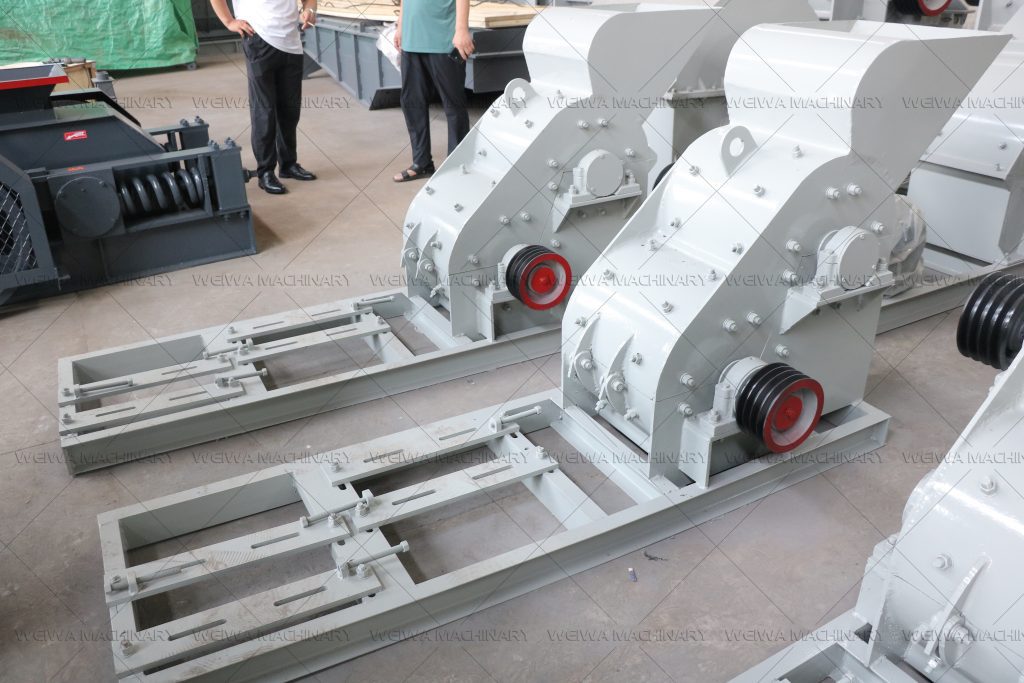
At Weiwa Machinery, our Two-Stage Crusher is engineered with heavy-duty rotors, wear-resistant hammers, and adjustable grate gaps to suit Vietnam’s diverse applications. The machine is designed without bottom screens in most configurations, which directly addresses the clogging problem common in high-moisture materials such as weathered rock and river-bound aggregates. For crusher in Vietnam users who previously struggled with seasonal downtime due to screen blocking, this structural choice has proven effective in maintaining continuous operation.
Another technical highlight is the synchronization of rotor speed and crushing chamber geometry. The first rotor typically operates at a slightly lower speed to handle coarse impact, while the second rotor runs at higher speed for fine fragmentation. This staged energy distribution reduces peak motor load and improves overall power utilization. In several Two-Stage Crusher in Vietnam pilot setups, we recorded smoother amperage curves and less vibration transmission to foundations, which is critical for plants built on compacted soil common in provincial industrial zones.
We also optimized the hammer arrangement and material grade based on feedback from Southeast Asian clients. High manganese steel combined with localized heat treatment extends service life under abrasive Vietnamese limestone and laterite conditions. Easy-access doors and modular liners shorten daily inspection time, an important factor for Two-Stage Crusher for Vietnam operators who run multiple shifts. These improvements reflect Weiwa Machinery’s commitment to adapting global crusher technology to regional realities rather than offering generic machines.
Energy Efficiency and Particle Uniformity in Trial Tests
Energy consumption per ton of product is a key metric for any crusher investment. In a controlled trial conducted with a Vietnamese aggregate producer processing 150 mm feed to below 20 mm output, our Two-Stage Crusher demonstrated consistent power draw with fewer current spikes during variable feeding. Compared with a reference single-stage hammer crusher in Vietnam of similar capacity, the two-stage system showed more stable throughput and reduced recirculation load when paired with a simple vibrating screen.
Particle uniformity is equally critical. Oversize chunks not only affect sales price but also damage conveyors and batching systems. Test samples from the Two-Stage Crusher in Vietnam site revealed a narrower size distribution curve, with most discharge concentrated around the target range and minimal ultra-fine generation. For clients supplying roadbase or precast concrete aggregates, this consistency reduces rejection rates and improves compatibility with local standards. Weiwa Machinery uses these trial datasets to fine-tune rotor clearance and hammer alignment for each Two-Stage Crusher for Vietnam deployment.
On-Site Trial Results of Two-Stage Crusher in Vietnam Projects
Practical performance ultimately determines equipment adoption. In a northern Vietnam limestone quarry, Weiwa Machinery deployed a Two-Stage Crusher to replace an aging jaw-plus-impact circuit. The existing line suffered frequent blockages during monsoon months when material moisture exceeded 8%. After installation, the plant reported uninterrupted operation for consecutive weeks under similar humidity, with noticeable reduction in manual cleaning. The Two-Stage Crusher in Vietnam configuration handled sticky material without screen plates, validating its advantage in tropical climates.
In a southern Vietnam construction waste yard, the machine was fed with demolished concrete blocks up to 400 mm, mixed with bricks and occasional rebar fragments. Magnetic separation was placed ahead of the crusher, but small residual steel pieces still passed through occasionally. The dual rotors absorbed these anomalies without catastrophic damage, and hammer wear remained within predictable limits. Managers noted that the Two-Stage Crusher for Vietnam recycling application produced more cubical particles than their previous vertical shaft option, increasing the resale value of crushed aggregate in the local market.
Across both sites, daily output stability improved. While single-stage crusher in Vietnam lines often required mid-day adjustments and screen changes, the two-stage system maintained rated capacity with routine lubrication and periodic hammer rotation. Weiwa engineers monitored vibration, temperature, and current profiles remotely during the trial period, using the data to compile preventive maintenance schedules tailored to Vietnamese operating habits and spare parts availability.
After-Sales Service and Spare Parts Supply in Vietnam
Technology alone is insufficient without reliable support. Weiwa Machinery has established responsive communication channels for Two-Stage Crusher in Vietnam users, including technical drawing sharing, video guidance for liner replacement, and coordinated sea freight for wear parts from China to major Vietnamese ports such as Hai Phong and Ho Chi Minh City. Typical consumables—hammers, liners, bearings—are standardized to reduce inventory complexity for local agents handling multiple crusher models.
During the trial phase, our technicians conducted on-site training covering start-up sequences, rotor balancing awareness, and safety lockout procedures. Feedback indicated that Vietnamese operators appreciated clear checklists and visual markings, which we subsequently incorporated into the Two-Stage Crusher for Vietnam user manual translation. This localization effort ensures that knowledge transfer matches the skill levels commonly found in provincial quarry teams and recycling workshops.
Comparing Crusher Solutions in Vietnam: Single vs Two-Stage Systems
Choosing between a conventional single-stage crusher in Vietnam and a Two-Stage Crusher depends on material properties, target output size, and plant layout constraints. Single-stage hammer mills remain popular for dry, low-moisture limestone with uniform feed. However, as Vietnamese projects diversify into weathered rock, clay-bearing stone, and mixed demolition waste, the limitations of bottom-screen designs become evident. Clogging, frequent screen replacement, and inconsistent fine content often offset the lower initial equipment cost.
The Two-Stage Crusher in Vietnam market is not a universal replacement but a targeted upgrade where continuous feeding of difficult materials is expected. By splitting crushing work into two synchronized rotors, the system reduces reliance on external screens and return conveyors for medium-fine applications. Plants that previously ran three pieces of equipment—primary crusher, secondary crusher, and intermediate screen—can sometimes consolidate into a single Two-Stage Crusher for Vietnam line with downstream screening only, saving footprint and belt maintenance.
That said, two-stage machines require careful foundation design and motor coordination. Weiwa Machinery assists clients in evaluating site power supply, feed hopper configuration, and discharge height before recommending the Two-Stage Crusher. Our comparison approach avoids over-specification and aligns equipment selection with actual Vietnamese material tests rather than generic brochure figures.
How Weiwa Machinery Supports Vietnam Customers with Crusher Solutions?
Weiwa Machinery positions itself as a long-term partner rather than a one-time supplier. For every Two-Stage Crusher in Vietnam inquiry, we request sample material photos, moisture estimates, and desired output ranges. Our engineers then simulate approximate reduction ratios and suggest rotor spacing, hammer quantity, and drive power. This consultative process helps Vietnamese buyers avoid underestimating crusher load or overestimating screen durability.
We also encourage prospective clients to visit ongoing crusher in Vietnam sites using Weiwa equipment, either physically or via live video walkthrough. Seeing uniform discharge, hearing stable rotor sound, and inspecting wear part condition provide more confidence than specifications alone. For cross-border buyers, we assist with documentation, container loading optimization for rotors and casings, and coordination with Vietnamese customs clearance agents familiar with machinery imports.
Whether the project involves limestone aggregates, laterite crushing, or construction debris recycling, the Two-Stage Crusher for Vietnam applications continues to prove its relevance. Weiwa Machinery remains committed to refining rotor dynamics, liner materials, and service responsiveness so that our Two-Stage Crusher delivers measurable uptime and product quality in Vietnam’s evolving industrial landscape.
For detailed specifications, trial reports, or quotation requests, feel free to contact our international team. We welcome Vietnamese partners to discuss site-specific challenges and explore how our crusher solutions can fit local workflows.
About Weiwa Machinery
Weiwa Machinery is a professional manufacturer and exporter of crushing, grinding, and mineral processing equipment, serving global markets with a focus on Southeast Asia. With years of experience in crusher design, two-stage crushing systems, and customized plant configuration, Weiwa provides reliable machines, technical consultation, and after-sales support tailored to regional material conditions. Our product range covers Two-Stage Crushers, hammer mills, jaw crushers, mobile crushing units, and related spare parts, all engineered to meet practical site demands in countries such as Vietnam, Indonesia, the Philippines, and beyond.
Contact Us:
Email: [email protected]
Phone / WhatsApp: +86 18439853888
Reference Product Page: Two-Stage Crusher Technical Reference