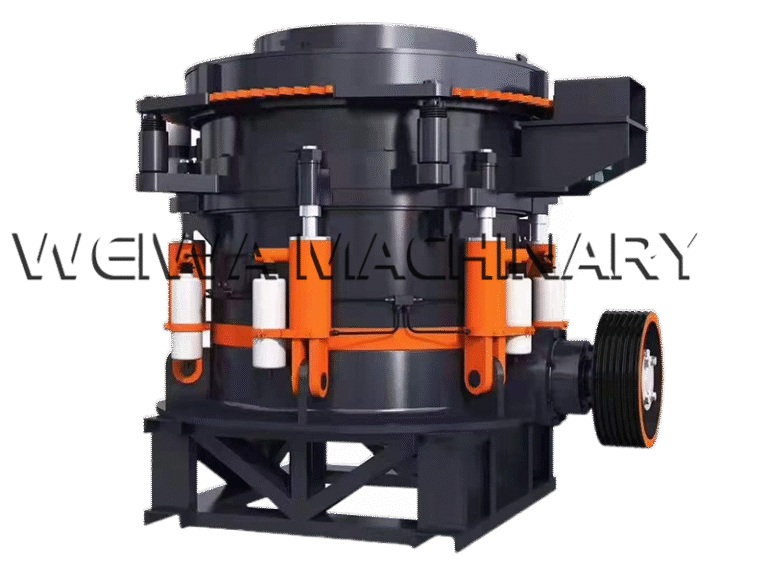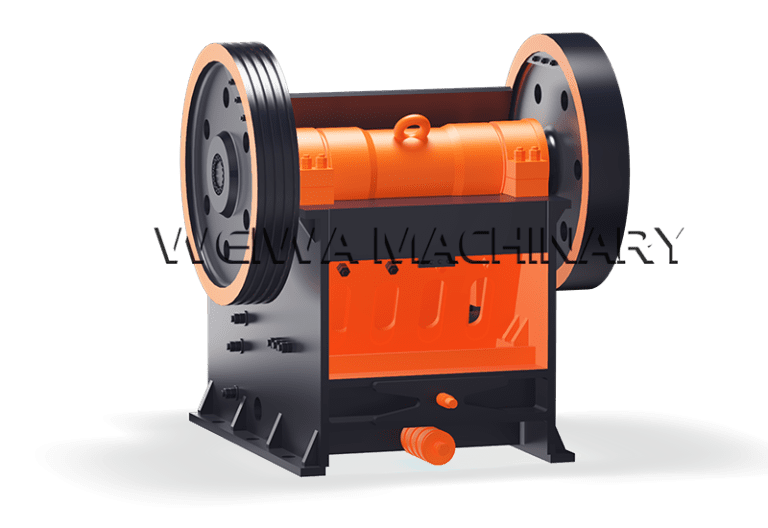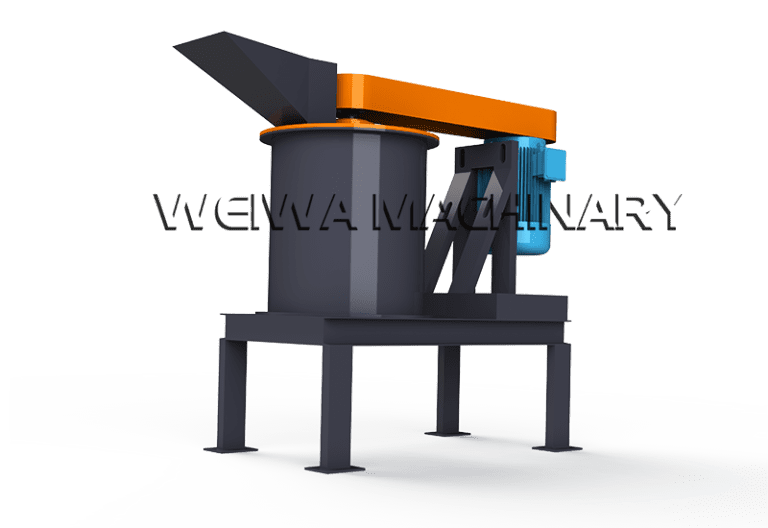
A hammer crusher built for West African conditions left our Gongyi workshop last month and is now running at a client site in Guinea. This hammer crusher for the Guinea project was not a standard stock unit. It was engineered around bauxite, limestone and laterite samples the client sent us, tested on our floor with their material, then packed for ocean freight with spare hammers, liners, screens and a full English manual. In this blog we walk through the shipment, the science behind the machine, the on-site trial numbers, and why a crusher for the Guinea market has to be specified differently from a crusher sold to a European quarry or a Southeast Asian cement plant.
Why Hammer Crusher in the Guinea Market Is Growing?
Guinea holds some of the largest bauxite reserves on earth and a fast-rising pipeline of road, port and urban construction projects. Most of these operations do not start with hard granite. They start with medium-hard, sometimes moist, high-clay or iron-stained material that must be reduced before milling, washing or agglomeration. That is exactly where a hammer crusher earns its place. The machine delivers a high reduction ratio in one stage, turns 150–200 mm feed into 0–25 mm mill feed, and keeps capital cost lower than a two-stage jaw-plus-cone circuit. For a junior miner or an aggregate supplier in Conakry, Kamsar or Boké, the single-stage hammer crusher in the Guinea context means fewer foundations, fewer motors, fewer belts, and faster commissioning.
Weiwa Machinery has supplied crushing equipment to more than 120 countries. West Africa is a special case because power supply, maintenance skill level and spare-part logistics are different from mature markets. A crusher for the Guinea client therefore needs oversized bearings, reversible rotor options, quick-change screen cassettes and a liner package that survives abrasive laterite. We treat Guinea not as a tag-on export destination but as a design environment.
What Happens Before a Crusher for the Guinea Client Leaves Our Factory?
Every hammer crusher for the Guinea order starts with a sample box. The client mails 20 kilograms of run-of-mine material. Our lab measures bulk density, moisture, abrasiveness and compressive strength. For the recent Guinea unit, the sample was bauxite with 6.2 percent moisture and 18 percent clay binding. Standard hammers would have clogged. We switched to a heavier swing hammer profile, opened the rotor tip speed slightly, and specified a grate with anti-block curved bars instead of straight bars.
After design sign-off, the frame is welded, stress-relieved, blasted and painted with two-pack epoxy. The rotor assembly is dynamically balanced to ISO G6.3. The hammers are manganese steel poured in our own foundry. The liner plates are high-chromium alloy. Before packing, we bolt the unit to a test skid, feed it the client’s material, and run it for four hours. Only when the discharge passes the 25 mm screen at the contracted 45 tph do we disassemble, rust-proof, wrap and load it.
The Guinea shipment travelled nude on a flat rack for the main frame and in plywood cases for rotors, screens, hammers and electrical panel. We issued commercial invoice, packing list, certificate of origin, CE declaration and French-English operation manual because many Guinea technicians read French better than English.
Hammer Crusher Working Principle in Simple Terms
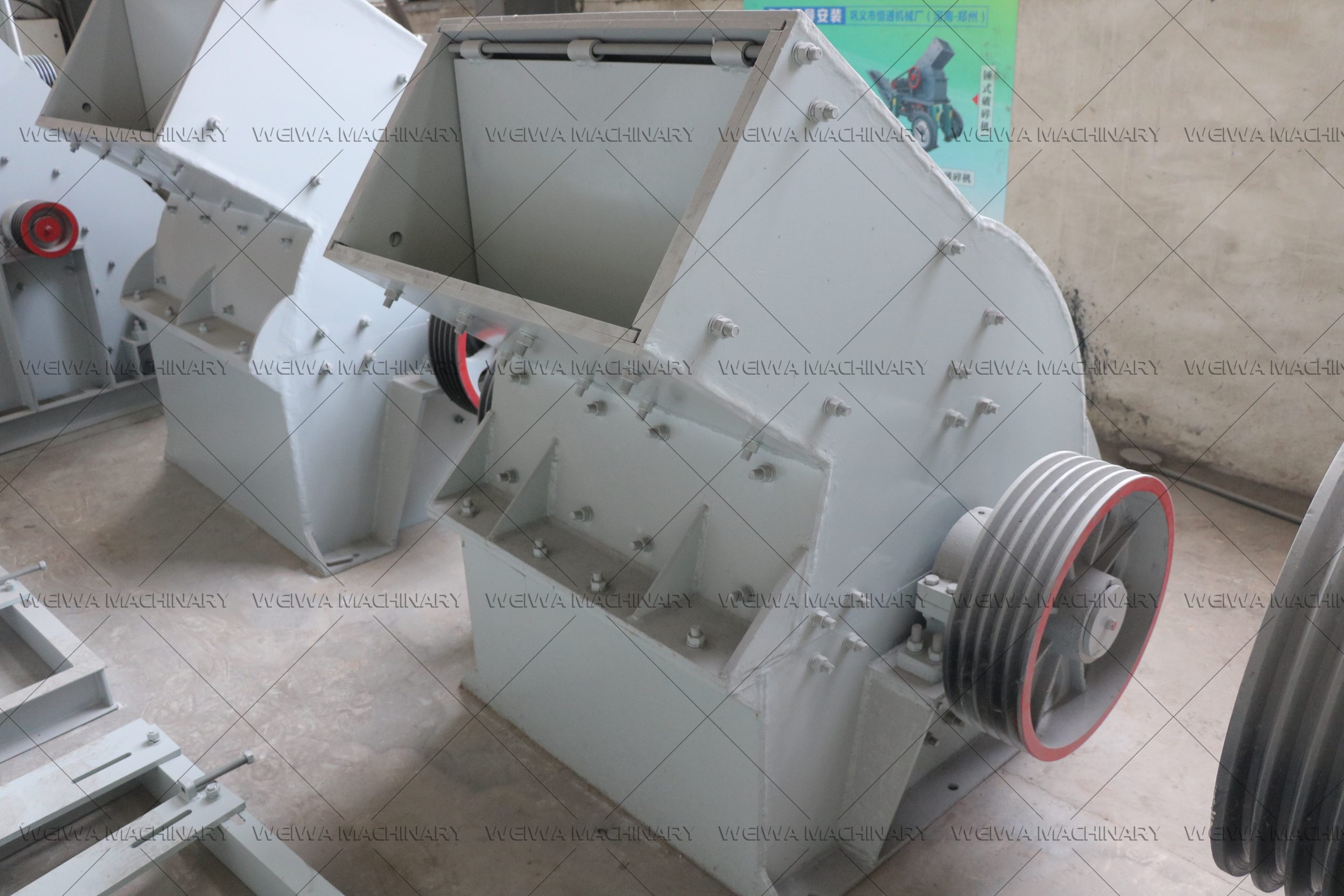
A hammer crusher is an impact crusher. A motor drives a rotor. The rotor carries rows of hammers on pins. Material drops in from the top. The hammers hit it at 30–55 meters per second. Fragments fly against the breaker plate, get hit again, and fall toward the bottom screen. Anything smaller than the screen hole falls through. Anything larger stays in and gets re-hammered until it fits. That loop is the whole secret. No jaws, no cones, no eccentric shafts.
Rotor and Hammers
The rotor is the heart. For the Guinea unit we used a 1300 mm diameter rotor with 28 hammers in four rows. Hammer weight was 38 kg each. Tip speed 42 m/s. Manganese 18–20 percent with chromium addition gave us the wear margin laterite demands. Hammers are reversible end-to-end and side-to-side, so when one corner wears the operator rotates instead of replacing. That single detail cuts hammer cost per ton by roughly 30 percent on a hammer crusher for the Guinea duty.
Screen Grate and Particle Size
Final size is not set by the hammers alone. It is set by the bottom grate. We shipped three grate sets: 15 mm, 25 mm and 40 mm square-hole cassettes. The Guinea client started with 25 mm because the material feeds a ball mill. Screen open area was 38 percent, higher than our standard 32 percent, to compensate for sticky fines. When moisture spikes in the rainy season they will swap to 40 mm and accept a coarser product rather than stop the line.
Guinea Site Conditions and Material Samples
Guinea is not one geology. Coastal zones see sandy overburden. Bauxite plateaus near Boké show pisolitic bauxite that crushes easily but smears when wet. Inland limestone quarries near Mamou produce cleaner calcium carbonate. The client for this crusher for the Guinea project runs mixed bauxite reject plus imported limestone for road base. Ambient temperature hits 38°C, dust is fine, and the voltage supply swings between 380 and 415 VAC. We specified IP55 motor, tropical insulation class F, and a VFD soft starter so the rotor accelerates without kicking the village transformer.
Feed size on site ranges 0–180 mm. Some boulders arrive at 220 mm after blasting. We told the client to pre-screen over 150 mm and feed the oversize to a small jaw grizzly. A hammer crusher loves uniform feed and hates sudden 300 mm rocks. Matching feed to machine is half the commissioning battle.
On-Site Trial Run Results of the Hammer Crusher for the Guinea Project
Our technician flew in for seven days. Day one was foundation check and laser alignment. Day two was lubrication and electrical termination. Day three was no-load run. Day four we fed 12 tons of dry bauxite reject. Day five we fed 40 tons mixed with 6 percent moisture. Day six we changed to 25 mm screen and ran three hours continuous. Day seven we trained six local operators and handed over the logbook.
Throughput and Reduction Ratio
Contract was 40–50 tph at 25 mm minus. Measured average was 47.5 tph on dry mix and 41.2 tph on wet mix. Feed was 160 mm average, discharge 92 percent passing 25 mm, 71 percent passing 10 mm. Reduction ratio was 6.4:1 in a single pass. A jaw crusher alone would have needed a cone after it to reach the same mill feed. The client confirmed power draw 132 kW steady, peak 148 kW during tramp shock. Specific energy 2.78 kWh per ton, better than the 3.4 kWh/t they saw on a rented European impactor.
Product Shape and Screen Passing Rate
Guinea road-base specs dislike flat flakes. Our hammer crusher for the Guinea unit produced cubicity index 0.82, measured by manual sieving and visual inspection. Fines below 3 mm were 14 percent, acceptable for mill feed, not excessive for dust control. Screen passing rate stayed stable for three hours; only a 2°C rise in bearing temperature was noted, within limit. After the trial the hammers lost 3.1 mm on leading edge, projected liner life 900–1100 hours before rotation.
How to Choose the Right Crusher for the Guinea Operation?
Not every Guinea line needs a hammer crusher. If the rock is granite, basalt or quartzite above 150 MPa, a jaw-plus-cone circuit is safer. If the rock is bauxite, limestone, gypsum, coal, phosphate, laterite or concrete rubble, the hammer crusher wins on cost and footprint. The selection checklist we give every crusher for the Guinea inquiry is short: feed hardness under 120 MPa, moisture under 10 percent, silica under 8 percent, target product under 30 mm, single-stage layout preferred. If four of five boxes tick yes, we propose a hammer crusher.
Capacity sizing follows a simple rule. Rotor diameter in meters squared, times tip speed factor, times material factor. For bauxite the factor is 0.78. A 1.3 m rotor at 42 m/s gives theoretical 78 tph, derated to 47 tph with moisture and screen loss. We never sell nameplate; we sell site number. That is why the Guinea client got a PC1310, not a PC1210.
Weiwa Machinery After-Sales Support for Guinea Clients
Shipping is the easy part. Supporting a hammer crusher in the Guinea for five years is the real job. Every Weiwa crusher leaves with a wear-part kit: 8 hammers, 4 liner segments, 1 screen cassette, 2 bearing sets, 1 set V-belts. We keep a mirror stock in our Henan warehouse and express ship to Conakry within 72 hours. Remote video troubleshooting runs in French and English. On-site visits are scheduled twice a year for large accounts. Spare-part price list is fixed for 12 months so budget planning is predictable.
For this Guinea client we also configured the VFD with a Modbus gateway so their PLC engineer can read bearing temperature, amps and hour meter from the control room. Preventive maintenance is no longer a paper checklist; it is a trend line.
About Weiwa Machinery
Weiwa Machinery is based in Gongyi City, Henan Province, China. For over 30 years we have manufactured crushing, grinding, briquetting and mineral-processing equipment for mining, cement, construction, recycling and agriculture. Our hammer crushers, jaw crushers, impact crushers, ball mills and complete crushing plants have been exported to more than 120 countries and regions, serving over two million end users. We do not only sell machines; we sample material, simulate the circuit, test the prototype, train the crew and stock the spares. The hammer crusher for the Guinea shipped this quarter is one example of that workflow.
If you are evaluating a crusher for the Guinea bauxite, limestone or aggregate project, send us your material sample and target tph. We will return a tested proposal, not a brochure quote.
Contact Weiwa Machinery
Email: [email protected]
Phone / WhatsApp: +86 18439853888