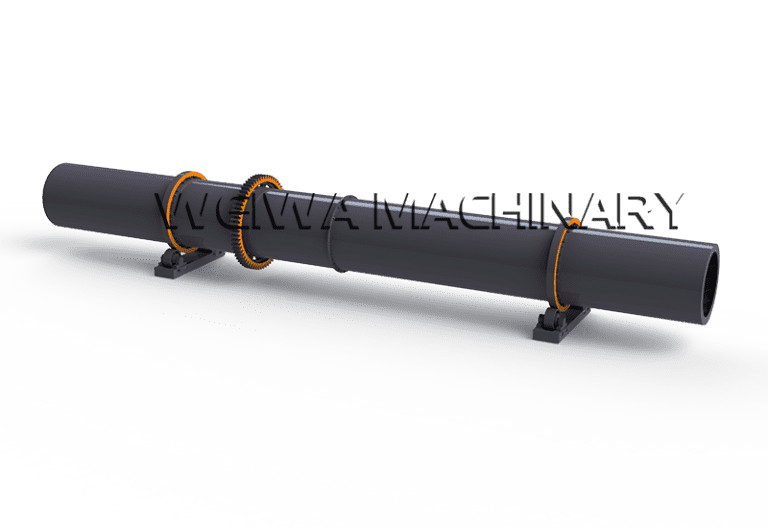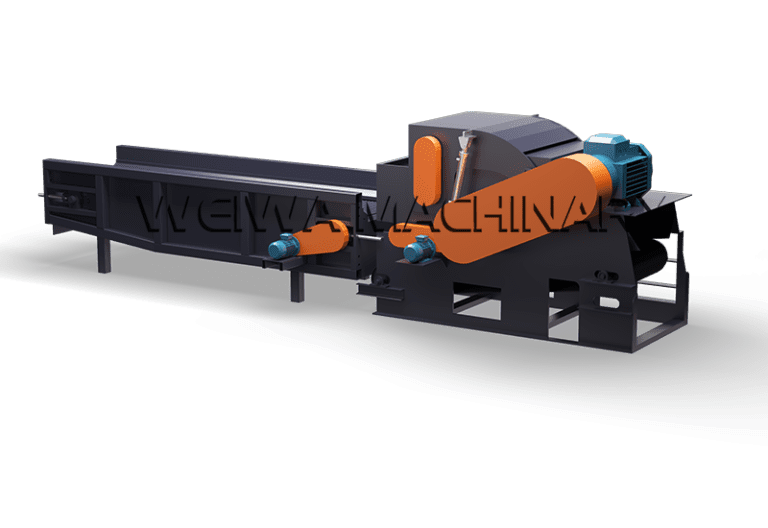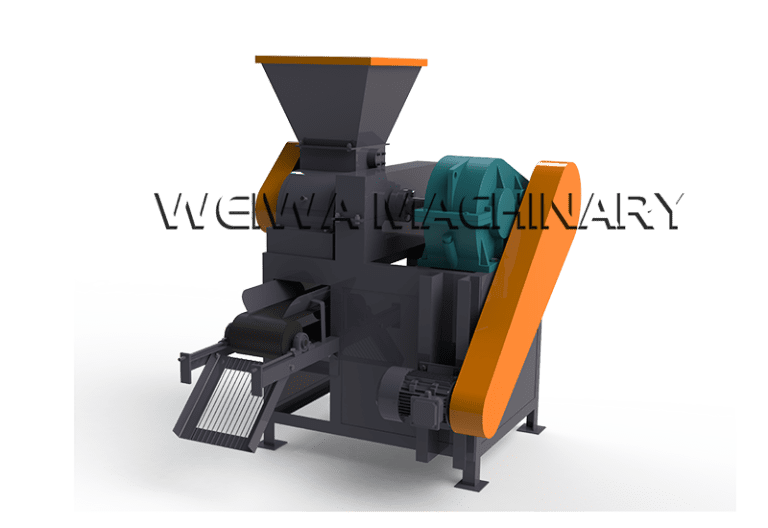
When Italian cement plants, mineral processors and ceramic manufacturers search for a ball mill in Italy or a dependable crusher for Italy, they are not only looking for a piece of rotating steel—they are looking for predictable fineness, energy efficiency, low maintenance downtime and responsive technical support. At Weiwa Machinery, we have been engineering and exporting industrial crushing and grinding equipment since the 1990s. Our ball mills and crushers are already operating across Europe, Southeast Asia, South America and North Africa.
Why Ball Mills Matter in Italia?
Italy hosts a mature base of cement production facilities, active marble and granite processing zones in regions such as Carrara in Tuscany, ceramic tile clusters in Sassuolo, Emilia-Romagna, and various non-ferrous mineral processing operations. In each of these sectors, the final product quality—whether Portland cement, ceramic glaze or mineral concentrate—depends heavily on particle size distribution after grinding. A ball mill remains the most widely accepted equipment for achieving consistent micron-level fineness in both dry and wet processes.
Unlike impact crushers that reduce large rocks to centimeters, a ball mill for Italy mineral or cement lines receives pre-crushed feed—typically below 25 mm from a crusher for Italy such as a jaw crusher or impact crusher—and grinds it to 20–400 mesh depending on the application. The ability to control residence time, media charge, rotational speed and liner profile gives Italian plant operators the flexibility they need for product differentiation.
Ball Mill Working Principle Briefly Explained for Italian Operators
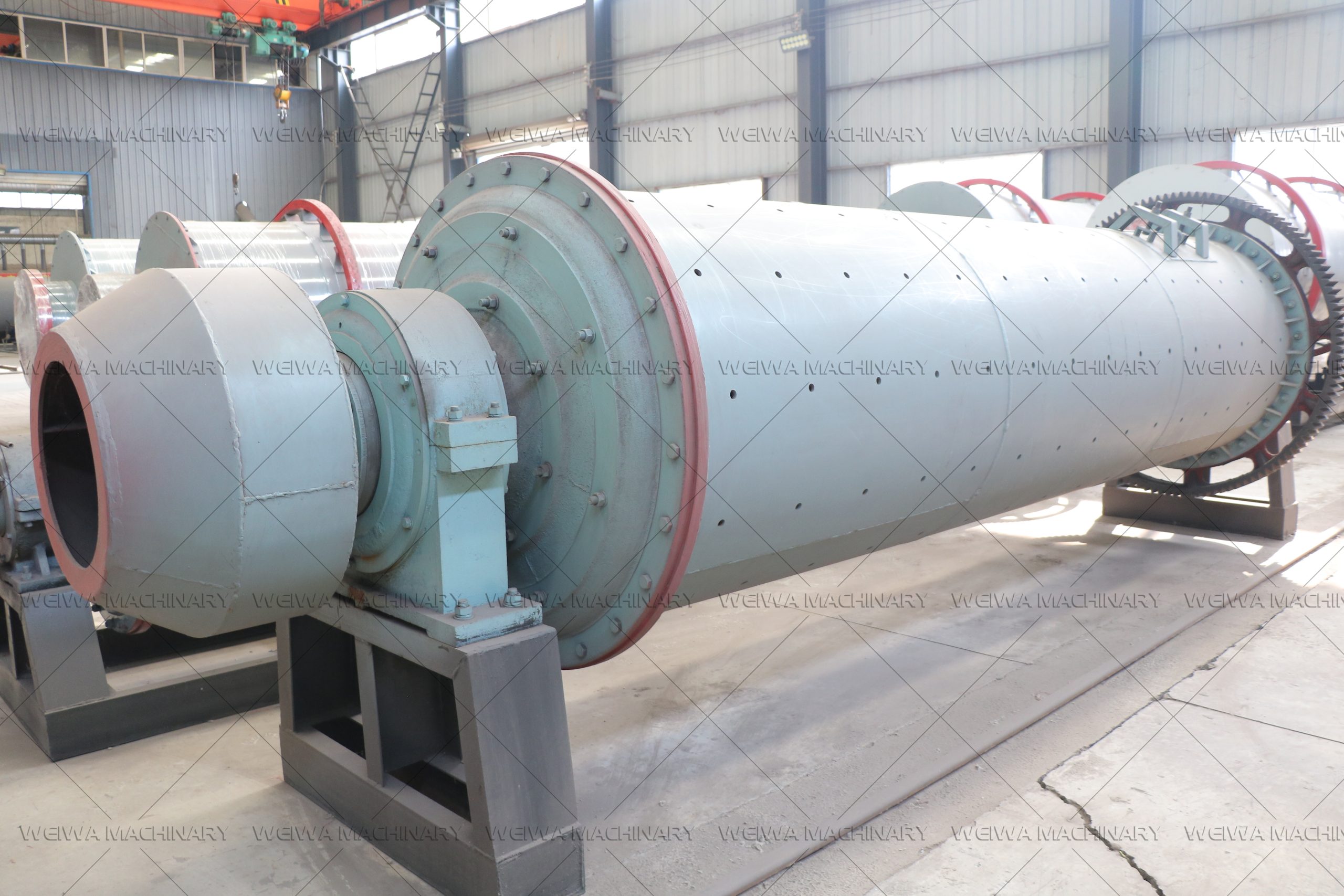
A ball mill is a horizontal rotating cylinder partially filled with grinding media—usually forged steel balls, high-chrome balls or ceramic media. As the shell rotates, the media are lifted by friction and centrifugal force, then cascade downward, impacting and attriting the material fed through the inlet trunnion. Coarse grinding occurs in the first chamber with larger balls and stepped liners; fine grinding follows in the second chamber with smaller balls and smooth liners.
The critical speed of a ball mill is the rotational speed at which the grinding media would centrifuge against the shell wall and cease to fall. Weiwa ball mills are engineered to operate at 65%–78% of critical speed, ensuring optimal cascading action. Italian clients who require simultaneous drying can opt for our drying–grinding integrated ball mill, which introduces hot air through the discharge end—a useful feature when processing high-moisture limestone or industrial minerals common in Mediterranean climates.
Ball Mill for Italy – Applications in Cement, Mining and Ceramics
The Italian market demands versatility. Below we outline the three main sectors where our ball mill in Italy projects—or Italy-comparable trial configurations—have shown strong results.
Wet and Dry Ball Mill Options for Italian Production Lines
Cement and Clinker Grinding: Italian cement works require finely ground clinker with specific surface area typically between 3000–3500 cm²/g (Blaine). A Weiwa ball mill for Italy cement circuits can be configured as an open circuit or closed circuit with high-efficiency separator, delivering stable fineness and reduced power draw per ton thanks to our optimized chamber ratio and wave-type liners.
Mining and Mineral Processing: For gold-bearing quartz veins, copper porphyry tails or barite beneficiation, the ball mill liberates valuable minerals ahead of flotation or gravity concentration. Our Italian clients’ counterparts in Southern Europe have reported improved liberation at P80 ≤ 75 μm when pairing a primary crusher for Italy (jaw or cone) with a properly sized Weiwa ball mill and classifying cyclone cluster.
Ceramic and Glaze Preparation: Sassuolo-based ceramic plants often grind feldspar, quartz and kaolin. Contamination control is critical, so alumina or zirconia media are recommended instead of steel balls. Weiwa ball mills for this niche are fitted with high-alumina brick liners and discharge screens suited for batch or continuous modes.
Grinding Media Selection for Calcium Carbonate and Clinker
Italian ground calcium carbonate (GCC) producers process high-purity limestone. For GCC, a two-chamber dry ball mill with forged steel balls in chamber one and smaller cylpebs in chamber two typically yields the best trade-off between throughput and fineness. Our engineers assist Italian buyers in calculating the optimal make-up ball size distribution, media charge percentage (usually 30%–40% of mill volume) and wear-compensation schedule, which directly affects operating cost per ton.
Weiwa Ball Mill Technical Features Valued by Italian Clients
Over decades of customization, Weiwa Machinery has refined the ball mill design to meet European expectations regarding safety, maintainability and energy performance.
Heavy-Duty Cylinder & Liners: The shell is fabricated from high-tensile steel plate, stress-relieved after welding. Liners are available in manganese steel, chrome-moly alloy, rubber or ceramic brick depending on abrasion conditions. Quick-wear liner replacement is facilitated by manholes sized for easy access—a detail appreciated by maintenance crews in Italian plants where shift windows are tight.
Precision Drive System: Our edge-driving and center-driving ball mills use internationally branded motors, hardened spur or helical gears, and split-type pinions for simplified alignment. The low-vibration design helps Italian factories meet workplace noise limits.
Advanced Bearing Assembly: Self-aligning double-row spherical roller bearings or slide shoe bearings with high-pressure oil jacking systems reduce starting torque and prolong service life. Temperature sensors at both ends allow integration into the plant DCS for condition monitoring.
Feeding & Discharge Flexibility: Both trunnion overflow and diaphragm (grate) discharge types are offered. For ball mill in Italy wet grinding circuits, the grate discharge minimizes over-grinding and improves throughput.
Trial Run and Commissioning Results of Weiwa Ball Mill in Italy-Comparable Conditions
Before any ball mill leaves our Gongyi workshop, it undergoes a factory acceptance test (FAT). Although on-site commissioning in Italy is arranged per project, we simulate Italian material characteristics using representative feed such as limestone (Mohs 3–4), clinker and marble chips.
In a recent pre-shipment trial for a European client ordering a Φ2.4×8 m wet ball mill, the following observations were documented:
The feed size was limited to below 20 mm by a preliminary jaw crusher for Italy-spec equivalent. The mill ran at 72% of critical speed with a 35% media fill. After a 4-hour warm-up, the product d90 measured 45 μm with narrow PSD. No abnormal vibration was detected on the main bearings, and no-load power consumption matched the design curve within ±2%. The client’s inspector witnessed the no-load run, media loading procedure and lubrication circulation test before approving shipment.
For Italian cement applications, we additionally verify the separator cut-point correlation when the ball mill is sold as part of a closed circuit. These transparent trial procedures give overseas buyers confidence comparable to seeing the machine running in their own facility.
Complementary Crusher Equipment for Italy – Pre-Grinding Before the Ball Mill
Efficient ball milling starts with correct feed preparation. A crusher for Italy quarry or plant reduces run-of-mine material from boulders to the 0–25 mm range expected by the ball mill inlet.
Jaw Crusher: Our PE and PEX series handle primary crushing of hard rock—granite, basalt, limestone—common in Italian aggregate operations. The deep symmetrical crushing chamber and wedge-adjustable discharge setting allow consistent CSS control.
Impact Crusher: Preferred when cubic aggregate shape matters, such as in concrete recycling or high-grade asphalt mixes. The PF series impact crusher produces well-shaped fines with low flake index, reducing ball mill circulating load downstream.
Cone Crusher: For secondary or tertiary crushing of abrasive ores prior to milling, the PY or Symons-type cone provides stable closed-side settings and high reduction ratios.
Weiwa Machinery can design the complete crusher + ball mill for Italy flowsheet, including hopper, vibrating feeder, belt conveyors, screening and dust suppression—all engineered to EU-standard safety guards and CE-marked electric panels upon request.
Why Choose Weiwa Machinery as Your Ball Mill and Crusher Supplier?
Selecting a ball mill in Italy supplier is ultimately a question of partnership reliability. Weiwa Machinery distinguishes itself through the following commitments:
Three Decades of Manufacturing Expertise: Since the 1990s we have specialized in crushing and grinding machinery. Our in-house machining workshop, dynamic balancing facility and NDT inspection ensure dimensional accuracy of rotating assemblies.
Customization for Local Requirements: Voltage (400 V / 50 Hz for Italy), motor brand preference (Siemens, ABB, WEG etc.), liner material, paint system (RAL colour code) and control voltage can all be specified. Cold-climate or high-humidity coastal adaptations are also available.
Spare Parts & After-Sales: We maintain an inventory of wear parts—liners, girth gears, pinions, trunnion seals, media—for fast dispatch. Remote commissioning guidance via video call, and on-site engineer dispatch when required, shorten your start-up time.
Proven Export Record: Weiwa products have been delivered to over 120 countries and regions. Our logistics team is experienced with Italian port customs clearance documentation (EUR.1 certificate, commercial invoice, packing list, CO).
Frequently Asked Questions About Ball Mill in Italy
What capacity ball mill is suitable for a small Italian ceramic workshop?
Batch ball mills from 0.5 ton to 2 ton per batch are common for ceramic glaze preparation. Continuous models start from 1 t/h dry grinding.
Can Weiwa supply both the crusher and ball mill together?
Yes. Many of our Italian inquiries involve a complete crushing-grinding line. We provide integrated layout drawings, foundation diagrams and electrical interlocking schemes.
Is CE certification available?
Upon request we can arrange machinery compliant with applicable EU directives and provide the Declaration of Conformity and CE marking.
How long is the production lead time for a ball mill for Italy order?
Standard models typically require 25–40 working days after deposit confirmation. Customized large-capacity mills may take longer; we will confirm in the proforma invoice.
About Weiwa Machinery
Weiwa Machinery is a professional manufacturer of crushing and grinding equipment founded in the 1990s in Gongyi City, Henan Province, China. We design and export Jaw Crushers, Impact Crushers, Cone Crushers, Ball Mills, Raymond Mills and complete mineral processing plants to more than 120 countries. With a customer-first philosophy, we provide customized engineering, factory trial runs, global spare parts supply and 24/7 technical support.
Email: [email protected]
Phone / WhatsApp: +86 18439853888
Website: https://crushmixplant.com/crusher-machine/ball-mill.html
Contact us today to discuss your Ball Mill for Italy or Crusher for Italy project—our engineers are ready to recommend the optimum solution for your material and capacity requirements.