

In the ever-evolving construction and infrastructure industry, the demand for high-quality sand has never been greater. Natural sand sources are depleting, and environmental regulations are tightening, making manufactured sand an increasingly vital alternative. This is where sand making plants come into play — a critical solution for producing consistent, high-grade artificial sand that meets modern engineering standards. At Weiwa Machinery, with over 30 years of industry experience, we specialize in designing and manufacturing efficient, reliable, and high-performance sand making machine systems tailored to diverse industrial needs.
What is a Sand Making Plant?
A sand making plant is an industrial facility designed to produce artificial sand (also known as manufactured sand or crushed sand) from raw materials such as rocks, stones, gravel, or mine tailings. Unlike natural sand, which is extracted from river beds and is subject to environmental concerns and scarcity, manufactured sand is produced through a controlled crushing and screening process, ensuring uniform particle size, better shape, and consistent quality.
The core of any sand making plant is the sand making machine — a specialized piece of equipment that crushes and shapes the raw material into fine, construction-grade sand. These plants often include a series of crushers, screens, conveyors, sand washers, and dust collection systems to create a complete, automated production flow.
At Weiwa Machinery, we understand that each project has unique requirements. That’s why our sand making plants are fully customizable, ensuring optimal efficiency, durability, and output quality for various applications.
Understanding the Sand Making Machine: The Heart of the Plant
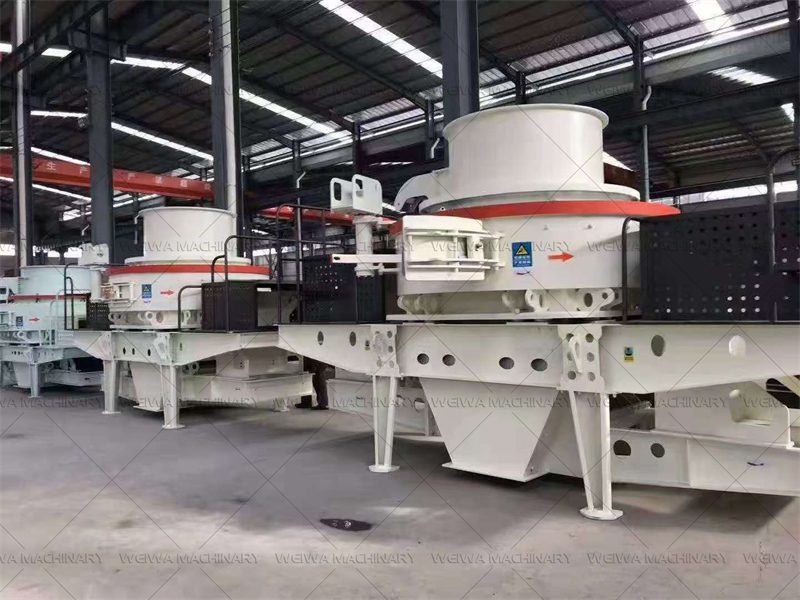
The sand making machine, also known as a vertical shaft impact crusher (VSI crusher), is the pivotal equipment in any sand production line. Its primary function is to crush aggregates into fine particles that resemble natural sand in shape and size. But it does much more than just crush — it shapes the material to achieve optimal angularity and surface texture, which are crucial for concrete strength and workability.
How Does a Sand Making Machine Work?
The operation of a sand making machine is based on the principle of rock-on-rock or rock-on-iron crushing, depending on the model and application. Raw materials are fed into the machine and accelerated through a high-speed rotor. They are then thrown against an impact plate or other materials, breaking them down into smaller particles. The material undergoes multiple impacts and grinding processes inside the chamber, resulting in well-shaped, fine sand.
Key features of a high-performance sand making machine include:
- High Crushing Efficiency: Capable of processing a variety of materials with high throughput.
- Adjustable Output Size: Allows for flexibility in meeting different sand gradation requirements.
- Low Operating Costs: Energy-efficient motors and wear-resistant materials reduce long-term expenses.
- Dust and Noise Control: Equipped with dust collectors and soundproofing features for environmentally friendly operation.
At Weiwa Machinery, our sand making machines are engineered with advanced technology and robust materials to ensure a long service life, minimal downtime, and superior sand quality.
Applications and Usage Scenarios of Sand Making Plants
Sand making plants have a broad range of applications across various industries. The manufactured sand produced is not only a substitute for natural sand but often a superior choice in terms of consistency and performance.
1. Construction Industry
The most common use of manufactured sand is in the construction industry, especially for:
- Ready-mix concrete: Provides better workability, strength, and durability.
- Precast concrete elements: Requires uniform and high-quality sand for precision.
- Road construction: Used in asphalt and road base layers.
- Building foundations: Ensures structural integrity with well-graded sand.
As urbanization accelerates globally, the demand for reliable and sustainable construction materials has made sand making plants indispensable.
2. Infrastructure Development
Large-scale infrastructure projects such as bridges, dams, airports, and railways require massive quantities of high-quality sand. Manufactured sand from a well-designed sand making plant ensures consistency in material quality, which is critical for the safety and longevity of these structures.
3. Mining and Quarrying
In mining operations, waste materials or by-products such as overburden or low-grade ore can be repurposed into usable sand through a sand making plant. This not only reduces waste but also creates an additional revenue stream.
4. Glass and Ceramics Manufacturing
Certain types of manufactured sand with specific chemical compositions and particle sizes are ideal for glass production, ceramics, and refractory materials. Sand making plants can be tailored to produce sand that meets the stringent purity and granularity requirements of these industries.
5. Landscaping and Decorative Uses
Beyond heavy industry, manufactured sand is also used in landscaping, golf courses, and decorative concrete, where visual appeal and consistent texture are important.
Key Components of a Sand Making Production Line
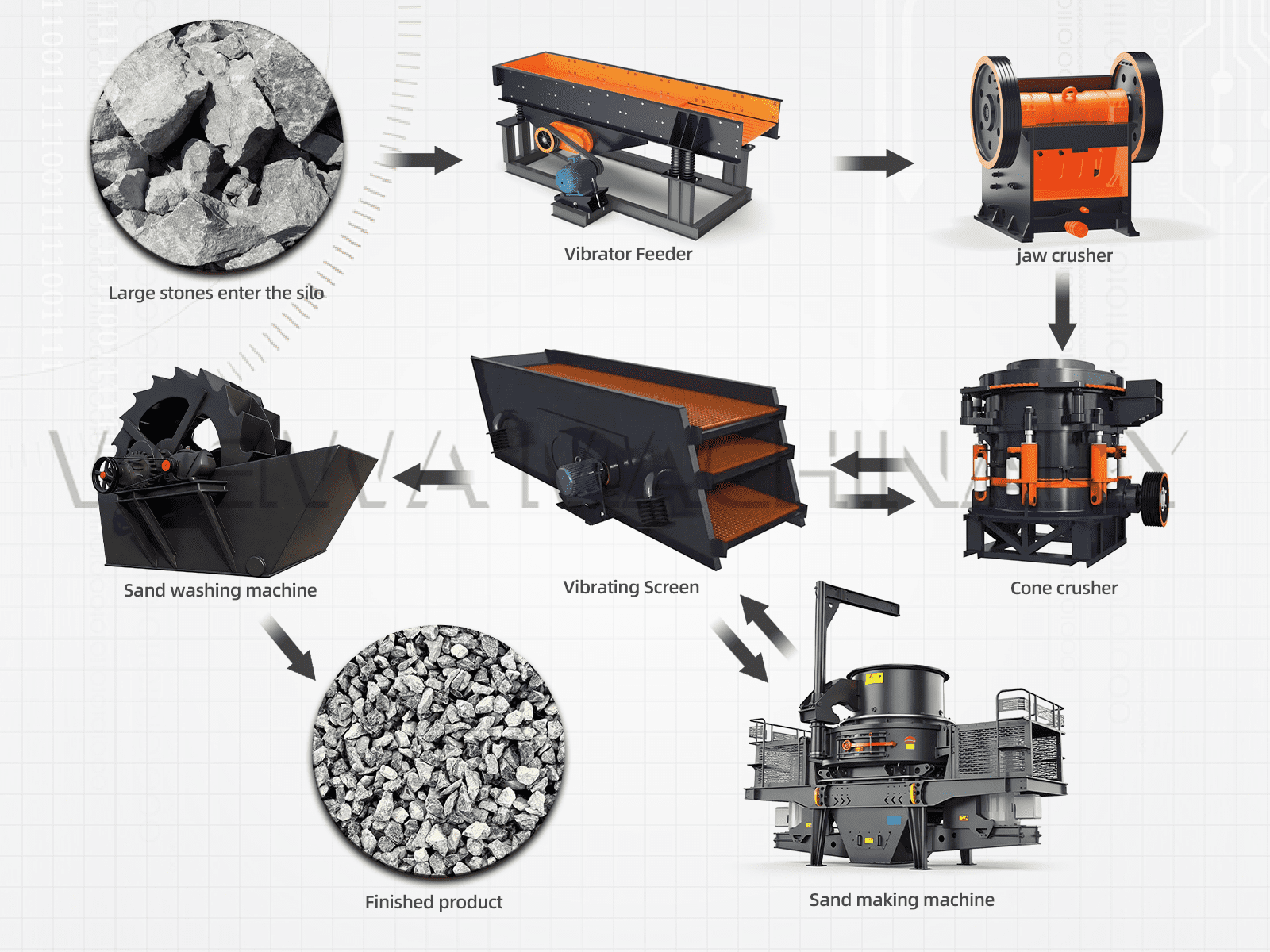
A fully functional sand making plant is more than just a sand making machine. It is a well-integrated system comprising several components that work together seamlessly to ensure efficient production. Below are the key elements:
1. Feeding System
The feeding system typically includes a vibrating feeder that regulates the flow of raw material into the crusher. Consistent feeding is crucial for maintaining the efficiency and stability of the entire production line.
2. Crushing and Shaping Unit (Sand Making Machine)
This is the core component where raw materials are crushed and shaped into sand. Our sand making machines at Weiwa Machinery are designed for high efficiency, low wear, and excellent particle shape.
3. Screening System
Vibrating screens separate the crushed material into different sizes. Oversized particles are returned to the crusher for further processing, while correctly sized sand moves on to the next stage.
4. Sand Washing System (Optional)
In cases where the sand needs to be cleaner or free from dust and fine particles, a sand washing machine is used. This is especially important for applications requiring high-purity sand.
5. Dust Collection and Environmental Control
Modern sand making plants incorporate dust collectors and air filtration systems to minimize environmental impact and ensure a safe working environment.
6. Conveyor System
Belt conveyors transport materials between different stages of the production line, ensuring a smooth and automated workflow.
At Weiwa Machinery, we design each component of the sand making plant with precision to ensure compatibility, efficiency, and ease of maintenance.
Advantages of Choosing a Weiwa Machinery Sand Making Plant
With over three decades of experience in the machinery manufacturing industry, Weiwa Machinery has established itself as a leader in the design and production of sand making plants and equipment. Here’s why customers trust us:
1. Decades of Expertise
Our history spans more than 30 years, during which we have continuously innovated and improved our technologies. This experience has given us deep insights into the needs of various industries and the challenges of sand production.
2. Customized Solutions
We understand that no two projects are the same. That’s why we offer customized sand making plant designs tailored to your specific raw materials, output requirements, and site conditions.
3. High-Quality Equipment
Our sand making machines are built with high-grade materials, advanced wear-resistant parts, and cutting-edge technology to ensure durability, efficiency, and low operating costs.
4. Comprehensive Support
From plant design and installation to after-sales service and technical support, Weiwa Machinery provides end-to-end solutions. Our team of experts is always available to assist with troubleshooting, maintenance, and optimization.
5. Sustainable Practices
We prioritize environmentally friendly designs, incorporating dust control, noise reduction, and energy-efficient components to minimize the ecological footprint of our plants.
Why Invest in a Sand Making Plant?
The shift from natural to manufactured sand is not just a trend — it’s a necessity driven by environmental concerns, regulatory pressures, and the growing demand for consistent, high-quality construction materials. Investing in a sand making plant is a strategic move for businesses looking to:
- Capitalize on the growing demand for manufactured sand.
- Reduce dependency on dwindling natural sand sources.
- Achieve better control over material quality and production costs.
- Contribute to sustainable construction practices.
With Weiwa Machinery’s advanced technology, industry expertise, and commitment to customer success, you can be confident in your investment in a state-of-the-art sand making plant.
Conclusion
Sand making plants are at the forefront of modern construction material production, offering a sustainable, efficient, and high-quality alternative to natural sand. The sand making machine is the cornerstone of these plants, responsible for transforming raw materials into precisely graded, well-shaped sand that meets the rigorous demands of various industries.
At Weiwa Machinery, we bring over 30 years of experience, innovation, and dedication to every sand making plant we design and manufacture. Our comprehensive solutions, tailored to your unique needs, ensure that you achieve optimal efficiency, quality, and return on investment.
Whether you’re in construction, mining, infrastructure, or manufacturing, Weiwa Machinery is your trusted partner in building a greener, stronger, and more efficient future through advanced sand making technology.
Contact us today to learn more about our sand making plant solutions and how we can help you meet your production goals.