Why Rotary Screens Matter in Bolivia—And Why We Care?
In the heart of South America, Bolivia stands as a nation rich in natural resources and agricultural potential. From the lithium-rich salt flats of Uyuni to the fertile valleys producing quinoa and soybeans, the country’s industries rely on efficient material processing to unlock value. At Weiwa Machinery, we’ve long recognized that screening technology is not just a “nice-to-have” but a critical link in Bolivia’s industrial chain. Over the past decade, our focus on rotary screens—a versatile, high-capacity solution for separating materials by size—has led us to collaborate closely with Bolivian clients, from small-scale miners to large agribusinesses. This blog dives into the science of rotary screens, their unique relevance to Bolivia’s market, and the real-world results from our recent trial runs, all through the lens of our commitment to local needs.
Understanding Rotary Screens: The Science Behind Efficient Separation
To appreciate why rotary screens are a cornerstone of modern processing, it helps to start with their basic mechanics. A rotary screen (also called a trommel screen) is a cylindrical drum, typically angled slightly, that rotates to separate materials based on particle size. As feedstock enters the drum, smaller particles pass through perforated or mesh surfaces, while larger ones tumble forward to exit at the end. What makes this design so effective? Three key principles:
The Role of Rotation Speed and Angle in Screening Efficiency
The drum’s rotation speed directly impacts how materials interact with the screen surface. Too slow, and particles may not move adequately, leading to clogging; too fast, and finer materials might be ejected before sieving. For most applications, speeds between 10–20 RPM strike a balance. The angle of inclination (usually 3–7 degrees) also matters: steeper angles increase throughput but reduce residence time, requiring adjustments based on material density. In Bolivia, where feedstocks range from heavy lithium ore to lightweight agricultural residues, fine-tuning these parameters is non-negotiable.
Mesh Selection: Matching Screen Openings to Bolivia’s Diverse Materials
Screen mesh—defined by hole size (e.g., 5mm, 20mm)—is the “gatekeeper” of separation. For Bolivian mining operations handling copper or tin ore, coarser meshes (10–50mm) remove oversized rocks, while finer meshes (2–5mm) recover valuable fines. In agriculture, processing quinoa or corn requires ultra-fine meshes (1–3mm) to eliminate dust and chaff. At Weiwa Machinery, we prioritize customizable mesh options, ensuring each rotary screen aligns with the specific gravity, moisture content, and particle distribution of Bolivia’s raw materials.
Durability in Harsh Conditions: Why Rotary Screens Thrive in Bolivia?
Bolivia’s terrain spans high-altitude deserts to humid lowlands, and its industries face extreme temperatures and abrasive materials. Our rotary screens are built with high-strength steel drums, wear-resistant liners, and sealed bearings to withstand corrosion and mechanical stress. For example, in Potosí’s silver mines, where ore contains sharp silica particles, our screens maintain integrity even after thousands of hours of operation—critical for minimizing downtime in remote sites.
Rotary Screens in Bolivia
Bolivia’s economic backbone includes mining (contributing ~15% of GDP), agriculture (employs ~30% of the workforce), and emerging sectors like lithium extraction. Each sector has distinct screening challenges, which our rotary screens are engineered to solve.
Mining Sector: Enhancing Ore Processing in Bolivia’s Resource-Rich Regions
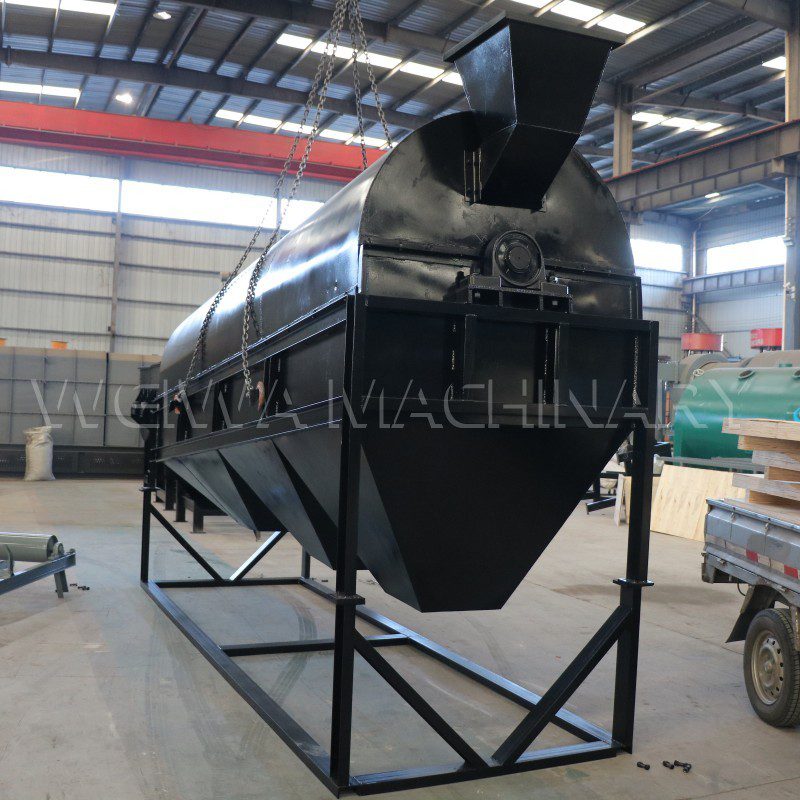
Bolivia is among the world’s top producers of tin, zinc, and silver, with lithium reserves second only to Chile. Yet, many mines still rely on outdated screening methods, leading to inefficiencies: undersized ore bypassing recovery stages or oversized waste increasing transport costs. Our rotary screens address this by integrating variable-speed drives, allowing operators to adapt to changing ore grades. In a recent project with a tin mine in Oruro, we installed a 3-meter-diameter rotary screen with a 15mm mesh. Post-installation trials showed a 22% reduction in waste sent to tailings ponds and a 18% increase in concentrate yield—translating to higher profits for the client.
Agriculture: Boosting Crop Quality and Reducing Waste
Agriculture is Bolivia’s lifeline, with exports like quinoa, soybeans, and Brazil nuts gaining global traction. However, post-harvest processing often struggles with inconsistent grain quality due to poor screening. Traditional sifters may miss fine impurities or damage delicate crops. Our rotary screens, with their gentle tumbling action, preserve grain integrity while removing debris. Take a soybean cooperative in Santa Cruz: after adopting our 2.5-meter rotary screen with a 2mm mesh, they reduced broken beans by 40% and achieved a 99.5% purity rate—meeting international export standards and commanding premium prices.
Emerging Lithium Extraction: Preparing for Bolivia’s Green Future
As Bolivia ramps up lithium production (targeting 100,000 tons/year by 2030), the need for precise screening of brine-derived lithium carbonate is growing. Our rotary screens, modified with corrosion-resistant coatings, excel at separating lithium particles from brine residues, ensuring high-purity output for battery manufacturing. While still in pilot phases, early tests with a Bolivian lithium consortium show promise: our screens achieve 98% lithium recovery rates, outperforming conventional methods.
Proving Performance on the Ground
At Weiwa Machinery, we believe theory must meet practice. Before delivering any machine, we conduct on-site trials tailored to Bolivia’s conditions. Here’s how two recent trials validated our rotary screens’ suitability.
Case Study 1: High-Altitude Mining Trial in La Paz
La Paz’s altitude (3,500m above sea level) poses unique challenges: lower air pressure affects cooling systems, and cold temperatures thicken lubricants. A gold mining client invited us to test a 4-meter rotary screen designed for coarse ore pre-screening. We adjusted the motor power to compensate for thin air and used synthetic lubricants rated for sub-zero conditions. During the 72-hour trial, the screen processed 800 tons/day of ore, maintaining a 95% screening efficiency despite ambient temperatures dropping to -5°C. The client noted zero unplanned stops, praising the screen’s “reliability in the harshest corners of Bolivia.”
Case Study 2: Agricultural Co-op Trial in Cochabamba
A quinoa cooperative in Cochabamba sought to upgrade from manual winnowing, which was labor-intensive and inconsistent. We deployed a compact 1.8-meter rotary screen with adjustable mesh (1–4mm) and a hopper feeder for uniform material flow. Over five days, the team tested batches of quinoa with varying moisture levels (12–18%). Results were striking: screening time per ton dropped from 45 minutes (manual) to 8 minutes, and impurity removal improved from 85% to 99%. The co-op’s manager remarked, “This machine doesn’t just save time—it lets us sell cleaner quinoa, which buyers pay more for.”
Why Weiwa Machinery? Customization, Support, and Local Partnership
Our success in Bolivia stems from more than just robust machinery. We prioritize three pillars:
Tailored Designs for Bolivia’s Unique Challenges
No two sites are identical. Whether a mine requires a dust-sealed screen for arid regions or an agricultural client needs a mobile unit for field use, we modify dimensions, power sources (including diesel generators for off-grid sites), and control systems to fit local constraints.
On-the-Ground Technical Support
Language barriers and logistical hurdles can derail projects. Our bilingual team (Spanish-English) provides installation guidance, operator training, and 24/7 remote troubleshooting. For a client in Sucre, we even trained local technicians to perform basic maintenance, reducing dependency on foreign experts.
Long-Term Partnerships Over One-Time Sales
We view each client as a collaborator. Post-installation, we monitor performance data via IoT sensors (optional) and offer free upgrades as technology evolves. This approach has earned us repeat orders—one mining group in Bolivia has now purchased 12 rotary screens over five years.
Empowering Bolivia’s Industries, One Screen at a Time
Rotary screens are more than machines—they’re enablers of progress. In Bolivia, where resource wealth meets the need for sustainable growth, our rotary screens bridge the gap between potential and profitability. From boosting mine yields to elevating crop quality, our trials prove that when technology is adapted to local realities, the impact is transformative.
At Weiwa Machinery, we don’t just sell equipment; we build solutions. If you’re in Bolivia and seeking a rotary screen that works as hard as your team, let’s talk. Together, we can turn screening challenges into opportunities.
About Weiwa Machinery
Weiwa Machinery is a global leader in screening and material processing equipment, specializing in customized rotary screens for mining, agriculture, and industrial applications. With over 20 years of experience, we combine engineering expertise with local market insights to deliver reliable, efficient solutions worldwide. Contact us at [email protected] or +86 18439853888 to learn how we can support your operations.