For decades, Weiwa Machinery has engineered robust material handling systems for challenging environments across Africa and the Middle East. In recent years, demand for a dependable rotary screen in Libya has grown steadily as industries seek efficient, low‑maintenance solutions for size classification and material separation. A rotary screen, also known as a drum screen or roller screen, offers unique advantages that align perfectly with Libya’s climatic conditions, resource profile, and industrial development goals.
Rotary Screen Working Principle and Technical Advantages
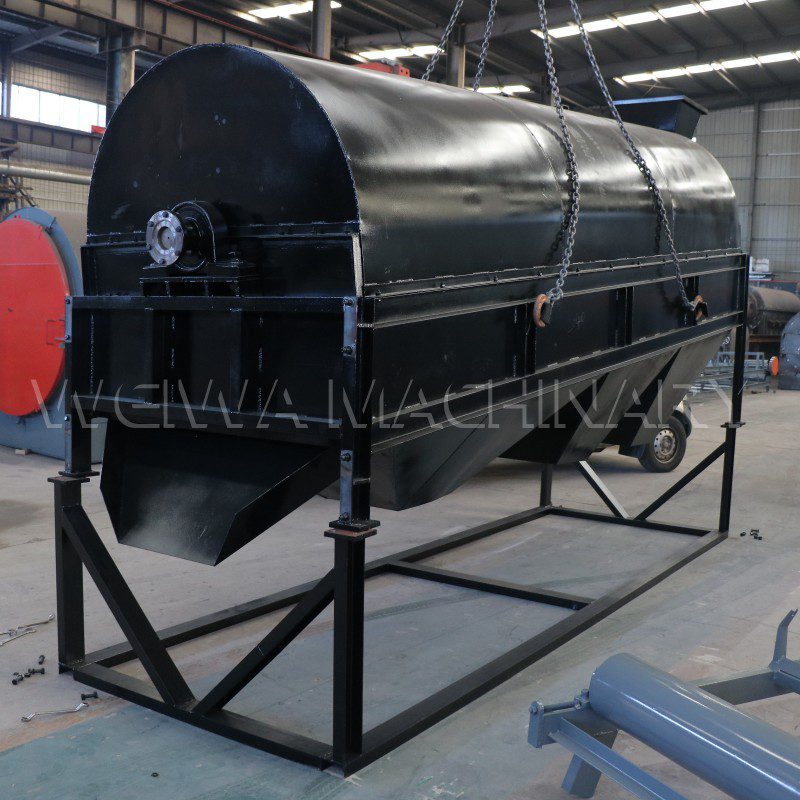
A rotary screen operates on a deceptively simple yet highly effective mechanical principle. Bulk material enters the elevated end of a slightly inclined cylindrical drum. As the drum rotates around its horizontal axis, material tumbles forward under the combined influence of gravity and rotational motion. Smaller particles pass through precisely engineered perforations in the drum wall, while oversized material continues to the discharge point. Unlike high‑frequency vibrating screens, a rotary screen relies on gentle tumbling rather than aggressive vibration. This characteristic reduces material degradation, lowers noise levels, and extends equipment service life.
From a technical perspective, rotary screens manufactured by Weiwa Machinery are defined by several performance parameters. Drum diameters typically range between nine hundred millimeters and two thousand four hundred millimeters, with lengths spanning from two meters to six meters depending on throughput requirements. Rotation speeds remain deliberately moderate, generally between twelve and twenty revolutions per minute, ensuring stable material movement without excessive abrasion. Screening efficiency consistently exceeds ninety percent when configured correctly for feed characteristics. These machines are capable of processing capacities from ten tons per hour to more than three hundred tons per hour, making them suitable for both small‑scale operations and large industrial plants.
The structural design prioritizes durability. Drums are fabricated from high‑strength carbon steel or stainless steel, selected according to material corrosiveness and environmental exposure. Perforation patterns are customizable, allowing operators to achieve precise cut points ranging from one millimeter up to one hundred millimeters. Drive systems employ heavy‑duty gearboxes coupled with energy‑efficient electric motors, ensuring consistent torque even under variable load conditions. These technical attributes collectively establish the rotary screen as a versatile and resilient solution for demanding applications.
Low‑Speed Tumbling for Fragile Materials
One of the defining advantages of a rotary screen is its ability to handle fragile materials without significant breakage. In agricultural contexts, where grains, seeds, or dried vegetables must be classified without damaging kernels, the low‑speed tumbling action proves invaluable. Similarly, in recycling operations involving glass cullet or brittle plastics, the reduced impact forces preserve material integrity. For Libyan operators managing mixed feedstocks, this capability translates into higher product value and reduced waste.
Why Libya Needs High‑Performance Rotary Screens?
Libya’s industrial landscape is shaped by its geography, climate, and economic priorities. The country possesses substantial reserves of aggregates, limestone, and industrial minerals essential for construction and infrastructure development. At the same time, agriculture remains a vital sector, particularly in coastal regions where irrigation supports crop production. Waste management and recycling initiatives are gradually expanding in urban centers such as Tripoli and Benghazi. Each of these sectors requires reliable material classification technologies that can withstand harsh operating conditions.
The Libyan climate presents specific challenges. Prolonged periods of high temperature, frequent dust storms, and limited water availability demand equipment that resists overheating, clogging, and premature wear. Vibrating screens, while effective in temperate environments, often struggle in desert conditions due to accelerated bearing failure and excessive dust generation. A rotary screen, by contrast, generates far less vibration and can be equipped with sealed drive systems and dust suppression features. This makes the rotary screen in Libya not merely a viable option but often the superior choice for continuous operation.
Furthermore, Libya’s logistics infrastructure imposes constraints on equipment maintenance. Remote quarries and rural agricultural sites frequently lack immediate access to specialized technicians or spare parts. The simplicity of rotary screen mechanics—few moving parts, accessible drum interiors, and straightforward drive assemblies—reduces dependency on complex servicing. Operators can perform routine inspections and minor repairs with basic tools, minimizing downtime and preserving productivity.
Adaptability to Arid Climates and Dust Environments
Dust control is a critical concern in Libyan industrial operations. Fine particulate matter not only affects worker health but also infiltrates mechanical components, accelerating wear. Weiwa Machinery addresses this challenge by integrating enclosed drum sections, strategically positioned dust extraction ports, and optional water misting systems. During field deployments, these adaptations have demonstrated a significant reduction in airborne dust concentrations, contributing to safer and cleaner worksites. Such enhancements reinforce the suitability of a rotary screen for Libya’s arid environment.
Rotary Screen in Libya Field Trials and Operational Results
To validate performance under real‑world conditions, Weiwa Machinery conducted extended field trials of its rotary screens at multiple Libyan sites. One notable trial took place at a construction aggregate facility near Tripoli, where the rotary screen was tasked with separating crushed limestone into three distinct size fractions. Feed material contained high moisture variability due to seasonal humidity fluctuations. Over a continuous four‑week evaluation period, the rotary screen maintained screening efficiencies above ninety‑two percent, with negligible blinding of the drum perforations. Operators reported stable throughput averaging one hundred eighty tons per hour, meeting project specifications without unplanned interruptions.
Another significant deployment occurred at a Benghazi recycling yard specializing in construction and demolition waste. Here, the rotary screen processed mixed debris containing concrete fragments, wood, plastics, and metals. The objective was to isolate reusable aggregates from non‑recyclable contaminants. Despite the heterogeneous nature of the feedstock, the rotary screen achieved consistent separation, delivering clean aggregate suitable for road base applications. Notably, the low vibration signature minimized disturbance to adjacent structures, an important consideration in urban recycling operations.
A third trial focused on agricultural screening in the Misrata region, where a rotary screen was employed to classify barley and wheat seeds prior to storage. The gentle tumbling action prevented seed cracking, while the adjustable aperture settings allowed operators to tailor cut points according to grain size distribution. Post‑trial analysis indicated a marked improvement in storage quality, attributed to the removal of broken kernels and foreign matter. These outcomes underscore the versatility of the rotary screen across diverse Libyan industries.
Trial Results from Tripoli Aggregate Site
Data collected during the Tripoli trial revealed several key performance indicators. Energy consumption averaged eighteen kilowatt‑hours per hundred tons processed, reflecting strong operational efficiency. Bearing temperatures remained within safe limits despite ambient highs exceeding forty degrees Celsius, validating the effectiveness of the cooling and sealing systems. Maintenance intervals extended beyond six hundred operating hours before routine lubrication became necessary. Collectively, these metrics confirm that a rotary screen in Libya can deliver reliable, cost‑effective performance even under strenuous conditions.
Industry Applications of Rotary Screens Across Libya
The utility of rotary screens extends across multiple sectors critical to Libya’s economic development. In mining and mineral processing, rotary screens efficiently classify ores, coal, and aggregates. Their ability to handle high tonnages with minimal fines generation aligns with the needs of quarry operators supplying construction projects nationwide. In the construction sector, rotary screens facilitate the recycling of demolition waste, supporting circular economy initiatives and reducing reliance on virgin materials.
Agricultural applications are equally compelling. Libya’s cereal production, particularly wheat and barley, benefits from pre‑storage screening to remove impurities and damaged grains. Fertilizer blending operations also leverage rotary screens to ensure uniform particle size distribution, enhancing nutrient delivery and crop yields. Food processing facilities, especially those handling flour, sugar, and spices, utilize stainless steel rotary screens to meet hygiene standards while achieving precise classification.
Environmental management represents another growth area. Municipal solid waste sorting facilities increasingly adopt rotary screens to segregate organic matter from inert materials. This capability supports composting programs and landfill diversion strategies. In cement production, rotary screens prepare raw meal by removing oversized clinker fragments, thereby protecting downstream grinding equipment. Across all these domains, the rotary screen for Libya emerges as a unifying technology capable of addressing varied material handling challenges.
Screening Efficiency in Benghazi Construction Projects
In Benghazi, ongoing infrastructure rehabilitation has intensified demand for high‑quality aggregates. Rotary screens deployed at local batching plants have enabled contractors to meet stringent gradation specifications. By producing consistently sized materials, these screens reduce variability in concrete strength and improve overall construction quality. The resulting reputation for reliability has encouraged broader adoption of rotary screening technology throughout the region.
Selecting the Right Rotary Screen for Libyan Operating Conditions
Choosing an appropriate rotary screen requires careful consideration of feed characteristics, environmental factors, and operational objectives. Material properties such as particle size distribution, moisture content, bulk density, and abrasiveness directly influence drum design and aperture selection. For instance, highly abrasive materials like quartzite necessitate hardened drum liners, whereas sticky materials may require anti‑clogging perforation geometries.
Environmental conditions in Libya further shape equipment specifications. High ambient temperatures call for enhanced cooling systems and heat‑resistant lubricants. Dusty atmospheres benefit from sealed enclosures and filtration units. In coastal areas, corrosion resistance becomes paramount, often dictating stainless steel construction. Throughput requirements determine drum dimensions and drive power, while space constraints may influence inclination angles and feed arrangements.
Maintenance accessibility is another crucial factor. Weiwa Machinery designs rotary screens with large inspection hatches, modular screen panels, and externally mounted bearings to simplify servicing. Training local operators ensures that routine tasks such as lubrication, screen replacement, and alignment checks can be performed independently, reducing reliance on external support. By aligning equipment configuration with site‑specific realities, operators maximize return on investment and minimize lifecycle costs.
Maintenance Strategies for Desert Operations
Effective maintenance protocols are essential for sustaining rotary screen performance in desert climates. Regularly scheduled cleaning prevents dust accumulation around bearings and drive components. Lubrication intervals should be adjusted to account for elevated temperatures, with priority given to high‑temperature greases. Visual inspections of drum perforations help detect early signs of wear or blockage. When properly implemented, these strategies extend equipment lifespan and preserve screening accuracy, reinforcing the long‑term value of a rotary screen for Libya.
Why Choose Weiwa Machinery for Your Rotary Screen Project?
Weiwa Machinery brings more than thirty years of engineering excellence to every rotary screen we manufacture. Our global footprint spans over one hundred twenty countries, with installations supporting mining, construction, agriculture, recycling, and food processing industries. In Libya specifically, our commitment extends beyond equipment supply to encompass comprehensive project support, including site assessment, customization, installation supervision, operator training, and after‑sales service.
Our rotary screens are distinguished by robust construction, precise engineering, and adaptability to extreme environments. We collaborate closely with clients to understand their unique challenges, whether related to material characteristics, climatic conditions, or logistical constraints. This consultative approach ensures that each rotary screen delivered to Libya is optimized for its intended application. Furthermore, our multilingual technical team provides responsive assistance, and our spare parts network facilitates timely replacements, minimizing operational disruptions.
Proven field performance reinforces our credibility. From Tripoli to Benghazi, from Misrata to Sabha, Weiwa rotary screens have demonstrated durability, efficiency, and reliability. Clients consistently report improved product quality, reduced operating costs, and enhanced process stability. These outcomes reflect not only the inherent strengths of the rotary screen design but also the rigorous quality control and customer‑centric philosophy that define Weiwa Machinery.
If you are evaluating screening solutions for your Libyan operation, we invite you to engage with our technical team. Together, we can identify the optimal rotary screen configuration to meet your production targets and environmental conditions. With Weiwa Machinery as your partner, you gain more than a supplier—you gain a long‑term ally committed to your success in one of Africa’s most dynamic industrial markets.
About Weiwa Machinery
Weiwa Machinery is a global leader in mineral processing, construction, recycling, agriculture, and cement production equipment. Headquartered in Gongyi City, Henan Province, China, we combine advanced engineering with decades of field experience to deliver durable, high‑performance machinery. Our products are exported to more than 120 countries and regions, serving over two million satisfied customers. We provide 24/7 customer support, spare parts supply, on‑site technical service, installation guidance, and operator training. Whether you require a rotary screen in Libya or a complete crushing and screening plant, Weiwa Machinery stands ready to support your operations with proven technology and unwavering service.
Contact us today:
Email: [email protected]
Phone: +86 18439853888
Website: https://crushmixplant.com/related-equipments/roller-screen.html