In recent years, the demand for high-efficiency material reduction equipment has grown rapidly across Latin America, and Colombia is no exception. From the limestone quarries of Boyacá and Santander to the gold and coal mining zones of Antioquia and Cesar, Colombian operators increasingly seek machinery that can handle variable feed conditions, reduce energy consumption, and produce uniform final products without frequent downtime. The Two-Stage Crusher supplied by Weiwa Machinery has emerged as a strategic choice for local businesses that require both primary and secondary crushing integrated into a single, rugged machine.
What Is a Two-Stage Crusher and How Does It Work?
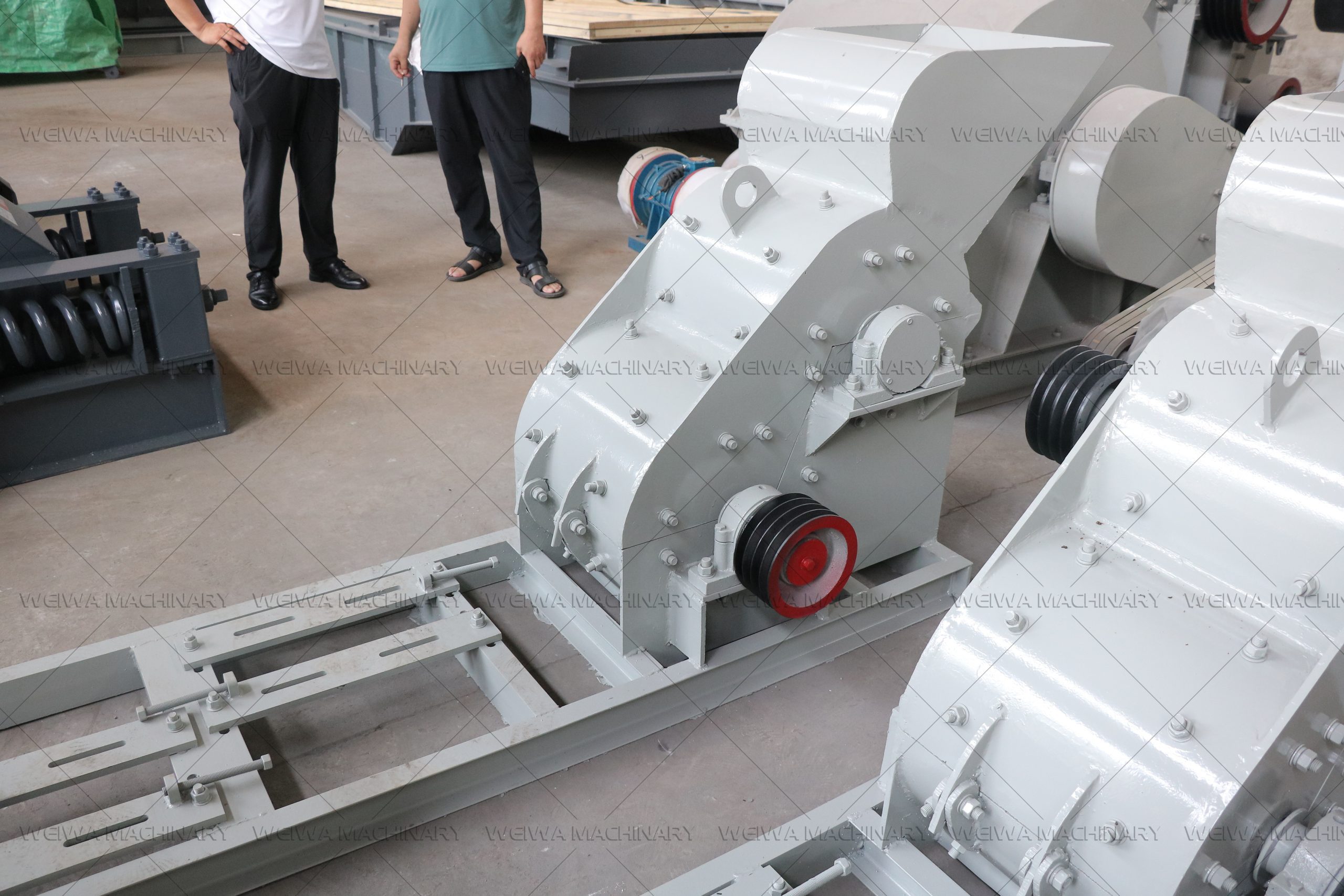
A Two-Stage Crusher, sometimes referred to as a double-rotor hammer crusher, is a piece of heavy-duty crushing equipment designed to accomplish both coarse breaking and fine grinding within one integrated housing. Unlike traditional systems that require a jaw crusher for primary size reduction followed by an impact or cone crusher for secondary refinement—often linked by conveyors, transfer bins, and additional foundations—the two-stage crusher compresses this workflow into two sequential crushing chambers driven by two independently rotating rotors mounted in series.
The raw material enters the first chamber where high-speed hammers attached to the upper rotor deliver strong impact force to break large lumps, typically up to 400 mm or more depending on model configuration. The partially crushed material then falls directly into the second chamber where the lower rotor, often running at a higher linear speed, subjects it to further impact, attrition, and inter-particle collision. The discharge gap between the hammer tips and the liner plates in the second chamber determines the final output size, which can be adjusted to produce particles commonly in the range of 0 to 5 mm or 0 to 10 mm according to application requirements. Because the two stages occur inside one machine, the need for intermediate handling equipment is minimized, floor space is reduced, and the overall energy per ton of processed material tends to be lower than with separate primary and secondary crushers operating in series.
Key Design Features Relevant to Colombian Conditions
Many Colombian crushing plants process materials with fluctuating moisture content, especially in coal regions and during rainy seasons in tropical zones. A notable feature of the Weiwa Two-Stage Crusher is its screenless bottom design. Traditional hammer mills with grate bars tend to clog when the moisture content exceeds approximately eight to ten percent, leading to blockages, overheated motors, and unplanned shutdowns. The screen-free discharge structure of our two-stage crusher allows fine particles to exit freely regardless of moisture level, making it particularly suitable for processing coal gangue, shale, clay-bearing limestone, and even mixed construction and demolition waste that may contain damp soil or organic residue. High-chromium alloy hammers with shift-adjustment technology enable operators to rotate and reposition worn hammerheads rather than discarding them, extending wear-part life significantly—a practical advantage for remote Colombian sites where spare parts logistics can be challenging.
Why the Colombian Market Needs Advanced Two-Stage Crushing Technology?
Colombia possesses diverse mineral resources including gold, coal, emeralds, nickel, limestone, and aggregates for construction. The topography and climate vary widely from the Andean highlands to the Caribbean coastal plains, meaning that crushing equipment must tolerate altitude-related engine derating, high humidity in some regions, and abrasive ores in others. Additionally, infrastructure reconstruction projects in urban areas generate substantial volumes of concrete, brick, and asphalt debris that require on-site or regional recycling into reusable aggregates.
A Crusher in Colombia must therefore be versatile. The Two-Stage Crusher in Colombia fills this need by offering a single machine capable of reducing oversized run-of-mine rock, calcined bauxite, slag, or demolition concrete in the first stage and simultaneously producing well-graded fine aggregate or mill-feed-sized product in the second stage. For small to medium-sized Colombian quarry owners, this reduces capital expenditure because one machine replaces two. For larger operations, it can be deployed as a dedicated fine-crushing unit ahead of ball mills or vibrating screens to improve downstream separation efficiency. The simplified flow sheet also means fewer personnel are required to monitor multiple pieces of equipment, which appeals to operations aiming to optimize labor costs while maintaining throughput.
Typical Applications of Two-Stage Crusher in Colombian Industries
Mining and Mineral Processing
In Colombian gold and copper prospects, ore often contains clay or weathered zones that cause conventional crushers to blind or choke. Our two-stage crusher handles such heterogeneous feeds steadily. The first rotor fractures the competent rock while dislodging clay clumps, and the second rotor completes the size reduction so that the product meets the top-size requirement for gravity concentration, flotation, or milling circuits. Reports from trial setups indicate that pre-crushing with a two-stage unit can increase ball mill throughput by allowing a smaller and more consistent feed size distribution, thereby reducing over-grinding and improving liberation characteristics.
Limestone and Aggregate Quarrying
Colombia’s construction boom drives demand for high-quality aggregates. Limestone is abundant in departments such as Boyacá, Cundinamarca, and Santander. A Two-Stage Crusher configured with manganese or high-chrome liners can accept run-of-quarry limestone up to 350 mm and produce cubical shaped aggregate in the 5 to 20 mm fractions as well as manufactured sand below 5 mm in a single pass. The uniform particle shape and controlled fines content benefit concrete producers who must comply with NTC (Norma Técnica Colombiana) specifications for compressive strength and workability.
Construction and Demolition Waste Recycling
Bogotá, Medellín, Cali, and Barranquilla generate thousands of tons of C&D waste annually. Reinforced concrete chunks, bricks, tiles, and asphalt millings can be fed into the two-stage crusher after magnetic separation to remove ferrous rebar. The first crushing stage breaks the bulky matrix, exposing embedded metal which is captured by downstream magnets, while the second stage refines the rubble into recycled coarse and fine aggregates suitable for base courses or new concrete with appropriate mix redesign. Adopting this approach helps Colombian contractors meet environmental regulations favoring circular economy practices and reduces landfill tipping fees.
Coal and Industrial Minerals
In the Cerrejón and other coal-producing regions, the Two-Stage Crusher is applied to crush coal seams containing shale partings and moisture-laden fines. The absence of a bottom screen prevents the notorious wet-coal blockage problem, and the adjustable gap ensures the minus-50 mm or minus-25 mm sizing required by preparation plants or export terminals. Similarly, gypsum, kaolin, and soft industrial minerals benefit from the gentle yet thorough two-step reduction that limits generation of excess ultra-fines when properly configured.
Field Trial Results – Weiwa Two-Stage Crusher Performance in Colombian Context
During a field evaluation conducted at a limestone processing plant in central Colombia, a Weiwa Two-Stage Crusher model with dual 132 kW motors was installed to replace an aging jaw-plus-impact circuit. The plant normally feeds blasted limestone with a top size of approximately 300 mm and moisture varying between three and seven percent depending on season. Prior to the upgrade, the jaw crusher frequently suffered from bridging when oversize boulders were presented, and the separate impact crusher required regular screen-pack cleaning which interrupted production every four to six hours.
After commissioning the two-stage crusher, the operator recorded a sustained throughput of 120 tons per hour with peak rates reaching 145 tph under optimal feed conditions, representing a roughly thirty percent improvement compared to the previous average. Energy consumption measured at the main switchboard showed a reduction of approximately eighteen percent per ton of finished product, attributed to the elimination of the transfer conveyor between primary and secondary stages and to the more efficient utilization of kinetic energy in the second rotor. Product sampling indicated that eighty-seven percent of the output was below 10 mm with a well-distributed granularity curve, meeting the specifications for both road-base aggregate and feed to the on-site vertical shaft kiln.
In a separate trial arranged for a municipal waste recycling cooperative in a metropolitan area, the two-stage crusher processed a blend of broken concrete, red clay bricks, and minor amounts of ceramic tile. Although the feed contained occasional wood splinters and plastic film, the open-discharge design prevented wrapping or packing. The recycled aggregate produced passed the local public-works department’s Los Angeles abrasion and flakiness index criteria after a single washing step. The cooperative noted that the compact footprint of the machine allowed installation within an existing covered shed without major civil works, accelerating the project payback period.
These field experiences demonstrate that a properly sized Two-Stage Crusher from Weiwa Machinery can adapt to Colombian material characteristics and deliver measurable gains in capacity, energy efficiency, and product quality while lowering maintenance frequency.
Technical Advantages of Weiwa Two-Stage Crusher Models
Dual Rotor Synchronous Drive System
Each rotor is driven by its own high-efficiency electric motor through a heavy-duty reduction gearbox. The upper rotor typically rotates at a slightly lower speed to maximize breaking force on large feed, whereas the lower rotor runs faster to enhance the fine-crushing action. The synchronized drive enables independent adjustment of rotor speeds via variable frequency drives when specified, giving Colombian operators flexibility to optimize performance for hard abrasive limestone one day and softer recycled concrete the next.
Wear-Resistant Components and Easy Maintenance Access
Hammer heads are cast from high-chromium alloy with martensitic matrix for superior impact and abrasion resistance. The unique shift-adjustment system permits three-step positional changes so that a single set of hammers delivers up to triple the service life compared to non-adjustable designs. Access doors on both sides of the casing and a hydraulic or manually assisted opening device allow technicians to inspect liners, rotate hammers, or replace worn parts without dismantling the entire upper structure. For Colombian customers located far from major cities, this design shortens maintenance windows and reduces the inventory of consumables that must be stocked on site.
No-Bottom-Screen Anti-Clogging Configuration
As emphasized earlier, the screenless discharge is pivotal for processing Colombian materials that may carry surface moisture, clay coatings, or organic contaminants. By controlling product size through the adjustable clearance between the lower rotor hammer tips and the arc-shaped liner plate rather than through grate bars, the crusher maintains continuous flow even when feed conditions temporarily deteriorate—a common scenario during rainy periods in the Andes or in open-pit coal mines.
Customization Options for Colombian Projects
Weiwa Machinery offers customization in several dimensions to suit the Colombian market. Feed opening dimensions can be enlarged for sites receiving exceptionally large boulders. Liner materials may be upgraded to high-manganese steel for highly abrasive gold ore or to medium-chrome alloys for limestone and recycled aggregate. Drive packages can be specified for 440 V or 480 V 60 Hz industrial power common in Colombian plants, or alternatively configured with diesel-generator sets for mobile installations in remote mining districts. Dust suppression spray nozzles and enclosed housing options are available for operations subject to strict environmental oversight in urban or ecologically sensitive areas.
How to Select the Right Two-Stage Crusher Model for Your Colombia Operation?
Choosing an appropriately sized Two-Stage Crusher begins with a clear understanding of your feed material properties. We recommend Colombian clients provide samples or detailed descriptions covering maximum feed size, typical and peak moisture content, abrasiveness or silica percentage, and the desired final product size range and shape. Expected hourly throughput should be stated as average sustainable feed rate rather than short-term peak, allowing our engineering team to factor in surge capacity.
For small quarries or pilot mining projects targeting 30 to 60 tph, our compact two-stage models with 55 to 90 kW total installed power are usually adequate. Medium-scale aggregate producers requiring 80 to 150 tph typically select models equipped with 110 to 185 kW combined motor power. Large mineral processing plants or central recycling facilities aiming at 200 tph and above can be served by our heavy-duty series with up to 355 kW drive and reinforced fabricated housings. Each proposal includes a recommended spare parts list, foundation drawing, and electrical schematic to streamline local installation by your engineering team or our supervised commissioning service.
If you are currently evaluating a Crusher in Colombia for a new project or a retrofit, our sales engineers can arrange a site visit—either in person or via video call—to review your existing layout and discuss how a Two-Stage Crusher in Colombia from Weiwa Machinery would integrate with your screening, conveying, and dust-control systems.
After-Sales Support and Spare Parts Availability for Colombian Customers
Weiwa Machinery has more than thirty years of experience exporting industrial crushing equipment to over one hundred and twenty countries. We understand that for Colombian buyers, timely access to technical support and wear parts is as important as the machine’s mechanical performance. Upon order confirmation, we supply comprehensive operation and maintenance manuals in English and, where requested, Spanish-language summaries for key safety and lubrication procedures.
Our standard warranty covers manufacturing defects for a period defined in the commercial contract, and we maintain a stock of commonly replaced items such as hammer sets, liner plates, bearings, and seals for quick dispatch from our warehouse. For urgent requirements, we coordinate international courier shipments to major Colombian airports including El Dorado (Bogotá), José María Córdova (Medellín), and Alfonso Bonilla Aragón (Cali). Remote troubleshooting is available via phone, email, or video conference with our technical department, and on-site commissioning or training visits can be arranged for larger orders to ensure your operators are fully confident in daily start-up, shutdown, and preventive maintenance routines.
Partner with Weiwa Machinery for Your Two-Stage Crushing Needs in Colombia
The Two-Stage Crusher represents a modern, space-saving, and energy-conscious approach to size reduction that aligns well with the operational realities faced by Colombian miners, quarry operators, recyclers, and industrial processors. Its ability to handle moist or clayey feeds without clogging, to produce uniform fine products in a single pass, and to reduce the complexity of the crushing circuit makes it a compelling alternative to traditional multi-machine setups. Field trials conducted in Colombian environments confirm that Weiwa Machinery’s engineering standards translate into reliable uptime, predictable wear-part life, and measurable improvements in throughput and power efficiency.
If you are considering the purchase of a Two-Stage Crusher for Colombia or wish to compare a two-stage solution against your current crushing flowsheet, we invite you to contact Weiwa Machinery for a personalized consultation, product datasheets, and a formal quotation tailored to your project parameters.
About Weiwa Machinery
Weiwa Machinery is a global manufacturer and supplier of complete material processing solutions with more than 30 years of expertise in the design and production of crushers, ball mills, rotary dryers, briquetting machines, and customized crushing plants. Our equipment serves the mining, construction, recycling, agriculture, and cement industries in over 120 countries and regions. Every Weiwa machine is built under strict quality control using advanced engineering and durable wear-resistant materials to ensure long service life even in demanding environments.
We provide end-to-end support—from initial inquiry and process recommendation through factory testing, overseas shipping, installation supervision, operator training, and after-sales spare parts supply. Our customer service team is available 24/7 to assist you.
Email: [email protected]
Phone / WhatsApp: +86 18439853888
Weiwa Machinery — Your trusted partner for efficient crushing and processing solutions in Colombia and worldwide.