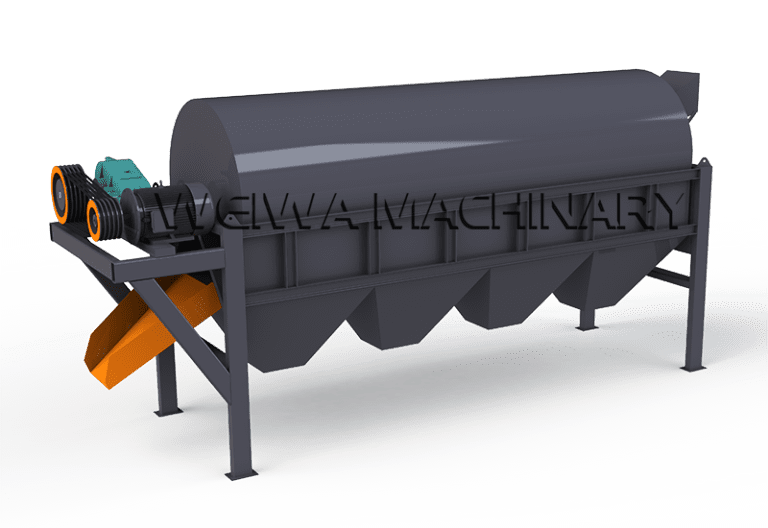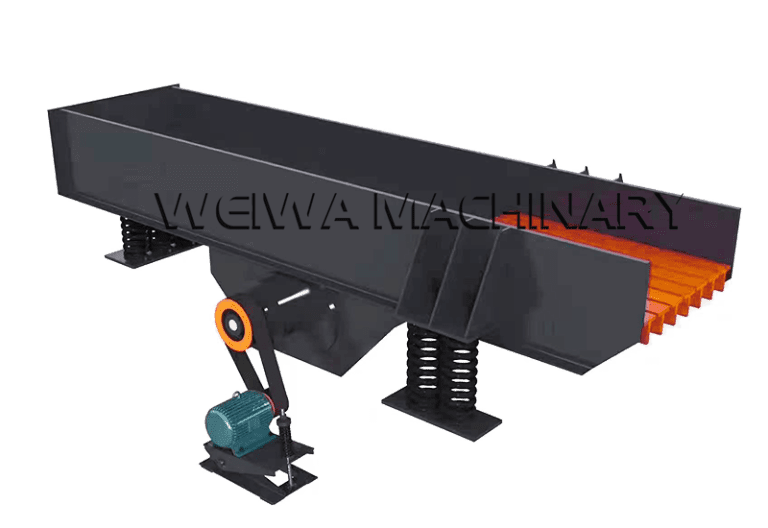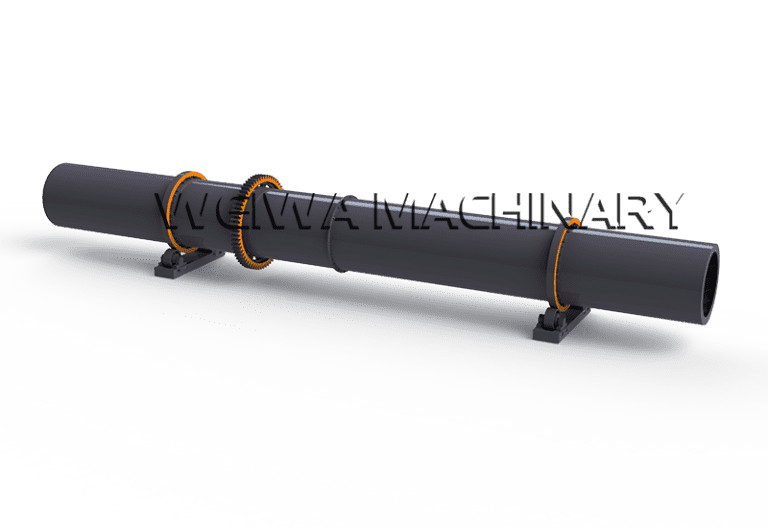
Recently, Weiwa Machinery completed the factory acceptance test and container loading of a full Ball Charcoal Briquettes Machine production line destined for the Republic of Congo and the Democratic Republic of Congo. This shipment is not only a logistics milestone for our company but also a reflection of the rapidly growing demand for making charcoal balls in Congo, where abundant biomass residues and traditional charcoal dust can be transformed into high-value fuel through a modern charcoal ball press machine and a complete Charcoal Briquette Machine system.
The concept of making charcoal balls in Congo is gaining traction because the region faces a paradox: widespread deforestation caused by traditional charcoal production on one side, and mountains of agricultural waste and charcoal fines discarded as useless on the other. A Ball Charcoal Briquettes Machine bridges this gap by compacting those fines into dense, uniform briquettes that burn longer and cleaner than loose charcoal powder. When equipped with a properly engineered charcoal ball press machine, a Charcoal Briquette Machine line can turn sawdust, coconut shell char, ground wood charcoal, and even certain mineral powders into marketable fuel. Our recent shipment to Congo includes a crusher, double-shaft mixer, binder dosing system, the charcoal ball press machine itself, a mesh belt dryer, and a semi-automatic packing unit—everything required for industrial-scale making charcoal balls.
Market Potential of Charcoal Briquette Machine and Making Charcoal Balls in Congo
The Republic of Congo and the DRC have some of the highest per-capita charcoal consumption rates in sub-Saharan Africa. Urban centers such as Brazzaville, Pointe-Noire, Kinshasa, and Lubumbashi rely heavily on charcoal for domestic cooking and small-scale industrial heating. At the same time, the two countries generate substantial volumes of biomass residues—palm kernel shells, cassava stems, sugarcane bagasse, sawmill offcuts, and coconut shells—most of which are either burned in open fields or left to rot. Introducing a Charcoal Briquette Machine for making charcoal balls in Congo allows local entrepreneurs to collect low-cost or free raw material, carbonize it in a simple kiln or furnace, crush the char into powder, and then feed it into a Ball Charcoal Briquettes Machine to produce standardized briquettes.
From an economic perspective, the payback period for a small-to-medium charcoal ball press machine line in Central Africa is often reported between six and eighteen months, depending on local charcoal prices and raw material accessibility. Finished briquettes made by a charcoal briquette machine command a premium over loose charcoal dust because they are cleaner to handle, produce less ash, and offer more consistent calorific value. For NGOs and government programs promoting clean cooking, subsidizing or facilitating the adoption of a Ball Charcoal Briquettes Machine aligns with reforestation and climate goals, since briquetting reduces the need to cut fresh trees for lump charcoal. Our Congolese client chose Weiwa Machinery after evaluating several suppliers because our charcoal ball press machine rollers are forged from high-chromium alloy, designed to withstand abrasive charcoal powder, and our engineering team provided a factory layout drawing adapted to their available workshop space.
The cultural shift toward packaged BBQ charcoal balls is also noticeable in Congolese urban retail markets. Supermarkets and street vendors increasingly prefer uniformly shaped briquettes produced by a Ball Charcoal Briquettes Machine because they fit standard packaging and are easier to ignite with minimal smoke. This trend mirrors what we have observed in Kenya, Zambia, and Nigeria, where making charcoal balls has evolved from a cottage industry into a formalized SME sector. A well-configured Charcoal Briquette Machine line—with the charcoal ball press machine at its core—positions Congolese investors to serve both the domestic cooking market and cross-border exports to neighboring Central African states.
What Is a Ball Charcoal Briquettes Machine and How Does the Charcoal Ball Press Machine Work?
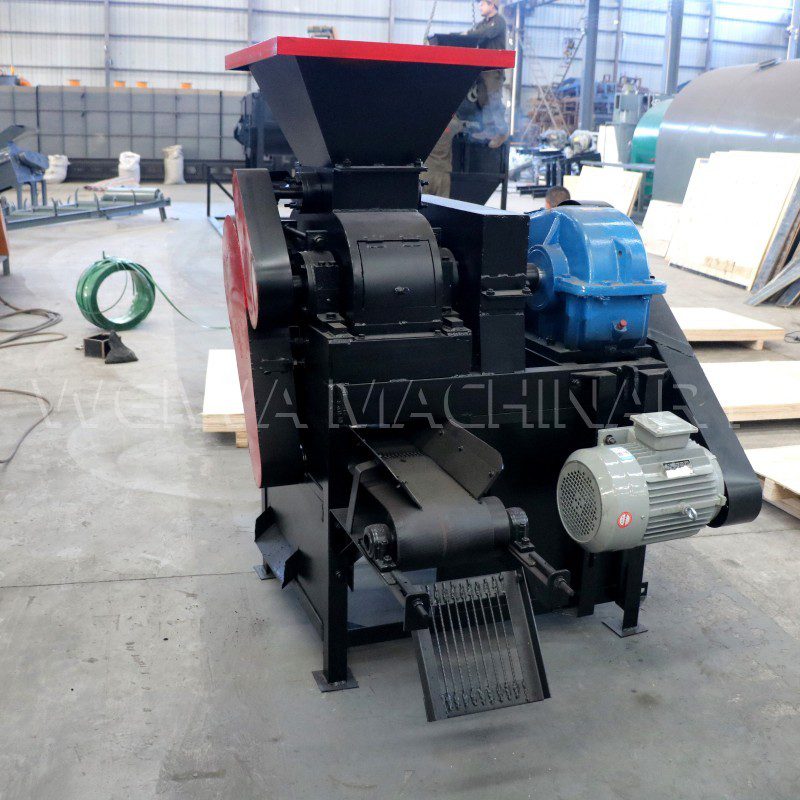
A Ball Charcoal Briquettes Machine, often referred to as a charcoal ball press machine or simply a Charcoal Briquette Machine with roller-type molding, is a piece of heavy-duty equipment that compresses finely ground charcoal or coal powder into spherical, oval, egg, or pillow-shaped briquettes under high mechanical pressure. Unlike screw extruders that push material through a heated barrel, the roller-type charcoal ball press machine relies on two counter-rotating rollers engraved with mold cavities. As the mixed powder—typically charcoal dust blended with a small percentage of binder and water—enters the nip point between the rollers, it is squeezed into the mold pockets and compacted to a density of 1.1 to 1.4 g/cm³.
Roller Pressing Principle in a Charcoal Ball Press Machine
The rollers of a Ball Charcoal Briquettes Machine are the heart of the system. They are usually made from 65Mn steel or a high-chromium alloy, surface-hardened to resist wear from abrasive powders. One roller is fixed axially while the other can float slightly to accommodate pressure fluctuations. The reduction ratio—the difference between the loose bulk density of the feed powder and the final briquette density—determines the required pressing force, which in our standard charcoal ball press machine models ranges from 15 to 80 tons depending on roller diameter and installed power. When making charcoal balls in Congo, clients typically request 25–40 mm ball or oval shapes, which our molds can produce with customizable engraving for branding purposes.
After the material passes the maximum pressure line at the roller center, the pressure drops rapidly and the formed briquette is ejected from the pocket by the continuing rotation. Any unformed powder or misshapen pieces are screened out and recycled back to the mixer. This closed-loop feature of a Charcoal Briquette Machine line minimizes waste and ensures high material utilization, a critical factor when raw material costs or logistics are significant in remote Congolese locations.
Shapes and Customization Options for Making Charcoal Balls
Although the term making charcoal balls suggests spherical output, most commercial Ball Charcoal Briquettes Machine installations in Africa produce oval or pillow shapes because these molds are easier to release and offer a larger contact area for binding. However, Weiwa Machinery can supply true round-ball molds, square tablets for shisha/hookah, or custom logos embossed on the briquette face. The flexibility of the charcoal ball press machine mold changeover means one Charcoal Briquette Machine frame can serve multiple product lines if the client wishes to diversify later. Our Congo shipment included interchangeable roller sets so the customer can switch between 30 mm oval and 25 mm round balls depending on seasonal market demand.
Complete Charcoal Briquette Machine Production Line for Making Charcoal Balls in Congo
A single charcoal ball press machine cannot operate optimally without properly prepared feed material. A turnkey line for making charcoal balls in Congo typically comprises the following sequential stages, all of which Weiwa Machinery supplies and integrates:
Raw Material Crushing Before the Ball Charcoal Briquettes Machine
Charcoal lumps, carbonized wood, or agglomerated char must be reduced to a powder of less than 3–5 mm for uniform feeding into the Ball Charcoal Briquettes Machine. We normally recommend a vertical compound crusher or a hammer mill with a sizing screen. Overly coarse particles prevent proper compaction in the charcoal ball press machine and cause high reject rates, while overly fine powder may require more binder. The crusher output is conveyed to a surge bin that buffers the Charcoal Briquette Machine line against feed inconsistencies.
Mixing and Binder Dosing for the Charcoal Ball Press Machine
In the double-shaft paddle mixer, charcoal powder is blended with a predetermined amount of water and binder. Common binders for making charcoal balls include cassava starch, corn starch, molasses, or bentonite clay—all of which are locally available in Congo at reasonable cost. The binder percentage typically ranges from 3% to 8% by weight depending on the charcoal type and desired briquette strength. Proper mixing is essential; inadequately wetted powder will not form balls in the charcoal ball press machine, while excess moisture leads to soft, deformed briquettes that require prolonged drying. Our mixer discharges the conditioned material onto a belt conveyor feeding the Ball Charcoal Briquettes Machine hopper.
Pressing Stage with the Charcoal Briquette Machine
The conditioned mixture enters the feeding device of the charcoal ball press machine, which uses a pre-pressing screw or vibrating chute to ensure even distribution across the roller width. The rollers then compress the material into the preset mold shape. Operators can adjust the gap between rollers and monitor hydraulic pressure in real time on the control panel. A well-tuned Ball Charcoal Briquettes Machine achieves a forming rate above 92%, meaning fewer than one in ten units require recycling. The freshly pressed briquettes still contain 12–18% moisture from the mixing stage and must be dried before they attain final hardness.
Drying and Packaging After Making Charcoal Balls
For the Congo project we supplied a multi-layer mesh belt dryer with temperature control between 80°C and 150°C, which reduces moisture to below 5% in 2–4 hours depending on briquette thickness. Sun drying is also an option for small-scale operations making charcoal balls in Congo, though it occupies more land and is weather-dependent. After drying, briquettes are passed through a vibrating screen to remove fines, then directed to a weighing and sealing machine. Branded polyethylene or kraft paper bags enhance shelf appeal in urban markets and differentiate your product from loosely sold traditional charcoal.
Raw Materials Suitable for a Charcoal Briquette Machine in the Congo Region
One of the strongest selling points of a Ball Charcoal Briquettes Machine is its ability to process diverse feedstocks. In Congo and surrounding Central African nations, the following materials are commonly used with a charcoal ball press machine:
Hardwood charcoal powder from traditional earth kilns or improved retorts is the most widespread feedstock for making charcoal balls in Congo. Sawdust charcoal produced in drum carbonizers is increasingly popular because it yields a more uniform particle size. Coconut shell charcoal, imported via coastal ports or sourced from inland plantations, produces premium BBQ briquettes with high fixed carbon and low ash—ideal for export-grade products from a Charcoal Briquette Machine line. Coal powder and coke breeze can also be briquetted on the same charcoal ball press machine with adjusted roller pressure and binder formulation, serving industrial heating markets.
Agricultural residues such as palm kernel shell char, rice husk char (if available from imported rice milling), and bagasse char can be blended with wood charcoal powder to reduce raw material cost. The Ball Charcoal Briquettes Machine handles mixed feeds well provided the particle size distribution is controlled and the binder dosage is optimized during the mixing stage. Our technical team assists clients in conducting small-batch trials before finalizing binder recipes for making charcoal balls in Congo.
Why Choose Weiwa Machinery Ball Charcoal Briquettes Machine and Charcoal Ball Press Machine
Weiwa Machinery has been manufacturing briquetting and carbonization equipment for more than thirty years. Our factory in Henan, China, covers a large production area with CNC machining centers, heat treatment workshops, and a dedicated assembly line for charcoal ball press machine units ranging from 1 t/h to 20 t/h capacity. Every Ball Charcoal Briquettes Machine undergoes a no-load test and a load simulation before leaving the workshop. We provide photographic and video evidence of the test run so overseas clients—such as our Congo customer—can verify quality before container loading.
Beyond hardware, Weiwa Machinery delivers engineering services that differentiate us in the international market. We produce CAD layout drawings and 3D renderings of your proposed Charcoal Briquette Machine plant, taking into account your building dimensions, power supply (380V/415V/440V, 50Hz or 60Hz), and local climate considerations. For the Congo shipment, we adapted the line to a 415V/50Hz three-phase supply and specified tropical-duty motors with IP55 protection. Our after-sales team offers 24/7 technical support via email and video call, and we can dispatch field service technicians for on-site installation and operator training when required. Spare parts kits—including spare rollers, bearings, and seals for the charcoal ball press machine—are packed in the same container to minimize downtime.
Customization is central to our approach. Whether you need a specific hourly output, a unique briquette shape from your Ball Charcoal Briquettes Machine, a diesel-engine-driven version of the charcoal ball press machine for areas with unstable electricity, or a fully automated PLC-controlled Charcoal Briquette Machine line with touchscreen HMI, Weiwa Machinery engineers a solution matched to your budget and market ambition. Our machines have been exported to over 120 countries across Asia, Europe, South America, and especially Africa—Kenya, Tanzania, Zambia, Nigeria, Ghana, Ethiopia, and now Congo.
Installation Commissioning and Training for Making Charcoal Balls in Congo
Upon arrival at the destination port—typically Pointe-Noire for ROC or Matadi for DRC—the Ball Charcoal Briquettes Machine line components are cleared and transported to the client’s site. Weiwa provides a detailed installation manual in English and French upon request, along with annotated diagrams showing foundation requirements for the charcoal ball press machine and dryer. Foundation bolts and anchor plates are included. During the first production run, our remote engineers guide the local team through startup sequencing: checking roller alignment, calibrating the binder dosing pump, adjusting the feeder screw RPM to match the Charcoal Briquette Machine rated capacity, and setting the dryer temperature profile.
Training covers safe operation of each machine in the line, routine maintenance intervals for the charcoal ball press machine (greasing bearings, inspecting roller surface wear, replacing hydraulic oil), troubleshooting common issues such as low briquette strength or excessive rejects, and basic quality control tests for briquette density and drop resistance. Well-trained operators are the key to consistent output when making charcoal balls in Congo, and Weiwa Machinery considers operator training an integral part of every sale, not an optional extra.
Frequently Asked Questions About Charcoal Ball Press Machine and Ball Charcoal Briquettes Machine
Can one Charcoal Briquette Machine handle both charcoal and coal powder?
Yes, the same charcoal ball press machine frame can process charcoal dust, coal fines, coke breeze, and certain mineral powders. You may need to adjust the binder type and roller pressure. Mold cavities are interchangeable on most Ball Charcoal Briquettes Machine models we supply.
What binder is best for making charcoal balls in Congo?
Cassava starch and corn starch are widely used and locally obtainable in Central Africa. Molasses can be added to improve green strength. Our team helps you determine the optimal percentage during the trial phase of your Charcoal Briquette Machine project.
How much space is required for a complete line making charcoal balls?
A typical 1–2 t/h Ball Charcoal Briquettes Machine line with crusher, mixer, press, and dryer needs approximately 150–250 m² of covered workshop space plus an area for raw material storage and finished goods. We provide a site layout drawing customized to your available footprint.
Is a diesel-powered charcoal ball press machine available?
Yes. For locations with unreliable grid power, we can equip the charcoal ball press machine and auxiliary equipment with diesel engines or a diesel-generator package. This is a common request for making charcoal balls in Congo outside major cities.
What is the typical lead time for a Ball Charcoal Briquettes Machine order?
Standard models of our Charcoal Briquette Machine and charcoal ball press machine are usually ready within 15–25 working days. Customized roller molds or special voltage/motor specifications may extend production to 30–40 days. Shipping to Central Africa typically takes 35–50 days depending on the port of discharge.
About Weiwa Machinery
Weiwa Machinery is a professional manufacturer of briquetting equipment and carbonization plants with more than 30 years of industry experience. We have served over 2,000,000 customers in more than 120 countries. Our product range includes the Ball Charcoal Briquettes Machine, charcoal ball press machine, charcoal extruder, coal briquette press, honeycomb briquette machine, rotary carbonization furnace, and continuous biochar kiln. We offer customized design drawings, factory layout planning, spare parts supply, and 24/7 after-sales support. Whether you plan to start making charcoal balls in Congo or expand an existing Charcoal Briquette Machine operation, our team is ready to assist you with a tailored solution and competitive quotation.
Contact us for inquiry and free factory layout design:
Email: [email protected]
WhatsApp / Phone: +86 18439853888