In the vast industrial landscape of Russia, moisture reduction and continuous bulk-material drying are foundational requirements across mining, construction, agriculture, biomass, and chemical sectors. As a globally active manufacturer with more than 30 years of experience, Weiwa Machinery has closely observed how the demand for rotary dryers and industrial tumble dryers continues to expand throughout the Russian Federation.
Understanding the Russian Industrial Drying Context
Russia’s geography, climate, and resource base strongly influence how industrial drying systems are selected and operated. With long winters, sub-zero temperatures in many regions, and widely distributed raw-material sources such as iron ore, limestone, coal, wood chips, grains, and chemical salts, Russian enterprises require drying equipment that is thermally efficient, mechanically robust, and capable of handling variable feed moisture. In this context, the rotary dryer has become a mainstream choice. Sometimes referenced simply as a tumble dryer in industrial procurement discussions, this equipment type is valued for its continuous operation, large throughput, and adaptability to harsh environments. Weiwa Machinery’s rotary dryer in Russia projects reflects these realities, where equipment must perform reliably despite ambient temperatures dropping below -20°C and where fuel flexibility—natural gas, coal, biomass, or oil—is essential.
The Russian drying market is not merely about equipment supply. It is about system integration, thermal efficiency, environmental compliance, and after-sales responsiveness. When Weiwa Machinery engages with Russian partners, the conversation begins with material characteristics: particle size distribution, initial and target moisture content, abrasiveness, and thermal sensitivity. These parameters determine drum diameter, length, slope, rotation speed, flight design, and heat-source configuration. A dryer that performs well in a Guangdong sand-drying plant may require significant redesign for a Siberian coal-slime application. This is why Weiwa Machinery treats every rotary dryer in Russia as a customized engineering project rather than a standardized commodity export.
Climate Challenges and Thermal System Design
One of the most distinctive aspects of deploying a rotary dryer in Russia is thermal retention. In extremely cold regions, drum surface heat loss, air leakage, and combustion air preheating become critical design considerations. Weiwa Machinery addresses these challenges by specifying enhanced insulation layers, sealed kiln-type roller supports, and combustion chambers capable of maintaining stable flame profiles under fluctuating ambient conditions. During trial runs conducted near the Ural industrial belt, our tumble dryer units demonstrated stable internal temperature gradients even when external temperatures hovered around -15°C. The dryer’s ability to sustain inlet temperatures between 120°C and 150°C for agricultural grains, or up to 600–750°C for mineral drying, ensured consistent moisture reduction without over-drying or thermal shock to the material.
Another climate-related factor is fuel availability. In many Russian regions, natural gas infrastructure is well developed, while in remote mining or forestry zones, biomass or coal firing is more economical. Weiwa Machinery’s rotary dryer systems are designed with multi-fuel burners and configurable furnace chambers, allowing the same tumble dryer to operate efficiently whether fired by clean gas or solid fuels. This flexibility directly supports Russian operators seeking to minimize drying cost per ton while meeting tightening environmental standards.
Core Working Principle of a Rotary Dryer in Industrial Applications
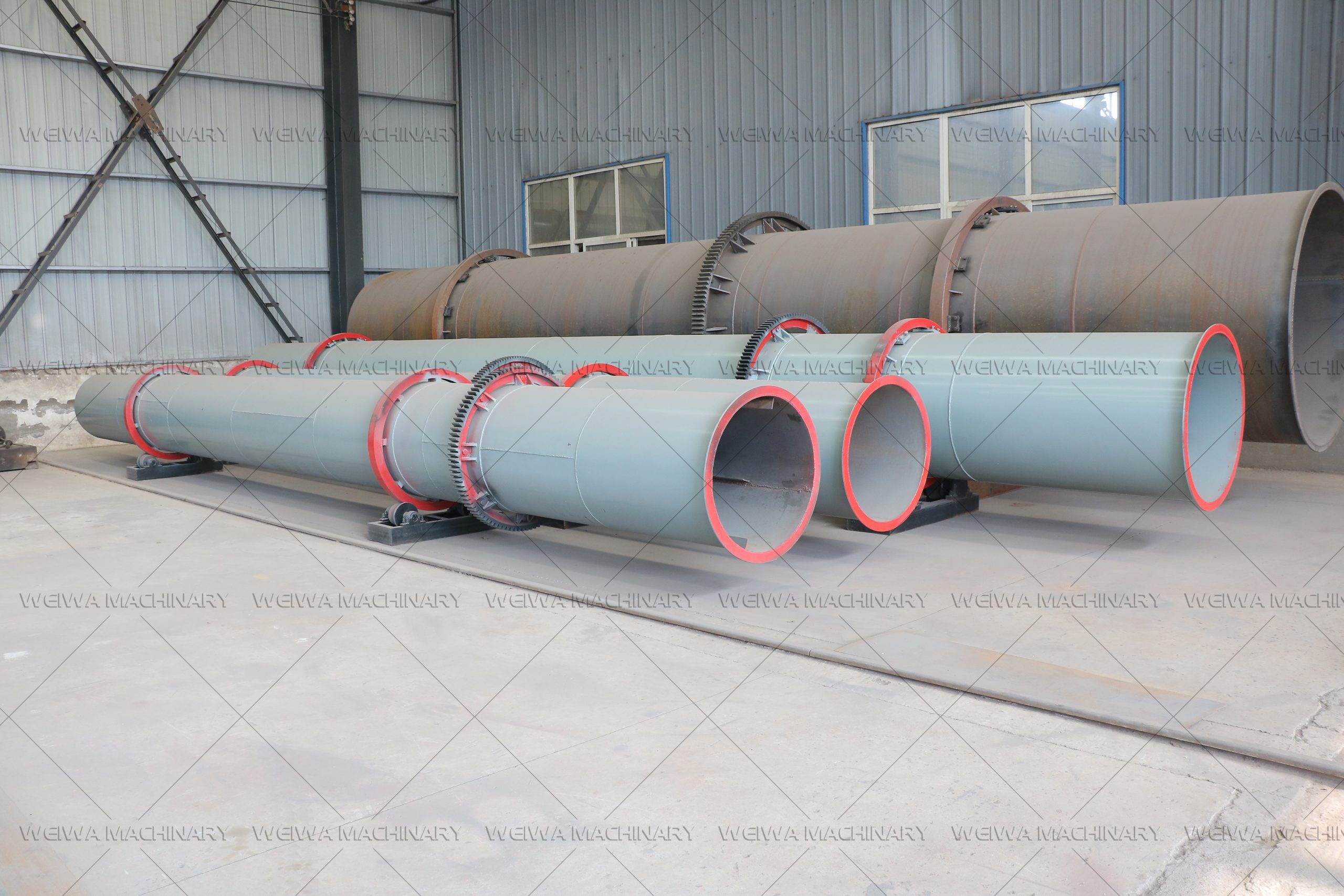
To appreciate why the rotary dryer is so widely adopted in Russia, it is useful to revisit its working principle in practical terms. A rotary dryer consists of a slightly inclined rotating cylindrical drum equipped with internal lifting flights. Wet material is fed from the higher end. As the drum rotates, the flights lift and cascade the material through a stream of heated gas flowing either parallel or counter-current to the material movement. Gravity and rotation advance the material toward the discharge end, where dried product exits for downstream processing or storage.
This seemingly simple mechanism is highly effective because it continuously renews the material surface exposed to hot gas, enabling efficient convective heat transfer and evaporation. The residence time, which depends on drum slope, rotation speed, and length, can be tuned to match moisture removal requirements. In Russia, where materials such as wet sand, gypsum, wood chips, or mineral concentrates often arrive with moisture contents ranging from 15% to over 30%, the rotary dryer’s adjustable retention time is a decisive advantage. Weiwa Machinery routinely configures tumble dryer systems with variable-frequency drives and adjustable damper controls, allowing operators to fine-tune throughput and dryness in response to seasonal feed variations.
Key Components That Influence Performance in Russia
A robust rotary dryer system comprises more than a rotating shell. For Russian industrial sites, Weiwa Machinery emphasizes several critical subsystems. The drum shell itself is fabricated from high-strength steel, often with wear-resistant liners when processing abrasive ores or slag. Support rollers, thrust rollers, and a precision-machined girth gear ensure stable rotation under heavy loads. The flight design—angle, spacing, and shape—determines how material is showered through the gas stream; poorly designed flights cause uneven drying and localized over-heating. During trial runs in southern Russia, our redesigned lifting flights improved thermal contact area by optimizing material curtain formation, resulting in more uniform exit moisture profiles across batch and continuous runs.
Equally important are the combustion and air-handling systems. A tumble dryer is only as efficient as its heat source and exhaust management. Weiwa Machinery integrates high-efficiency burners, insulated ducting, induced draft fans, and primary/secondary dust collection (cyclones and optional baghouses) to control emissions and recover sensible heat. In several rotary dryer in Russia installations, we implemented waste-heat recovery from adjacent kilns or boilers, reducing auxiliary fuel consumption by double-digit percentages. Such optimizations are essential in the Russian market, where energy cost and environmental permitting increasingly drive equipment selection.
Russian Market Sectors Where Rotary Dryers Deliver Value
The versatility of the rotary dryer allows it to serve multiple Russian industries. In mining and mineral processing, dryers handle iron ore, copper concentrate, bauxite, limestone, and coal. Moisture reduction improves transport efficiency, reduces smelting energy demand, and prevents freezing in rail transport during winter. In agriculture, a tumble dryer is indispensable for grains, oilseeds, and pulses, especially in export-oriented regions such as the Rostov and Krasnodar areas. Here, the dryer must preserve germination viability while achieving safe storage moisture levels, typically around 13–14% for wheat. Weiwa Machinery’s trial runs with grain cooperatives confirmed that controlled-temperature drying with gradual moisture removal avoids thermal damage and maintains product quality.
Construction materials form another major segment. Cement plants, gypsum board manufacturers, and fly-ash processors rely on rotary dryers to condition raw feeds before calcination or mixing. In chemical and fertilizer production, the dryer must accommodate salts, fertilizers, and sometimes corrosive by-products. Weiwa Machinery’s rotary dryer in Russia for a fertilizer application incorporated stainless-clad flight sections and specialized refractory lining to extend service life. Biomass and waste management represent a growing niche: wood chips, sawdust, bark, sewage sludge, and municipal solid waste all require bulk drying before pelletizing, combustion, or landfilling. Our tumble dryer deployments in Russian biomass plants demonstrated stable throughput even with variable feed moisture and bulk density, thanks to adjustable damper systems and intelligent feed-control interfaces.
Regional Considerations Across the Russian Federation
Russia’s sheer size means that a rotary dryer in Moscow Oblast faces different constraints than one in Novosibirsk or Yakutia. Western Russia benefits from denser energy infrastructure and shorter logistics chains, allowing larger, integrated drying lines. Eastern and northern regions prioritize cold-weather reliability, modular assembly, and spare-parts availability. Weiwa Machinery mitigates these regional risks by pre-assembling major sub-units, providing Russian-language documentation, and conducting remote commissioning sessions when travel is restricted. During a Siberian trial, our engineers guided local technicians via video link to complete initial start-up, calibrate temperature loops, and verify exhaust parameters, underscoring the importance of support models tailored to Russian operational realities.
Trial Run Methodology and Performance Evaluation
A central theme of this blog is the trial run phase, which Weiwa Machinery regards as the bridge between factory acceptance and full-scale production. Before a rotary dryer is fully commissioned at a Russian client site, we typically conduct factory load simulations using surrogate materials matched to the client’s moisture and bulk-density profile. Once shipped, on-site trial runs follow a structured protocol: mechanical inspection, no-load rotation test, hot commissioning with incremental feed, and stabilized full-capacity operation.
During the mechanical inspection, alignment of support rollers, clearance of thrust rollers, and lubrication of open gears are verified. The no-load test confirms stable rotation, vibration limits, and electrical protection coordination. Hot commissioning introduces the heat source and a controlled material feed. This stage reveals how the tumble dryer behaves under thermal expansion, how evenly the material curtains form, and whether temperature sensors and dampers respond correctly. Finally, full-capacity trials run continuously for 24–72 hours, measuring throughput, moisture reduction, fuel consumption, power draw, and dust emission levels.
Representative Trial Run Observations from Russian Sites
In a southern Russian grain-drying trial, Weiwa Machinery deployed a pilot-scale rotary dryer with a design capacity of approximately 10 tons per hour of wheat. Ambient temperature during the trial was around -5°C. The dryer maintained internal drying temperatures of 120–150°C and consistently reduced grain moisture from 18% to 13% across successive batches. Energy consumption measured approximately 380 MJ per ton, and operators reported reduced labor compared to previous static-bed systems. Based on these results, the cooperative proceeded with a full-scale triple-pass tumble dryer integrated with pre-cleaning equipment.
In another trial in the Ural region for limestone drying, a counter-current rotary dryer with 30-ton-per-hour capacity utilized waste heat from an adjacent kiln. The trial demonstrated a 15% improvement in thermal efficiency relative to the client’s legacy parallel-flow dryer. Maintenance downtime decreased by roughly 40%, attributed to easier access to internal components and reduced refractory wear. Vibration analysis under fluctuating feed sizes confirmed structural integrity, and exhaust dust concentrations remained within permitted limits using a two-stage cyclone plus baghouse system.
A third example involved biomass drying in a central Russian wood-processing zone. The rotary dryer processed mixed wood chips and sawdust with initial moisture around 35–40% down to 12–15%. The trial highlighted the importance of flight geometry: initial flights designed for coarser chips caused uneven cascading when finer sawdust dominated the feed. Weiwa Machinery retrofitted a hybrid flight arrangement combining lifting and dispersing segments, after which exit moisture uniformity improved markedly. Such iterative adjustments during trial runs are common and reflect the dryer’s inherent adaptability when engineering support is proactive.
Across these cases, several performance themes emerge. First, the rotary dryer’s ability to handle wide moisture ranges and particle mixes suits Russian raw-material variability. Second, thermal efficiency gains are achievable through counter-current flow, waste-heat integration, and improved insulation—measures that directly impact operating cost. Third, operator feedback consistently emphasizes controllability: once trained, Russian plant staff find tumble dryer parameters intuitive to adjust, and the equipment tolerates minor feed fluctuations without frequent shutdowns. These qualities matter in remote sites where technical manpower is limited.
Technical Specifications and Customization for Russian Conditions
While every Weiwa Machinery rotary dryer is tailored, certain specification ranges are common in Russian projects. Drum diameters typically span 1.2 m to 3.0 m, with lengths from 10 m to 30 m depending on retention time needs. Slope angles are usually 3–5°, rotation speeds adjustable between 2–8 rpm via VFD, and drive power sized from 7.5 kW for smaller units up to 90–160 kW for large-capacity systems. Inlet temperatures vary from 120°C for heat-sensitive agricultural products to 600–750°C for minerals and aggregates. Moisture reduction targets commonly range from initial 15–40% down to final 1–12%, depending on material and process requirements.
Customization for Russia often includes reinforced insulation packages rated for -40°C ambient, explosion-relief panels for combustible dust environments, and PLC-based control systems with Russian-language HMI screens. Conveyor interfaces, feed hoppers with anti-bridging agitators, and discharge seals are designed for local material flow properties. In regions with strict emissions regulations, Weiwa Machinery supplies multi-stage dust collection and continuous emission monitoring interfaces. The goal is not only to deliver a tumble dryer that dries material, but a rotary dryer system that integrates seamlessly into a Russian plant’s safety, automation, and environmental framework.
Installation, Logistics, and Commissioning in the Russian Context
Exporting a rotary dryer to Russia involves more than engineering. Customs clearance, certification alignment (such as EAC conformity), winter road restrictions, and heavy-haul logistics require coordinated planning. Weiwa Machinery prepares detailed packing lists, translated technical manuals, and modular disassembly plans to accelerate on-site assembly. During winter, foundation curing and crane access must be scheduled around weather windows. Our experience shows that involving local installation contractors early, sharing 3D general arrangement drawings, and pre-shipping critical small parts in separate climate-protected crates reduces delays.
Commissioning in Russia often benefits from a hybrid model: Weiwa engineers on-site for mechanical alignment and safety verification, complemented by remote support for control logic tuning and process optimization. This approach proved effective during pandemic-related travel limits and remains valuable for routine startups. A tumble dryer is a dynamic system; fine-tuning damper positions, sensor PID loops, and feed-rate interlocks during the first weeks of operation locks in performance and builds operator confidence. Russian clients who engage actively in this phase typically achieve stable moisture specs sooner and report fewer teething issues.
Why Russian Partners Choose Weiwa Machinery’s Rotary Dryer Solutions?
Beyond technical specifications, several factors differentiate Weiwa Machinery in the Russian market. First is cumulative experience: over 30 years of designing industrial drying systems and exporting to more than 120 countries means we have encountered—and solved—a wide spectrum of drying challenges. Second is customization discipline: we do not force a standard tumble dryer onto every application. Instead, we analyze material properties, plant layout, fuel options, and climate to propose a rotary dryer configuration aligned with the client’s economics and compliance needs.
Third is transparent trial-run methodology. Weiwa Machinery documents trial parameters, shares baseline vs. optimized performance data, and co-evaluates results with the client before sign-off. This transparency builds trust, especially in a market as relationship-driven as Russia. Fourth is after-sales structure: spare parts lists mapped to local warehouses when possible, 24/7 technical response, and operator training programs delivered on-site or remotely. In a country where equipment downtime directly impacts seasonal operations—such as grain harvest or winter coal processing—this support dimension is often decisive.
Finally, there is a cultural and commercial alignment. Weiwa Machinery understands that Russian projects value durability, straightforward maintenance, and clear communication. Our tumble dryer designs avoid over-complicated subsystems that are hard to service in remote sites. We specify internationally sourced bearings and motors with local representation in Russia when feasible, and we provide dimensional interchangeability data to simplify future upgrades. In conversations with Russian engineers, the message is consistent: a rotary dryer should work hard, be understandable, and be fixable with locally available resources.
Future Outlook: Rotary Dryer In Russia
Looking ahead, several trends will shape rotary dryer adoption in Russia. Energy efficiency mandates will push operators toward heat recovery, variable-speed drives, and smarter combustion control. Environmental oversight will continue to tighten, favoring closed-loop dust collection and low-NOx burners. Digitalization will gradually penetrate even heavy industrial sites, with remote monitoring of drum shell temperatures, bearing vibration, and moisture sensors becoming more common. Weiwa Machinery is adapting by embedding IoT-ready interfaces into our tumble dryer control panels, enabling Russian clients to track OEE-related metrics and receive predictive-maintenance alerts.
At the same time, material diversity will grow. As Russian agriculture expands into oilseeds and legumes, as mining diversifies into rare earths and industrial minerals, and as biomass-to-energy projects multiply, the rotary dryer’s role will broaden. Success will belong to suppliers who combine sound thermal engineering with local insight. Weiwa Machinery’s ongoing investments in Russia-focused design adaptations—enhanced cold-weather packages, EAC-aligned documentation, and modular shipping formats—reflect this commitment.
Partnering for Reliable Drying in Russia
The rotary dryer, often referenced simply as a tumble dryer in industrial contexts, remains one of the most effective solutions for continuous, large-scale moisture removal across Russian industries. Its strength lies in mechanical simplicity married to process flexibility: a rotating drum, intelligent flight design, controlled heat transfer, and adjustable residence time. Yet realizing these benefits in Russia demands more than importing equipment. It requires climate-aware engineering, rigorous trial runs, operator empowerment, and long-term support.
Weiwa Machinery approaches every rotary dryer in Russia project with this holistic mindset. From initial material testing and thermal calculation to on-site trial runs and post-commissioning optimization, our objective is consistent: deliver a tumble dryer system that performs reliably in harsh conditions, meets moisture and environmental targets, and integrates smoothly into the client’s workflow. As Russian industries evolve, the partnership between equipment supplier and operator must likewise evolve—technically, commercially, and culturally. Weiwa Machinery is committed to that evolution and to helping Russian enterprises transform drying from a bottleneck into a competitive advantage.
If you are evaluating a rotary dryer for your Russian site, whether for mining, agriculture, construction, chemicals, or biomass, we invite you to discuss your material profile and operational goals with our team. Together, we can design, trial, and deploy a drying solution engineered for Russia’s realities and your long-term success.