Introduction
The industrial landscape of Malaysia has undergone significant transformation in recent years, driven by rapid urbanization, infrastructure development, and a surge in demand for construction materials. At the heart of this progress lies a critical yet often overlooked piece of machinery: the hammer crusher. Designed to handle everything from limestone and coal to construction debris, hammer crushers have become indispensable in Malaysia’s mining, cement, and recycling sectors.
The Mechanics Behind Hammer Crushers
A hammer crusher operates on a simple yet effective principle: high-velocity impact. Raw materials—ranging from soft limestone to moderately hard gypsum—are fed into a spinning rotor equipped with pivoting hammers. Upon impact, materials shatter against stationary anvils or perforated screens, reducing them to desired sizes. This streamlined process eliminates the need for multiple crushing stages, slashing operational costs and boosting throughput.
Why Malaysia Needs Hammer Crushers?
Malaysia’s diverse industrial sectors demand versatility. Hammer crushers excel here:
- Cost-Effectiveness: Lower energy consumption compared to jaw crushers or cone crushers.
- Space Efficiency: Compact designs ideal for Malaysia’s urbanized industrial zones.
- Adaptability: Adjustable screens cater to varying output requirements (e.g., 0–5mm for cement, 5–20mm for road base).
Hammer Crushers in Action: Malaysian Use Cases
Mining & Quarrying
Malaysia’s limestone-rich regions rely on hammer crushers to supply aggregate for cement plants. For instance, a major quarry in Perak doubled its output by integrating Weiwa’s hammer crusher, which handled 80–100 tons per hour while maintaining a particle size of 15mm.
Construction Waste Recycling
Urbanization generates massive amounts of concrete and asphalt waste. Hammer crushers in Kuala Lumpur’s recycling facilities crush these materials into reusable aggregates, reducing landfill dependency. A notable project saw a 30% reduction in construction material costs through on-site recycling.
Cement Production
Cement plants in Johor leverage hammer crushers to pulverize limestone into fine powder—a critical step in clinker production. Weiwa’s machines achieve a uniform particle distribution, enhancing kiln efficiency and product quality.
On-Site Delivery and Installation
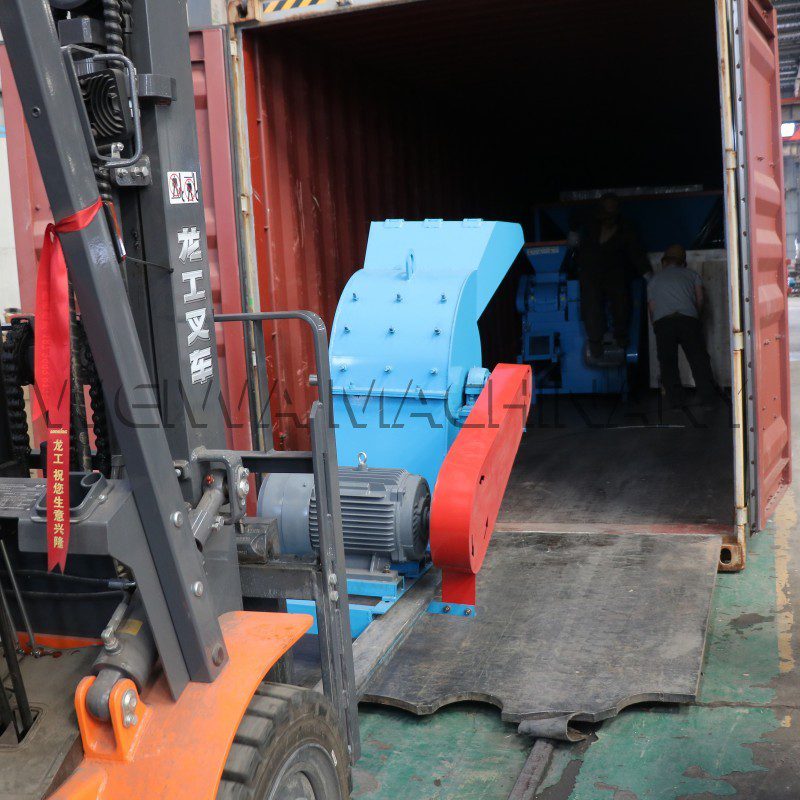
A key differentiator of Weiwa Machinery’s offerings is our end-to-end support, extending from factory delivery to on-site commissioning. Here’s how we ensure a seamless transition from shipment to operation in Malaysia:
1. Streamlined Logistics
- Global Transport Network: Hammer crushers bound for Malaysia are carefully packaged and loaded onto container ships at our Chinese ports, with transit times averaging 3–4 weeks.
- Customs Clearance: Our dedicated logistics team handles Malaysian import regulations, ensuring hassle-free clearance and timely delivery to sites across Kuala Lumpur, Penang, and Johor.
2. On-Site Assembly and Testing
- Expert Technicians: Weiwa deploys skilled engineers to oversee installation, often arriving weeks before equipment arrival to prepare the site.
- Client Collaboration: During assembly, our team works closely with Malaysian operators to align the crusher’s configuration (e.g., screen size, rotor speed) with their specific material needs (e.g., limestone for cement, recycled concrete for roads).
3. Launch and Training
- Cold-Run Testing: Before full-scale operation, crushers undergo rigorous testing with sample materials to verify throughput rates and particle size accuracy.
- Operator Training: Weiwa conducts hands-on workshops to familiarize Malaysian crews with maintenance protocols, safety checks, and troubleshooting techniques.
Case Highlight:
During a recent delivery to a Perak limestone quarry, our team coordinated a 20-ton hammer crusher shipment via sea freight. Within 5 days of arrival, the unit was fully operational, exceeding the client’s expected throughput of 100 tons per hour.
What Sets Weiwa’s Crushers Apart?
Weiwa Machinery’s hammer crushers are engineered for Malaysia’s unique challenges:
Durability Meets Local Conditions
- Wear-Resistant Components: Hammers and liners crafted from high-manganese steel withstand Malaysia’s abrasive laterite ores.
- Climate Adaptation: Sealed bearings and dust-proof designs combat tropical humidity, minimizing maintenance downtime.
Precision Engineering
- Customizable Screens: Replaceable grids allow operators to switch between 0–3mm, 3–8mm, and 8–15mm outputs with ease.
- Rotor Optimization: Variable-speed motors (up to 3,000 RPM) ensure optimal impact force for diverse materials.
Weiwa Crushers in Malaysian Operations
A leading Malaysian cement manufacturer recently partnered with Weiwa to replace outdated equipment. Key outcomes:
- Throughput Boost: Daily output increased by 40% (from 500 to 700 tons).
- Energy Savings: Reduced power consumption by 15% via streamlined crushing dynamics.
- Sustainability: Integrated dust suppression systems met Malaysia’s stringent environmental regulations.
Why Weiwa Machinery? A Partner for Malaysia’s Future
With over three decades of global experience, Weiwa Machinery stands out as a trusted solutions provider in Malaysia:
- Localized Expertise: Dedicated teams in Kuala Lumpur and Penang ensure seamless installation and training.
- After-Sales Support: 24/7 technical assistance and spare parts availability across major cities.
- Sustainability Focus: Energy-efficient designs align with Malaysia’s green industrial initiatives.
Conclusion
Hammer crushers are more than machinery—they’re catalysts for progress in Malaysia’s resource-driven economy. By combining cutting-edge technology with localized support, Weiwa Machinery empowers industries to achieve peak efficiency, reduce costs, and meet sustainability goals. For inquiries or to explore how our hammer crushers can elevate your operations, reach out today:
- Email: [email protected]
- Phone: +86 18439853888
- Website: Weiwa Hammer Crushers
Let’s build Malaysia’s future—together.