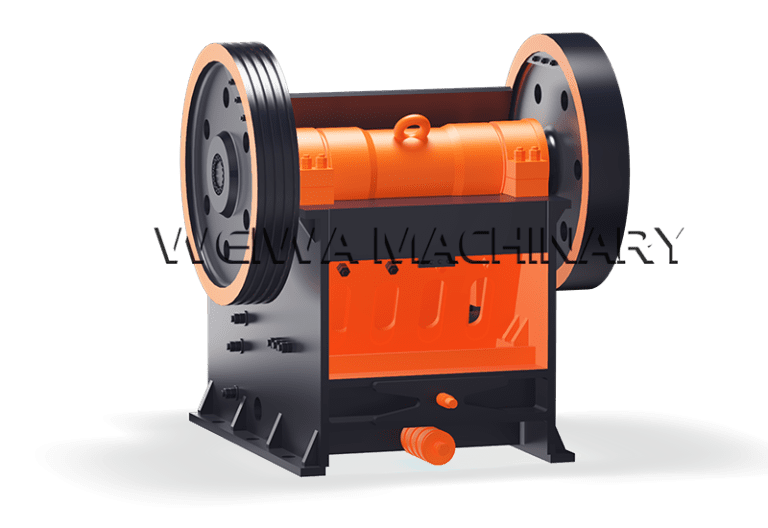
The demand for reliable primary crushing solutions in Southeast Asia has grown significantly over the past decade, and Laos is emerging as one of the most promising markets for mining, quarrying, and infrastructure development. Recently, Weiwa Machinery successfully completed the factory testing, packaging, and shipment of a heavy-duty jaw crusher destined for a long-term client in Laos. This delivery is not only a milestone for our export division but also an opportunity to demonstrate how a jaw crusher in Laos can adapt to local geological conditions, energy considerations, and project-scale requirements.
Understanding the Jaw Crusher as Core Crushing Equipment
A jaw crusher is a compression-based mechanical device designed to reduce large-sized ore, rock, and construction waste into smaller, manageable fragments suitable for secondary crushing, screening, or direct application. The operational principle resembles the biting motion of a human jaw, where a moving jaw plate driven by an eccentric shaft oscill exerts
The name jaw crusher derives from this cyclical motion: raw material enters the crushing chamber through the feed opening, the movable jaw closes periodically against the fixed jaw, and material is fractured along its natural cleavage planes due to compressive forces. This simple yet robust mechanism makes the jaw crusher the most widely used primary Crusher in mining, metallurgy, highway construction, railway projects, and urban demolition.
In the context of a jaw crusher in Laos, where granite, basalt, limestone, and river stone are commonly processed, the deep crushing chamber, high-strength fly
wear-resistant manganese steel liners, and adjustable discharge ports of a modern jaw crusher ensure consistent output size and high reduction ratios. Unlike impact crushers that rely on striking energy, a jaw crusher for Laos mining sites priorit
often delivers better performance on hard and abrasive materials with lower maintenance intensity, which is critical in remote quarries where spare part replacement must be efficient.
Core Structural Components of a Jaw Crusher
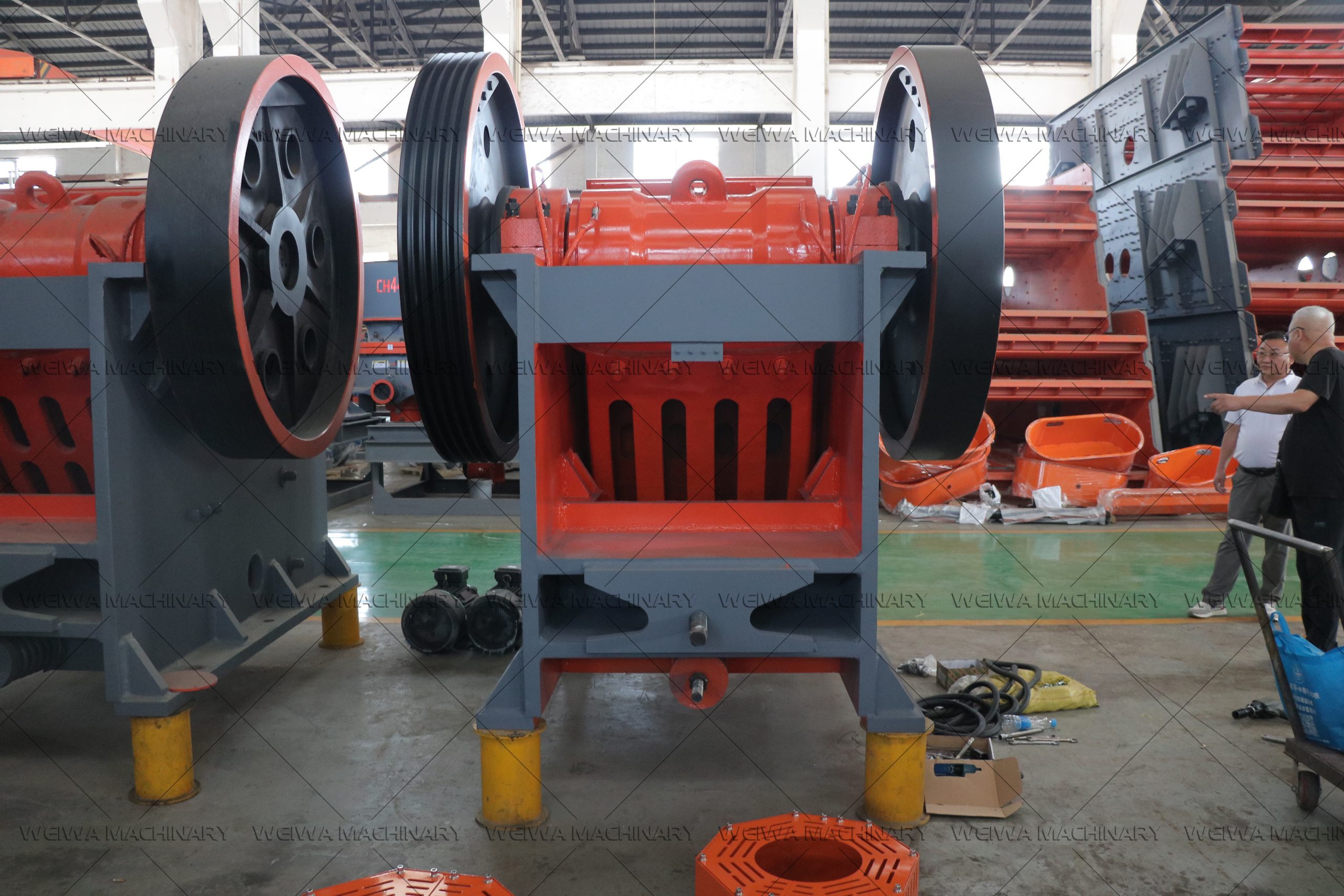
From an engineering perspective, the jaw crusher consists of a rigid frame, eccentric shaft, toggle plate system, flywheel, movable jaw, fixed jaw, side liners, and a wedge-based discharge gate adjustment mechanism. The eccentric shaft is typically forged from high-carbon steel and supported by heavy-duty spherical roller bearings to withstand continuous impact loads. The toggle plate not only transmits motion but also acts as a safety fuse—if uncrushable material enters the chamber, the toggle plate breaks first to protect the main frame. These design details are essential when evaluating any Crusher for Laos deployments, where tramp iron or oversized boulders are not uncommon in Laotian river gravel and open-pit mining operations.
Weiwa Machinery’s jaw crusher models integrate precision-machined eccentric shafts, stress-relieved welded frames, and modular liner systems that allow site technicians to replace wear parts without dismantling the entire pitman assembly. This engineering philosophy aligns with the practical needs of a jaw crusher in Laos, where minimizing downtime directly correlates with project profitability.
Why Laos Is a Strategic Market for Crushing Equipment?
Laos has been investing heavily in road networks, hydropower plants, urban expansion, and mineral resource exploitation. With abundant reserves of copper, gold, potash, bauxite, and aggregates, the country requires scalable crushing solutions across multiple provinces including Vientiane, Luang Prabang, Savannakhet, and Champasak. A Crusher for Laos must therefore balance mobility
throughput capacity, energy efficiency, mobility (for scattered quarries), and resilience to seasonal rainfall that affects material moisture content.
The jaw crusher for Laos applications typically serves as the first-stage unit in a stationary or mobile crushing plant. Feeding the project involves producing 0–40 mm aggregates for concrete batching or preparing run-of-mine ore for grinding circuits, the primary Crusher determines the downstream efficiency. If the jaw crusher delivers uneven granulularity or frequent blockages, secondary cones or impactors will suffer from overloading and accelerated wear. This systemic is why Weiwa Machinery emphasizes scientific chamber
selection of feed opening size, closed-side setting (CSS), eccentric throw, and motor power when configuring a jaw crusher in Laos.
Infrastructure and Mining Drivers in Laos
Road construction under regional connectivity initiatives has increased demand for high-quality basalt and granite aggregates. Similarly, small-to-medium gold and copper mines increasingly adopt mechanized comminution to replace manual hammer breaking. In both scenarios, a jaw crusher provides the necessary reduction from 400–600 mm feed size down to 50–150 mm at capacities ranging from 50 to 500 tph depending on model selection. The versatility of a jaw crusher for Laos sites lies in its ability to handle slightly plastic clayey feeds (common in alluvial zones) without severe chamber clogging, especially when equipped with a deep-cavity design and steep nip angles.
Jaw Crusher Shipment to Laos Field Report
On the morning of the shipment, our production team conducted the final pre-delivery inspection of a PE-series jaw crusher ordered by a Laotian aggregates producer. The unit featured a 750×1060 mm feed opening, suitable for processing 600 mm maximum feed, with an estimated capacity of 110–320 tph based on material density and CSS. Before container loading, we invited the client’s representative to witness a simulated trial run using locally representative limestone and river stone samples shipped earlier from Laos to our Gongyi factory.
During the trial, the jaw crusher in Laos-bound machine operated at 225 rpm eccentric shaft speed under variable feed rates. The first test batch consisted of 50 tons of 300–500 mm limestone with intermediate hardness (approx. 120 MPa compressive strength). Over a continuous 90-minute run, the jaw crusher maintained stable amperage draw, with peak current at 78% of rated motor capacity, indicating balanced load distribution. Discharge size distribution analyzed by sieve showed 82% of product within 0–60 mm when CSS was set at 65 mm, aligning with the client’s requirement for Crusher for Laos aggregate plants supplying asphalt mixing units.
Trial Run Observations and Technical Performance
Several key performance indicators were recorded during the factory acceptance trial. First, the crushing ratio reached approximately 8:1, effectively reducing 500 mm boulders to sub-60 mm fragments in one pass. Second, the wedge-type discharge adjustment allowed CSS changes in under 15 minutes without stopping the machine, a crucial advantage for a jaw crusher for Laos sites where feed size fluctuates due to blast pattern inconsistencies
variations. Third, vibration levels measured at four frame points remained below 4.5 mm/s RMS, confirming proper flywheel balancing and foundation alignment. Fourth, specific energy consumption calculated at 0.85 kWh per ton of limestone, competitive within the Crusher industry benchmark for similar-capacity primary units.
Noise emissions at 1 meter from the chassis were recorded at 74 dB(A), compliant with typical environmental expectations for a jaw crusher in Laos urban-peripheral installations. Dust generation during the trial was minimized by integrating a primary spray nozzle bracket above the discharge chute, a recommendation we often include when deploying any jaw crusher for Laos cement and asphalt aggregate producers concerned with community impact.
Scientific Selection Criteria for a Jaw Crusher in Laos
Choosing the correct jaw crusher model is not merely about matching quoted tph numbers. For a Crusher for Laos application, engineers must evaluate feed gradation, material abrasiveness (SiO₂ content), moisture, bulk density, required product curve, and plant layout constraints. Weiwa Machinery typically follows a five-step selection methodology: site questionnaire, material sample testing, capacity simulation using empirical formulas, model recommendation with multiple CSS scenarios, and confirmation of motor, starter, and foundation specifications.
For instance, if a Laotian client processes high-silica river stone with 350 MPa compressive strength, we may recommend a heavier-duty jaw crusher frame with reinforced rib structures and upgraded Mn18Cr2 liners rather than standard Mn13. Conversely, for soft limestone quarries near Vientiane, a lighter jaw crusher in Laos configuration with higher rotational speed can increase fines within 10–30 mm range, improving asphalt mix gradation. Ignoring these nuances often leads to underestimated wear costs and overestimated uptime, problems we help clients avoid by tailoring each jaw crusher for Laos proposal to geological reality.
Importance of Crushing Chamber Profile
The chamber profile—defined by nip angle, stroke, and depth—directly influences whether a jaw crusher bites efficiently or skips material. A too-steep nip angle causes material to ride the jaw without fracturing, while too-shallow angles reduce throughput. Our jaw crusher designs for the Crusher for Laos market use computer-aided kinematic simulation to optimize the moving jaw’s trajectory, ensuring a forward-and-downward motion that pushes material deeper into the cavity. This reduces recycled oversize and improves capacity by 10–15% compared to conventional straight-plate chambers, a meaningful gain for Laotian operators working with narrow profit margins.
Commissioning and Operator Training for Laos Clients
Beyond hardware, Weiwa Machinery provides commissioning support and operator training for every jaw crusher in Laos delivery. Language barriers and varying technical backgrounds necessitate visual manuals, bilingual labeling, and hands-on sessions. During training, we emphasize daily checks: lubrication oil level in the eccentric shaft housing, tightness of toggle seat bolts, liner wear measurement using template gauges, and monitoring of bearing temperature via embedded PT100 sensors where applicable.
A well-trained team ensures the jaw crusher for Laos sites operates
operates within design parameters, avoiding common pitfalls such as over-tightening the toggle plate, neglecting flywheel keyway inspection, or improper grease selection in high-humidity climates. Our after-sales engineers also guide clients on setting up a planned maintenance calendar—typically lubricating every 250 operating hours, rotating liners when worn unevenly, and replacing toggle seats after 3,000–5,000 hours depending on feed abrasiveness. This holistic approach differentiates a generic Crusher supplier from a committed partner in the Laotian market.
Spare Parts Strategy for the Laotian Market
One concern frequently raised when sourcing a jaw crusher in Laos from overseas manufacturers is spare parts lead time. Weiwa Machinery mitigates this by maintaining high-wear item inventories (liners, toggle plates, springs) in regional logistics hubs and offering detailed parts kits with each shipment. For critical components like eccentric shafts or bearings, we provide interchangeable drawings so local machining workshops in Laos can source equivalents if urgent replacement is needed. Ensuring continuity of operation for every jaw crusher for Laos customer is central to our service philosophy, especially in remote mining zones where downtime can exceed several days if parts are not pre-planned.
Environmental and Operational Considerations in Laos
Sustainability is gradually influencing equipment choices in Southeast Asia. A modern jaw crusher contributes to environmental goals through efficient size reduction (less recirculation, lower total energy per ton), extended liner life (less scrap), and compatibility with dust suppression and enclosed conveyors. In several Crusher for Laos tend, clients now ask about power factor correction, VFD compatibility for soft starting, and noise control—areas where our jaw crusher in Laos offerings include optional acoustic enclosures, energy-efficient motors meeting IE3 standards, and pulley guard designs that double as dust shields.
Moreover, the jaw crusher for Laos agricultural or residential-adjacent projects benefits from our modular skid-mounted designs that minimize concrete foundation volume, reducing embedded carbon and site preparation time. Such considerations, though sometimes secondary to price, increasingly affect tender evaluations in Laos government-affiliated infrastructure works.
Safety Features on Weiwa Jaw Crushers
Safety remains non-negotiable. Each jaw crusher leaving our factory is equipped with emergency pull-cord switches, guarded flywheels, secure access l with anti-slip grating, and clearly marked lubrication points. For the jaw crusher in Laos market, we also provide lock-out/tag-out procedure templates in English and basic Lao terminology to help site managers enforce safe maintenance practices. Since a Crusher is a high-energy machine with pinch points and flywheel inertia, embedding safety into both design and training protects personnel and avoids regulatory friction when importing a jaw crusher for Laos job sites.
Long-Term Market Outlook for Crushers in Laos
Industry analysts expect Laos to continue expanding its road network, rural electrification through small hydropower, and mineral exports over the next decade. This trajectory implies sustained demand for primary crushing equipment. However, competition among Crusher for Laos suppliers is intensifying, with buyers becoming more knowledgeable about total cost of ownership rather than upfront price alone. Factors such as liner life per ton, ease of CSS adjustment, local service responsiveness, and machine resale value now weigh heavily in procurement decisions.
Weiwa Machinery’s strategy is to solidify our presence by demonstrating that a jaw crusher in Laos from our by us is not a commodity product but a engineered solution backed by metallurgical expertise, trial-run transparency, and responsive support. Every jaw crusher for Laos we deliver carries with it the accumulated experience of serving over 2,000,000 customers globally,, adapted to the specific terrain, climate, and industrial maturity of the Laotian market.
Adapting to Material Variability in Laos
One lesson
technical challenge unique to the region is material variability—river stone may transition from rounded cobbles to angular crushed boulders within the same quarry face. A rigid jaw crusher setting would either choke on larger fractions or over-grind smaller feeds, wasting energy. Our solution on recent Crusher for Laos projects includes recommending variable-speed feeders ahead of the jaw crusher in Laos to regulate surge loads and, where budget allows, hydraulic adjust systems that enable CSS changes under load. These incremental upgrades transform a standard jaw crusher for Laos configuration into a responsive production asset capable of handling real-world feed instability.
Conclusion of the Laos Shipment Case and Technical Perspective
The recent shipment of a Weiwa jaw crusher to Laos encapsulates the intersection of mechanical reliability, market-specific engineering, and customer-centric service. Through factory trials simulating Laotian stone conditions, we validated that our jaw crusher in Laos performs with stable throughput, controlled product sizing, manageable wear rates, and operator-friendly adjustments. As infrastructure and mining evolve in the country, selecting the right Crusher for Laos applications will remain a decisive factor in project economics. Weiwa Machinery remains committed to supporting Laotian clients with technically sound recommendations, transparent testing, and long-term partnership rather than transactional equipment sales.
Whether you are planning a new quarry in Savannakhet, upgrading an existing crushing plant near Vientiane, or exploring mineral processing in Luang Prabang, a properly specified jaw crusher for Laos operations can lay the foundation for consistent aggregate quality and predictable operating costs. We invite you to leverage our technical team’s expertise to evaluate your material, capacity, and site constraints—because in crushing, as in business, the first stage determines everything that follows.
About Weiwa Machinery
Weiwa Machinery is a leading manufacturer and exporter of mining and construction equipment based in Gongyi City, Henan Province, China. With decades of engineering experience, we specialize in jaw crushers, cone crushers, impact crushers, sand-making machines, ball mills, rotary dryers, and complete crushing & beneficiation flowsheets. Our products have been exported to more than 120 countries and regions, earning the trust of over 2,000,000 customers worldwide. We provide 24/7 technical support, spare parts supply, on-site commissioning, and operator training to ensure maximum uptime and performance. Weiwa Machinery combines robust Chinese manufacturing capabilities with global service commitment, making us a reliable partner for clients seeking a Crusher for Laos and beyond.
Contact Us:
Email: [email protected]
Phone / WhatsApp: +86 18439853888
Address: Dahuangye Industrial Zone, Gongyi City, Henan Province, China
Website: https://crushmixplant.com/crusher-machine/jaw-crusher.html