In the rapidly expanding industrial landscape of Mexico, where construction aggregates, silica sand, limestone, copper-bearing ores, and mineral concentrates are processed on a massive scale every day, moisture control remains one of the most persistent operational bottlenecks for plant owners and project engineers. Excessive moisture in bulk solids leads to clumping during conveyance, inaccurate batching in concrete production, increased freight costs for outbound mineral shipments, and reduced thermal efficiency in downstream calcination or smelting circuits. For decades, the rotary dryer—often referred to in industrial contexts as a tumble dryer or tumbling drum dryer—has been the workhorse solution for continuous, high-capacity moisture removal across mining, aggregate, cement, chemical, and biomass sectors worldwide. At Weiwa Machinery, with more than thirty years of engineering expertise and equipment deployed in over one hundred twenty countries, we have closely studied the specific climatic, regulatory, and feedstock challenges facing Mexican processing plants.
Understanding the Industrial Rotary Dryer and Tumble Dryer Concept
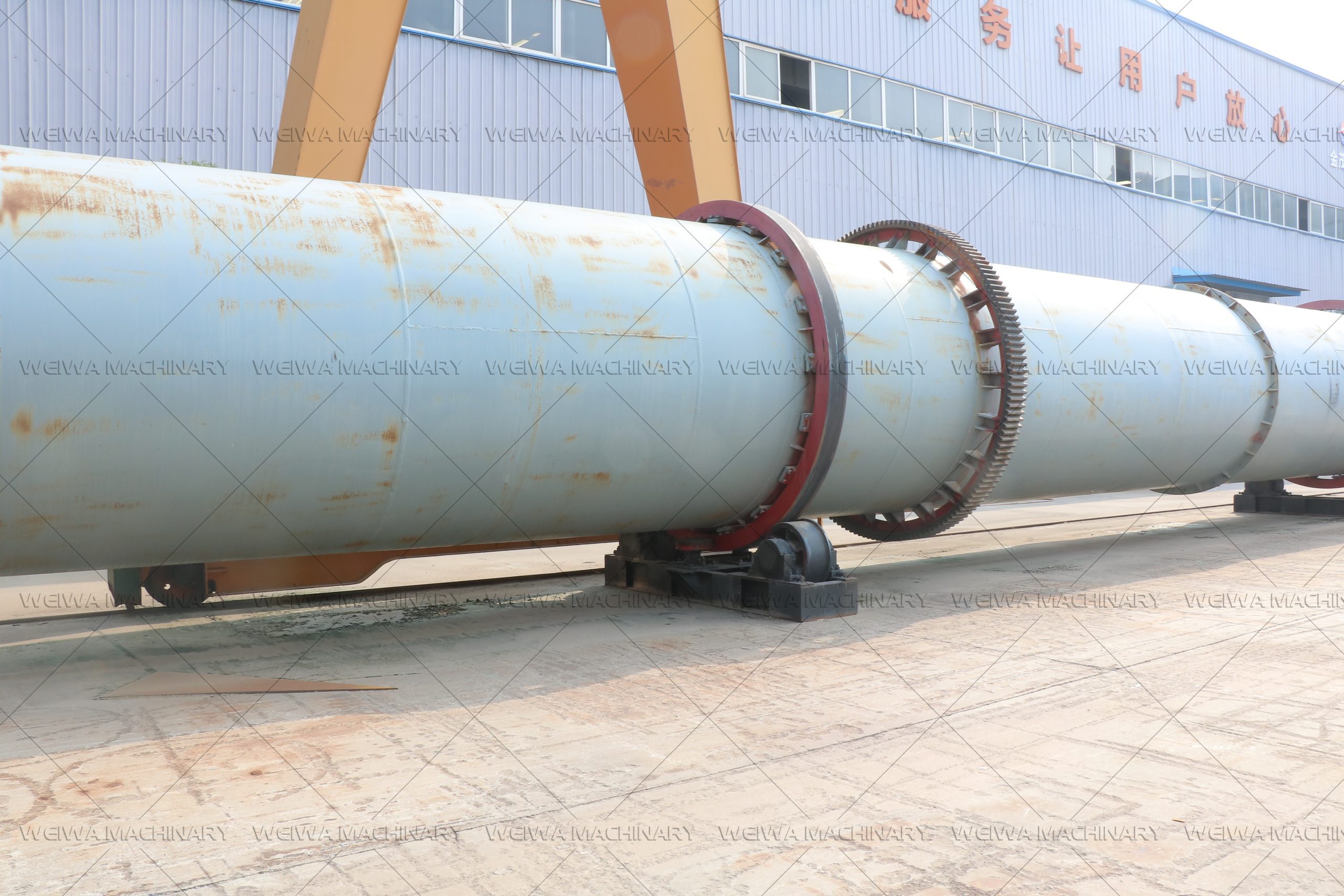
The term rotary dryer describes a directly or indirectly heated horizontal cylindrical drum that rotates on riding rings supported by trunnion rollers. The drum is installed at a shallow incline—typically between one and four degrees—relative to the horizontal plane. Wet bulk material is introduced at the elevated feed end through a chute or screw feeder. As the drum rotates at two to eight revolutions per minute, internal flights or lifters pick up the material and cascade it through a flowing stream of heated gas. This cascading action maximizes the exposed surface area of the material to the hot air or combustion gases, enabling rapid evaporative moisture removal by convective heat transfer. The dried product exits at the lower discharge end, where it may be screened, cooled, or conveyed to storage silos.
In English-speaking industrial procurement documents, the phrase tumble dryer is occasionally used synonymously with rotary dryer when referring to this tumbling-drum configuration for mineral or aggregate drying, although the same term in household contexts refers to clothes dryers. Throughout this article, when we mention tumble dryer we are describing the heavy-duty industrial rotary drying system supplied by Weiwa Machinery for Mexican mining and aggregate operations.
Why Mexican Industries Demand Reliable Rotary Dryer and Tumble Dryer Systems
Mining and Mineral Processing in Northern and Central Mexico
Mexico is a leading global producer of silver, gold, copper, zinc, and lead, with significant iron ore and fluorite operations concentrated in states such as Sonora, Chihuahua, Zacatecas, San Luis Potosí, and Coahuila. Run-of-mine ores and concentrates frequently leave the flotation circuit or thickener with moisture contents ranging from six to eighteen percent by weight. Shipping moist concentrate increases logistics costs unnecessarily, and many smelters impose strict maximum moisture limits to prevent furnace instability. A properly sized rotary dryer or tumble dryer reduces moisture to one to three percent, producing a free-flowing, specification-compliant product. Weiwa Machinery has configured multi-zone counter-current and co-current drying systems for Mexican copper and iron ore concentrators, matching retention time, flight geometry, and burner output to the thermo-physical properties of each specific ore type.
Sand and Aggregate Drying for the Construction Sector
The Mexican construction boom—particularly in Mexico City metropolitan area, Monterrey, Guadalajara, Querétaro, and coastal resort zones—has driven intense demand for washed concrete sand, manufactured sand, and decorative aggregates. Natural river sand and crushed stone often retain eight to twenty percent moisture after washing or rainfall exposure. This residual moisture compromises mix proportioning in ready-mix concrete plants and asphalt batching facilities. Installing a rotary dryer or tumble dryer directly in line after dewatering screens enables producers to achieve final moisture levels below one percent, ensuring consistent slump control and binder optimization. Our Mexican clients commonly specify single-pass rotary drums with natural gas or diesel burners for sand drying applications, although biomass-fired options are gaining traction in regions with abundant wood waste.
Cement, Lime, Gypsum, and Industrial Minerals
Major Mexican cement groups and independent lime producers dry raw mix components such as clay, gypsum, and limestone prior to grinding or calcination. The rotary dryer is favored for its tolerance of abrasive, high-throughput feeds and its ability to operate continuously with minimal supervision. Weiwa tumble dryer installations for this sector incorporate refractory-lined drums, heavy-duty alloy riding rings, and automated temperature control loops to satisfy local environmental emission standards.
Biomass and Agricultural By-Product Drying
In agricultural regions such as Sinaloa, Jalisco, and Veracruz, biomass pellets and animal feed require preconditioning through moisture reduction. Sawdust, sugarcane bagasse, and distillers grains are effectively processed in a rotary dryer configured for lower temperature operation to avoid thermal degradation. The gentle tumbling action prevents particle breakage while achieving uniform drying—a key quality parameter for premium biomass fuel exports.
Key Design Features of Weiwa Machinery Rotary Dryer and Tumble Dryer for the Mexican Market
Every rotary dryer or tumble dryer exported to Mexico by Weiwa Machinery is engineered according to site-specific parameters including feed moisture, target outlet moisture, bulk density, particle size distribution, ambient temperature, available fuel, and local electrical standards. Core design elements include:
Robust Rotating Drum Shell
The cylindrical shell is fabricated from high-tensile structural steel plate, typically Q345B or equivalent ASTM-grade material, with thickness selected based on drum diameter and anticipated abrasion. For corrosive or highly acidic feedstocks, we apply epoxy or rubber linings, or specify stainless-clad steel. The drum length-to-diameter ratio is optimized—usually between four to eight—to provide sufficient residence time for complete evaporation without excessive footprint.
Precision-Engineered Internal Flights and Lifters
Straight, angled, or cascading flight designs are modeled in-house using pilot test data. The goal is to create a uniform curtain of material across the drum cross-section for maximum gas-solid contact. Improper flight design causes “slugging” or uneven drying; our Mexican sand dryer configurations use staggered lifting flights to eliminate dead zones.
Burner and Furnace Assembly
We offer burners compatible with natural gas, LPG, light oil, heavy oil, coal, or biomass pellets. For Mexican clients with access to natural gas infrastructure, we integrate high-efficiency modulating gas burners with flame safeguard controls and automatic turndown to match fluctuating moisture loads. Combustion air preheat may be incorporated where waste heat recovery is feasible.
Sealing and Dust Containment Systems
Flexible graphite or spring-loaded labyrinth seals at both drum ends minimize cold air infiltration and dust leakage, helping plants comply with SEMARNAT (Secretaría de Medio Ambiente y Recursos Naturales) particulate emission guidelines. Downstream cyclone collectors or baghouse filters capture fine carryover from sand or mineral drying operations.
Drive Train and Support Rollers
A heavy-duty girth gear and pinion drive, coupled with a variable frequency AC motor and planetary gearbox, permits rotational speed adjustment between two and seven rpm. This flexibility lets operators fine-tune residence time during seasonal variations in feed moisture—a common scenario during Mexico’s rainy season.
Control and Instrumentation Package
Our standard control panel includes inlet and outlet thermocouples, drum RPM display, ammeter for main drive motor, high-temperature alarms, and optional PLC-based SCADA integration. Operators can log drying temperature profiles and correlate them with moisture test results, supporting continuous process improvement.
Typical Specifications of Weiwa Rotary Dryer and Tumble Dryer Models Shipped to Mexico
Although every system is customized, the following ranges represent common configurations for Mexican aggregate and mineral drying plants:
Drum diameters from 0.6 meters for pilot units up to 3.6 meters for high-capacity plants. Effective drum lengths from 6 meters to 30 meters depending on required retention time. Capacity ranges from 1 ton per hour for specialty mineral drying up to 120 tons per hour for sand and aggregate drying. Inlet gas temperatures typically 300 to 800 degrees Celsius regulated by burner modulation. Final moisture achievable as low as 0.3 percent for silica sand and generally below 2 percent for most ores and aggregates. Drive power from 5.5 kW to 200 kW matched to drum size and fill percentage. Fuel consumption optimized through counter-current flow design and optional heat recovery from exhaust gases.
Field Trial and Commissioning Results – Rotary Dryer in Mexico Case Study
To illustrate the practical effectiveness of our rotary dryer and tumble dryer technology, we present summarized findings from a recent Weiwa Machinery commissioning project for a central Mexican aggregates and silica sand producer serving the ready-mix concrete and ceramic tile industries.
Client Background and Project Objective
The client operates a 60-ton-per-hour wet screening and washing plant producing concrete sand and silica sand fractions. Post-dewatering screen moisture averaged 10 to 14 percent, causing frequent mixer recalibration and customer complaints regarding slump variation. The objective was to install a rotary dryer rated for 30 tons per hour of silica sand and 40 tons per hour of mixed construction sand, reducing moisture to ≤ 0.8 percent at the discharge point, while keeping thermal energy consumption within budget and meeting local dust emission limits.
Equipment Supplied
Weiwa Machinery supplied a complete drying system comprising a φ2.2 m × 14 m single-pass rotary dryer (also described in the client’s documentation as an industrial tumble dryer), a natural-gas-fired burner with 4-million-kcal/hour capacity, a primary cyclone separator, a secondary multi-tube dust collector, inlet and outlet sealed housings with flexible graphite seals, a variable-frequency drive main motor, and a local control panel with digital temperature indication and high-limit shutdown.
Pre-Shipment Factory Test and Trial Run in China
Prior to export, the entire drum assembly underwent a no-load running test exceeding four hours, verifying roller alignment, thrust roller response, gear meshing backlash, and seal compression. A witnessed hot commissioning simulation confirmed burner ignition sequence, temperature ramp rate, and control logic. Photographic and video documentation was shared with the Mexican client to confirm build quality before container loading.
On-Site Installation and Start-Up in Mexico
Under the guidance of Weiwa senior engineers connected via remote video support and a locally appointed mechanical contractor, the rotary dryer was erected on a reinforced concrete foundation. Alignment tolerances were checked with dial indicators. After gas line pressure testing and interlock verification, the first heat-up was performed. The drum reached operating temperature within twenty-five minutes. Wet sand at 11 percent moisture was introduced gradually. After a one-hour stabilization period, discharge samples were taken at fifteen-minute intervals and tested with a halogen moisture analyzer.
Trial Performance Data
During the formal acceptance trial run at nameplate feed rate of 30 tons per hour for silica sand, the average inlet gas temperature was maintained at 520 degrees Celsius with outlet gas temperature of approximately 95 degrees Celsius. The measured final moisture content at the dryer discharge averaged 0.45 percent, well within the ≤ 0.8 percent contractual guarantee. For the mixed construction sand stream at 40 tons per hour, final moisture averaged 0.62 percent against a guaranteed 1.0 percent maximum. Thermal efficiency calculated from fuel flow and moisture-evaporation load exceeded 72 percent—a competitive figure for a direct-heated single-pass tumble dryer. Particulate emissions at stack complied with the client’s environmental permit thresholds when the secondary collector was online.
Operator Feedback and Post-Commissioning Observations
The plant reported noticeably improved batching accuracy in the downstream concrete mixing plant due to consistent sand moisture. Downtime for manual moisture correction was eliminated. The VFD-controlled drum speed allowed the operator to compensate for seasonal feed moisture spikes during the summer rainy season by slowing the drum to increase residence time. Overall equipment effectiveness in the first three months of operation exceeded ninety percent, with only routine lubrication and minor refractory inspection required. This successful deployment reinforces why an appropriately specified rotary dryer or tumble dryer remains the first-choice solution for Mexican aggregate and mineral processors seeking reliability and throughput.
Selection Criteria When Sourcing a Rotary Dryer or Tumble Dryer for Mexico
Procurement teams evaluating a rotary dryer or tumble dryer for installation in Mexico should consider the following factors to ensure long-term ROI:
Feedstock Characterization
Obtain representative samples of the wet material for laboratory moisture determination, particle size analysis, and thermal sensitivity testing. Sticky plastic clays require different flight configurations compared to free-flowing silica sand. Sharing this data with Weiwa Machinery allows us to simulate drying kinetics and recommend optimal drum dimensions and flight patterns.
Fuel Availability and Cost
Natural gas is economical and clean in many industrialized Mexican corridors, but in remote mining locations propane or diesel may be the only option. Biomass firing using locally sourced wood chips or agri-waste can substantially reduce operating expense for plants already handling biomass. Burner selection directly influences CAPEX and OPEX.
Environmental Compliance Requirements
Confirm local SEMARNAT emission limits for particulate matter and NOx. This determines whether a simple cyclone is sufficient or if a baghouse or wet scrubber must be included. Our rotary dryer packages can be specified with high-efficiency filtration to meet stringent urban-area regulations.
Site Conditions—Altitude, Ambient Temperature, Humidity
Mexico’s varied geography means some plants sit at elevations above 2000 meters, where reduced air density affects burner combustion air requirements and fan selection. Weiwa tumble dryer designs account for these deratings to preserve rated thermal input.
After-Sales Support and Spare Parts Accessibility
Choose a manufacturer that provides detailed bilingual (English/Spanish) operation manuals, spare parts lists with OEM codes, and responsive technical support. Weiwa Machinery maintains an export documentation team familiar with Mexican customs requirements and can consolidate spare parts kits for extended operation between major overhauls.
Common Misconceptions About Rotary Dryer and Tumble Dryer Technology
Some buyers assume that any rotating drum will dry any material equally well. In reality, flight design, fill percentage, retention time, and temperature profile must be matched to the feed. Installing an undersized rotary dryer leads to incomplete drying at the rated throughput; oversizing wastes capital and may cause over-drying or thermal degradation of heat-sensitive products. Others confuse the industrial tumble dryer discussed here with laundry tumble dryers—despite sharing the tumbling principle, the scale, construction, and thermal energy involved are entirely different. Engaging an experienced OEM such as Weiwa Machinery mitigates these risks through proper application engineering rather than guesswork.
Future Trends – Energy Efficiency and Automation in Rotary Dryer Systems for Mexico
As energy costs fluctuate and sustainability reporting gains importance among Mexican industrial groups, we anticipate wider adoption of waste-heat recovery from kiln or engine exhaust to pre-warm combustion air for the rotary dryer. Indirect-heated rotary designs are also seeing niche application where product contamination from combustion gases must be avoided—for example in food-grade mineral drying. Integration of IoT sensors to continuously infer moisture from temperature and power draw signatures is an emerging area we are actively piloting, which would allow closed-loop drum-speed and burner modulation for the tumble dryer, further optimizing fuel consumption and product consistency.
Conclusion
The rotary dryer—also known in the industry as an industrial tumble dryer—continues to prove its worth across Mexico’s diverse processing industries, from Sonoran copper mines to Veracruz biomass plants and the bustling concrete sand operations feeding Mexico’s urban growth. Weiwa Machinery combines three decades of rotary drying expertise with a consultative approach to deliver systems engineered for Mexican feedstocks, fuels, altitudes, and compliance regimes. Our field trial results demonstrate that with correct sizing, robust fabrication, and attentive commissioning, a Weiwa rotary dryer or tumble dryer delivers predictable moisture reduction, high thermal efficiency, and dependable uptime. If your operation in Mexico is evaluating drying equipment or seeking to upgrade an existing system, our engineering team is ready to analyze your material and propose a tailored solution.
About Weiwa Machinery
Weiwa Machinery is a professional manufacturer with over 30 years of experience in designing and supplying industrial machinery including rotary dryers, tumble dryers, crushers, and complete mineral processing & biomass production lines. Our equipment has been exported to more than 120 countries and regions, earning the trust of over 2,000,000 customers worldwide. We provide customized engineering design, factory acceptance testing, spare parts support, and on-site or remote commissioning guidance.
Contact us today for a quotation on rotary dryer / tumble dryer solutions for your Mexico project:
Email: [email protected]
WhatsApp / Tel: +86 18439853888
Website: https://crushmixplant.com