Japan, a global leader in technology and industrial innovation, has long prioritized efficiency, sustainability, and precision in its manufacturing and resource management sectors. As industries such as construction, mining, and waste recycling expand, the need for advanced material processing equipment has become more critical than ever. Among these technologies, the two-stage crusher has emerged as a standout solution, offering unmatched performance in handling complex materials. At Weiwa Machinery, we have been at the forefront of this evolution, providing high-quality two-stage crushers to Japanese clients and witnessing firsthand their transformative impact.
What Is a Two-Stage Crusher?
To understand why two-stage crushers are gaining traction in Japan, it is essential to first define their design and functionality. Unlike single-stage crushers, which rely on a single set of crushing components (e.g., hammers or jaws) to reduce material size, a two-stage crusher integrates two distinct crushing mechanisms in one machine. Typically, the first stage uses a high-speed rotor with hammers or blades to break down large chunks of material, while the second stage employs a grid or screen to further refine the output, ensuring consistent particle size.
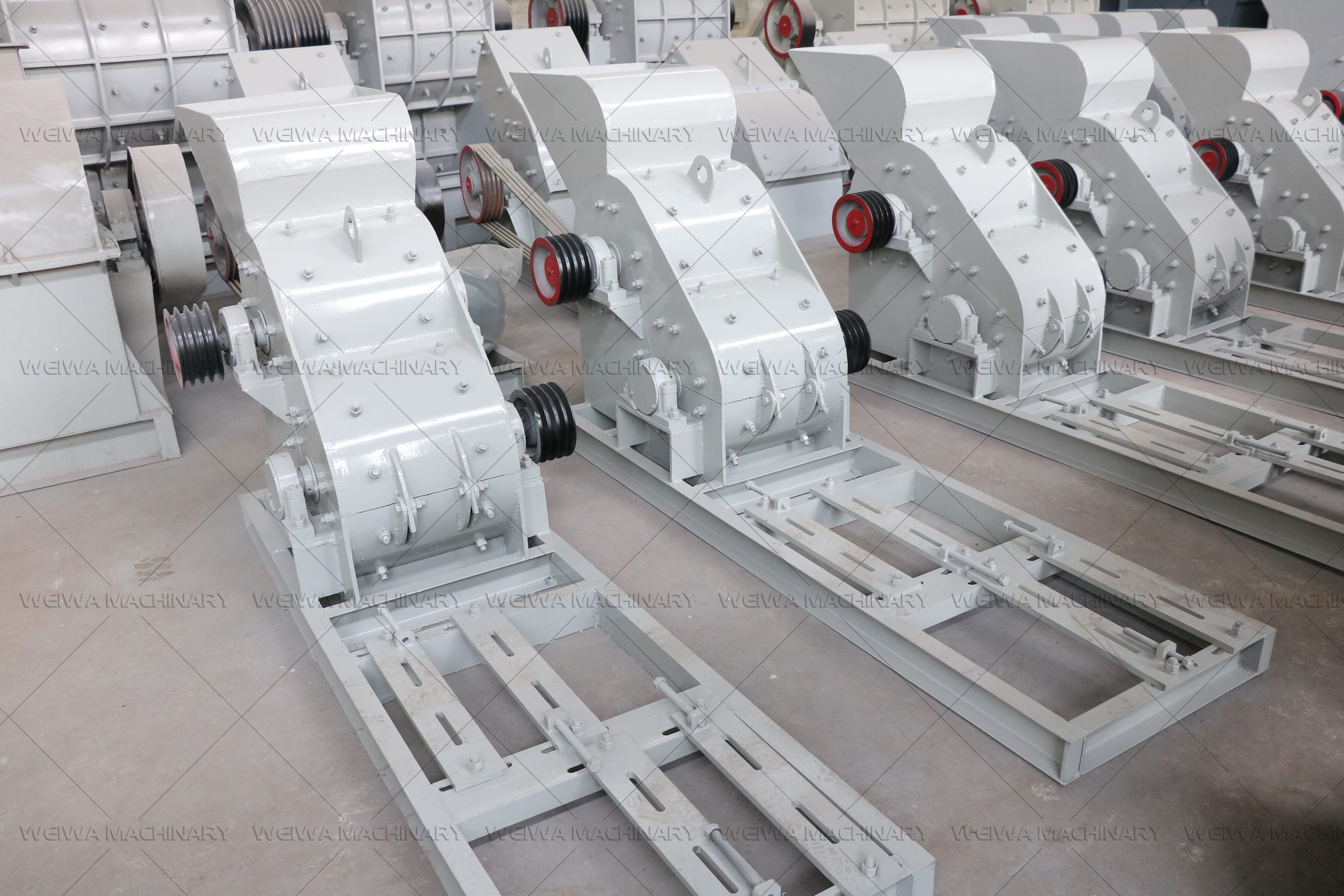
This dual-stage process addresses a common challenge in material processing: the need to handle both coarse and fine materials efficiently. For example, in Japan’s construction industry, where recycled concrete and asphalt are often mixed with soil and debris, a two-stage crusher can separate and crush these components without clogging or excessive wear.
Why Japan? The Unique Demands of the Japanese Market
Japan’s industrial landscape presents specific challenges that make two-stage crushers an ideal fit. Here are three key factors driving their adoption:
Stringent Environmental Regulations
Japan is renowned for its strict environmental policies, particularly in waste management and recycling. The government’s “3R Initiative” (Reduce, Reuse, Recycle) mandates that industries minimize waste and maximize resource recovery. Two-stage crushers excel in this context by enabling efficient processing of construction and demolition waste (CDW), turning it into reusable aggregates for new projects. Their ability to handle mixed materials—such as concrete, wood, and metal—reduces the need for multiple machines, streamlining operations and lowering carbon footprints.
High-Quality Output Requirements
Japanese industries, from electronics to automotive manufacturing, demand precision in every step of production. In applications like coal preparation for power plants or mineral processing for rare earth elements, the consistency of crushed material directly impacts product quality. Two-stage crushers deliver uniform particle sizes, minimizing the need for additional screening and reducing energy consumption. This aligns with Japan’s focus on lean manufacturing and cost efficiency.
Space and Energy Constraints
As a densely populated nation, Japan faces limited space for industrial facilities. Two-stage crushers are compact compared to traditional multi-machine setups, making them ideal for urban and suburban operations. Additionally, their energy-efficient design—achieved through optimized rotor speeds and reduced friction—helps lower operational costs, a critical consideration in a country with high energy prices.
The Science Behind Two-Stage Crushing: How It Outperforms Single-Stage Systems
The superiority of two-stage crushers lies in their ability to address the limitations of single-stage systems. Let’s break down the technical advantages:
Reduced Over-Crushing and Energy Waste
Single-stage crushers often apply excessive force to small particles, leading to over-crushing and unnecessary energy use. In contrast, the two-stage design allows the first stage to target large chunks, while the second stage focuses on refining the output. This targeted approach reduces energy waste by up to 30%, according to field tests conducted by Weiwa Machinery.
Enhanced Moisture Resistance
Japan’s humid climate and frequent rainfall pose challenges for material processing, as wet materials tend to clump and clog crushers. Two-stage crushers mitigate this issue with their open design and adjustable screen settings, which allow moisture to escape during the first stage. The second stage then processes the dried material, ensuring smooth operation even in adverse weather conditions.
Lower Maintenance Costs
The dual-stage mechanism distributes wear across two sets of components, extending the machine’s lifespan. For example, the hammers in the first stage are designed to absorb initial impact, while the screen in the second stage handles finer particles, reducing stress on individual parts. This results in fewer breakdowns and lower maintenance expenses—a key selling point for Japanese businesses, which prioritize long-term reliability.
Case Study: Two-Stage Crusher Trial in a Japanese Construction Waste Facility
To demonstrate the real-world impact of our two-stage crushers, let’s examine a recent trial at a leading construction waste recycling plant in Osaka, Japan.
Client Background
The facility processes 500 tons of CDW daily, including concrete, bricks, and steel rebar. Prior to the trial, they used a single-stage jaw crusher, which struggled with mixed materials and required frequent cleaning due to clogging.
Implementation of Weiwa’s Two-Stage Crusher
We installed a WWT-800 model, a medium-sized two-stage crusher with a 200 kW motor. The first stage features a 1,000 rpm rotor with alloy steel hammers, while the second stage uses a 20 mm grid to produce aggregates between 0–40 mm.
Results After 30 Days
- Output Consistency: The crusher produced 95% of aggregates within the target size range, compared to 70% with the old system.
- Throughput: Daily processing capacity increased by 25% to 625 tons, thanks to reduced downtime.
- Energy Savings: Power consumption dropped by 18% per ton of processed material.
- Maintenance: The client reported zero unplanned stoppages during the trial period, a significant improvement from the previous system’s weekly breakdowns.
The success of this trial led the client to place a full order for two additional units, underscoring the value of two-stage crushers in Japan’s competitive recycling sector.
How to Choose the Right Two-Stage Crusher for Your Japanese Operation?
Selecting the appropriate two-stage crusher requires careful consideration of your specific needs. At Weiwa Machinery, we guide clients through the following steps:
Assess Material Characteristics
The type, size, and moisture content of your input material will determine the ideal crusher configuration. For example, a facility processing wet clay should opt for a model with a larger first-stage chamber to prevent clogging, while a mining operation handling hard rock may require reinforced hammers.
Determine Output Specifications
Define the desired particle size distribution and throughput. Our team uses simulation software to model how different crusher models will perform with your materials, ensuring you achieve the right balance of speed and precision.
Consider Long-Term Costs
While two-stage crushers have a higher upfront cost than single-stage models, their energy efficiency, low maintenance, and extended lifespan result in lower total cost of ownership. We provide detailed ROI analyses to help Japanese clients make informed decisions.
The Future of Two-Stage Crushers in Japan: Trends and Opportunities
As Japan continues to invest in green infrastructure and smart cities, the demand for two-stage crushers is expected to grow. Emerging trends include:
- Integration with IoT: Smart sensors that monitor wear, temperature, and vibration, allowing predictive maintenance.
- Recycling of E-Waste: With Japan’s push to recycle electronic products, two-stage crushers are being adapted to handle circuit boards and batteries.
- Modular Designs: Compact, modular units that can be easily transported and installed in urban areas.
At Weiwa Machinery, we are committed to staying ahead of these trends, continuously innovating our two-stage crusher line to meet the evolving needs of the Japanese market.
About Weiwa Machinery
Founded in 1990, Weiwa Machinery has grown into a trusted provider of crushing and mixing equipment for global clients. Specializing in two-stage crushers, jaw crushers, and mobile crushing plants, we combine cutting-edge engineering with rigorous quality control to deliver reliable solutions. Our team of engineers works closely with clients to customize machines for specific applications, ensuring optimal performance and longevity.
With offices in China and partnerships across Asia, Europe, and North America, Weiwa Machinery serves industries ranging from mining and construction to agriculture and chemical processing. Our commitment to customer satisfaction is reflected in our comprehensive after-sales support, including installation guidance, operator training, and spare parts availability.
For inquiries about our two-stage crushers or other products, please contact us at:
- Email: [email protected]
- Phone: +86 18439853888
Conclusion
The adoption of two-stage crushers in Japan marks a significant shift toward more efficient, sustainable material processing. By addressing the unique challenges of the Japanese market—from strict regulations to space constraints—these machines offer a compelling alternative to traditional crushing systems. At Weiwa Machinery, we take pride in contributing to this transformation, providing Japanese clients with robust, high-performance equipment that drives productivity and profitability.
Whether you are in recycling, mining, or construction, a two-stage crusher could be the key to unlocking new levels of efficiency. Contact Weiwa Machinery today to learn how our solutions can elevate your operations.