
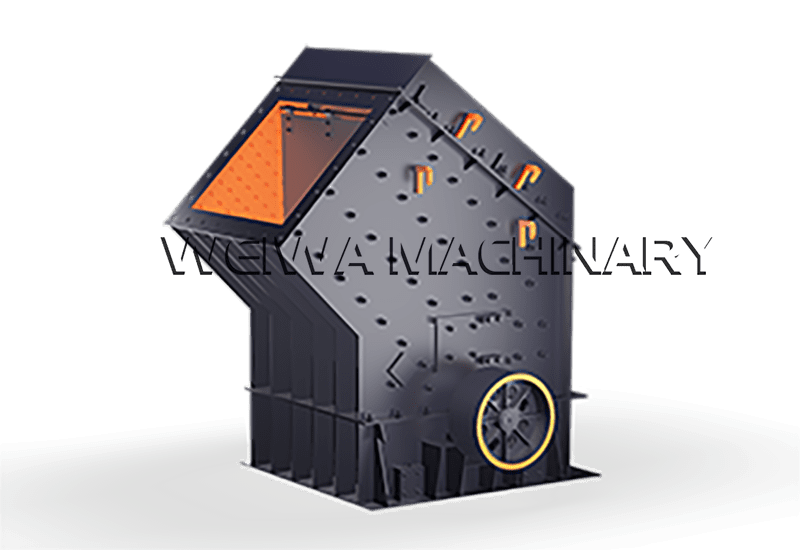

What is an Impact Crusher?
An impact crusher is a type of crushing equipment that uses impact energy to crush materials. Unlike jaw crushers or cone crushers that rely on compression, impact crushers accelerate the material to high speeds and then impact it against breaker plates or anvils. This process results in efficient size reduction with a unique cubical shape, making it ideal for producing high-quality aggregate.
The core principle behind an impact crusher is the transfer of kinetic energy from a rapidly rotating rotor to the material. When the material enters the crushing chamber, it is struck by hammers or blow bars attached to the rotor. The force of the impact shatters the material, which then collides with the breaker plates or other particles, further reducing its size.
Impact crushers are known for their high reduction ratios, versatility in handling various materials, and ability to produce fine and uniform end products. They are commonly used in the secondary or tertiary stage of crushing, though they can also be employed as primary crushers for softer materials.
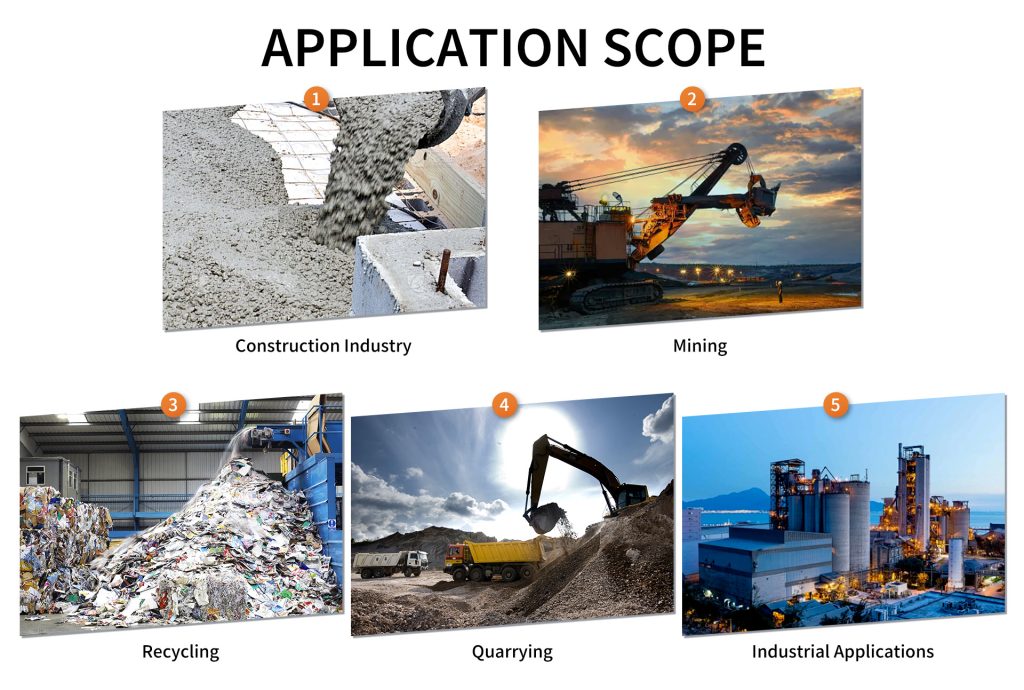
Applications of Impact Crushers
Impact crushers are incredibly versatile and find applications across a wide range of industries. Their ability to handle a variety of materials and produce high-quality end products makes them indispensable in many operations.
Key Components of an Impact Crusher
Understanding the key components of an impact crusher is essential to appreciating its functionality and efficiency. Here are the main parts that make up an impact crusher:
1. Rotor
The rotor is the heart of the impact crusher. It is a high-speed rotating component that holds the hammers or blow bars. The rotor accelerates the material to high speeds, delivering the impact energy needed for crushing.
2. Hammers Blow Bars
Attached to the rotor, hammers or blow bars are the primary impact elements. They strike the material as it enters the crushing chamber, initiating the crushing process. These components are typically made from high-wear-resistant materials to ensure durability.
3. Breaker Plates Anvils
Breaker plates or anvils are stationary components against which the material is impacted. They help in further reducing the size of the material and shaping it into the desired form.
4. Crushing Chamber
The crushing chamber is the enclosed space where the material is crushed. Its design plays a crucial role in determining the final product’s size and shape.
5. Feed Hopper
The feed hopper is where the raw material is introduced into the crusher. It ensures a steady and controlled flow of material into the crushing chamber.
6. Discharge Chute
The discharge chute is the outlet through which the crushed material exits the crusher. Its design ensures smooth and efficient material flow.
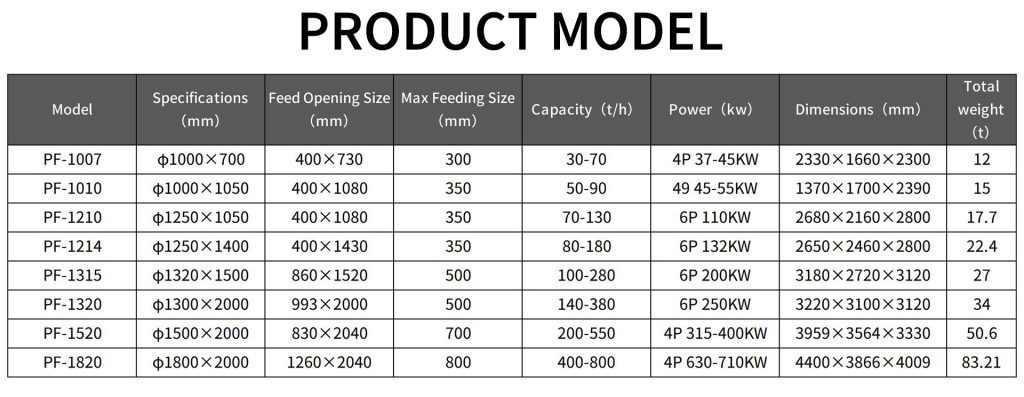
Types and Models of Impact Crushers
Impact crushers come in various types and models, each designed to meet specific application requirements. The choice of model depends on factors such as the type of material, desired output size, capacity, and operational conditions. At Weiwa Machinery, we offer a range of impact crusher models tailored to diverse industrial needs. Below are the primary types and popular models we provide:
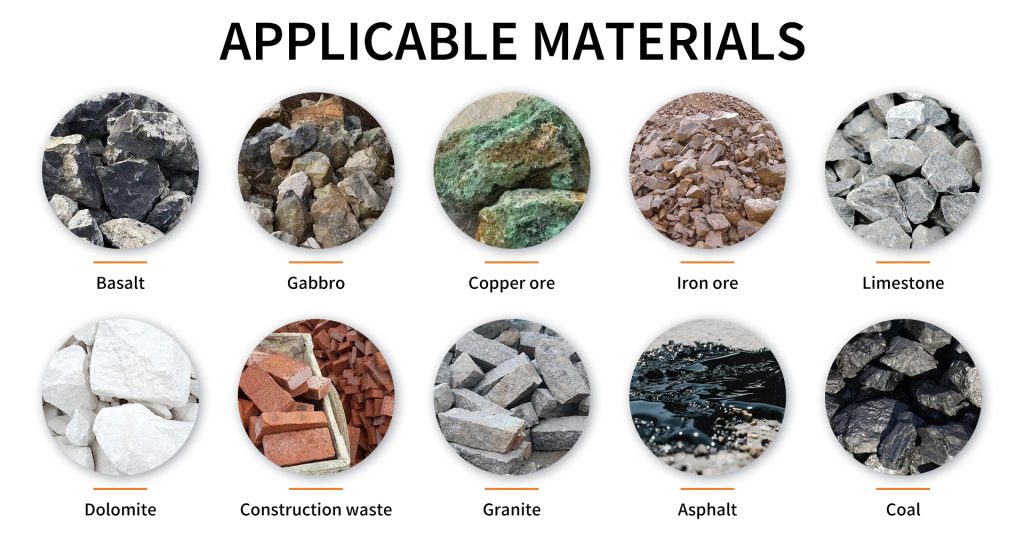
Raw Materials Suitable for Impact Crushers
Impact crushers are highly versatile and can effectively process a wide range of raw materials. Their ability to handle different types of materials with varying hardness levels makes them suitable for diverse applications. Below are the primary raw materials that are well-suited for impact crushers:
Advantages of Impact Crushers
Impact crushers offer several advantages that make them a preferred choice for many applications:
1. High Reduction Ratio
Impact crushers can achieve a high reduction ratio, meaning they can reduce large rocks into smaller particles in a single pass. This reduces the need for multiple stages of crushing, saving time and energy.
2. Cubical Product Shape
Unlike other crushers that produce elongated or flaky particles, impact crushers produce a cubical product shape. This is particularly desirable in construction applications, as cubical aggregates provide better compaction and strength.
3. Versatility
Impact crushers can handle a wide range of materials, including soft to medium-hard rocks, ores, and even recycled materials. This versatility makes them suitable for various industries and applications.
4. Ease of Maintenance
Modern impact crushers are designed with ease of maintenance in mind. Wear parts such as hammers and blow bars can be easily replaced, minimizing downtime and maintenance costs.
5. Energy Efficiency
Impact crushers are known for their energy efficiency, especially when compared to other types of crushers. Their ability to crush materials with impact energy rather than compression reduces energy consumption.
Factors to Consider When Choosing an Impact Crusher
Selecting the right impact crusher for your operation requires careful consideration of several factors:
1. Material Type
The type of material you need to crush will influence the choice of impact crusher. For example, harder materials may require a crusher with more robust components and higher power.
2. Desired Product Size
The desired size of the final product will determine the crusher’s settings and configuration. Impact crushers offer adjustable settings to achieve the desired product size.
3. Capacity Requirements
The required crushing capacity will influence the size and power of the impact crusher. It’s essential to choose a crusher that can handle your operation’s throughput needs.
4. Operating Conditions
Consider the operating environment, including factors such as humidity, temperature, and altitude, as they can affect the crusher’s performance.
5. Maintenance and Wear Parts
Evaluate the availability and cost of wear parts and maintenance services. Choosing a crusher with easily replaceable parts and reliable support can minimize downtime and operational costs.
Why Choose Weiwa Machinery for Your Impact Crusher Needs?
At Weiwa Machinery, we have over 30 years of experience in designing, manufacturing, and supplying high-quality crushing equipment. Our impact crushers are engineered to deliver exceptional performance, reliability, and durability, ensuring they meet the demands of even the most challenging applications.
1. Expertise and Experience
With decades of industry experience, we understand the unique challenges faced by our customers. Our team of experts works closely with clients to provide tailored solutions that meet their specific needs.
2. Innovative Designs
Our impact crushers are designed with innovation and efficiency in mind. We incorporate the latest technologies and materials to ensure our crushers deliver superior performance and longevity.
3. Quality Assurance
Quality is at the core of everything we do. Our impact crushers are manufactured using high-quality materials and undergo rigorous testing to ensure they meet the highest standards.
4. Comprehensive Support
We provide comprehensive support to our customers, including installation, maintenance, and spare parts services. Our team is always ready to assist you, ensuring your operations run smoothly and efficiently.
5. Global Reach
With a strong global presence, we serve customers in various industries and regions. Our impact crushers are trusted by professionals worldwide for their performance and reliability.
Conclusion
Impact crushers are a cornerstone of modern material processing, offering unmatched efficiency, versatility, and performance. Whether you’re in construction, mining, recycling, or quarrying, an impact crusher can significantly enhance your operations.
At Weiwa Machinery, we are proud to be a trusted partner for businesses worldwide, providing high-quality impact crushers and expert support for over 30 years. Our commitment to innovation, quality, and customer satisfaction sets us apart as a leader in the industry.
If you’re looking for a reliable and efficient impact crusher, look no further than Weiwa Machinery. Contact us today to learn more about our products and how we can support your operations.