In recent months, Weiwa Machinery completed a significant Cone Crusher shipment to a long‑term client in the Russian Federation, covering both the European part of Russia and subsequent deployment in a Siberian‑adjacent mining cluster. This blog documents the entire process from pre‑shipment preparation, sea‑land logistics, on‑site installation, no‑load and load trial runs, to real‑world commissioning results under sub‑zero working conditions.
Background of the Russia Cone Crusher Project
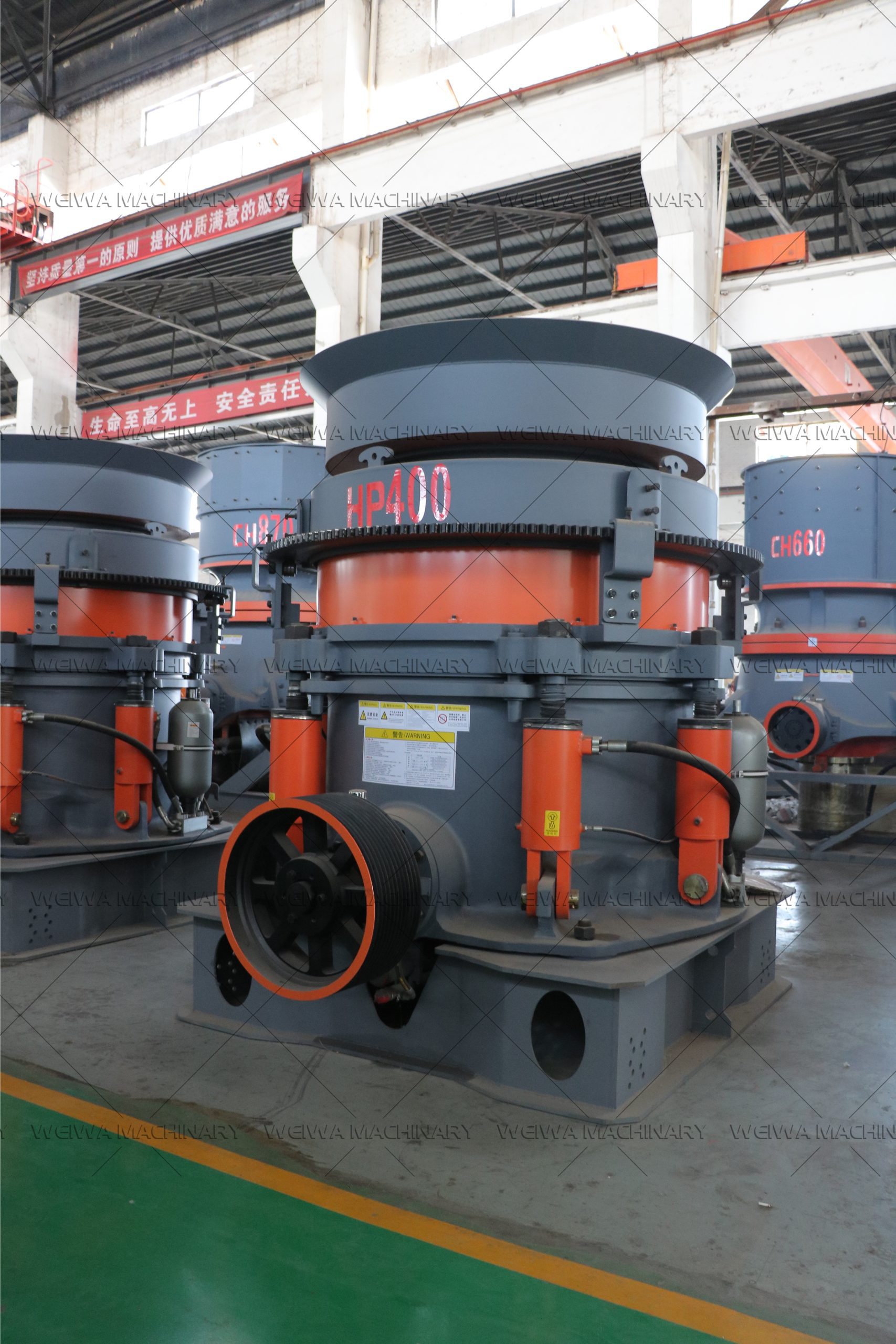
The client operates a medium‑scale granite and iron‑ore‑associated aggregate site in central Russia, where winter temperatures routinely drop below minus thirty degrees Celsius and summer dust loads are high. They previously used older Soviet‑era spring cone crushers and a few imported European units, but faced challenges in spare‑part lead time, hydraulic oil solidification in winter, and inconsistent product shape. After evaluating multiple suppliers, they selected Weiwa Machinery to supply a hydraulic multi‑cylinder Cone Crusher with enhanced cold‑climate packages, including low‑temperature resistant seals, heated lubrication tanks, and remote monitoring modules suitable for Cone Crusher in Russia deployments.
This project is not only a machinery delivery but also a market‑specific adaptation case. Crusher in Russia must survive long cold seasons, intermittent power fluctuations, and abrasive local aggregates such as quartzitic granite and magnetite‑bearing ores. Our engineering team spent four weeks customizing cavity design, eccentric throw, and discharge settings to match Russian GOST aggregate specifications, ensuring the Cone Crusher for Russia would produce uniform cubic particles in both secondary and tertiary stages.
Why the Russian Market Requires Specialized Cone Crushers?
Russia spans eleven time zones and contains some of the world’s most resource‑rich but climatically hostile regions. In discussing Cone Crusher in Russia, we must address geology, climate, and industrial habits. Russian mining and quarrying sites often operate in remote areas with limited maintenance crews. A Crusher in Russia must therefore be robust, simple to service, and tolerant of variable feed conditions. Many operations still prefer spring cone crushers due to familiarity and mechanical simplicity, yet modern hydraulic Cone Crusher designs increasingly win acceptance when equipped with cold‑start systems, anti‑freeze hydraulic circuits, and locally available wear parts.
From a material perspective, Russian aggregates frequently include hard igneous rocks, metamorphic ores, and abrasive river gravels. A Cone Crusher for Russia must maintain liner life under continuous interparticle crushing while allowing quick CSS adjustment to adapt to changing product requirements such as railway ballast, asphalt mix, or concrete coarse aggregate. Our Russia‑bound unit integrates a hydraulic tramp release system with enhanced spring assist, ensuring that uncrushable tramp iron common in legacy Russian mines does not damage the main shaft. This balance between hydraulic precision and mechanical fail‑safe is critical for any Crusher intended for long‑term Russian operation.
Climate Adaptations in Cone Crusher for Russia
One of the defining features of a Cone Crusher in Russia is the low‑temperature package. Standard hydraulic oils thicken near minus twenty degrees, increasing pump load and risking cavitation. For this shipment, Weiwa Machinery specified arctic‑grade hydraulic fluid, insulated tank heaters with thermostatic control, and trace heating on critical lines. The lubrication system uses a dual‑stage filtration with bypass indicators visible to operators unfamiliar with digital interfaces, acknowledging that some Crusher in Russia sites still rely on manual checks. Electric motors are equipped with space heaters to prevent condensation during idle winter periods, and control panels are housed in heated enclosures rated for minus forty degrees Celsius.
Steel selection also matters. Normal manganese liners can become brittle in extreme cold, accelerating cracking. Our Cone Crusher for Russia uses modified high‑manganese steel with micro‑alloying to improve impact toughness at low temperatures, validated through simulated minus fifty‑degree lab tests. These details may seem minor individually, but collectively they determine whether a Crusher survives its first Russian winter without unplanned downtime.
Market Preferences and Procurement Trends in Russia
Discussions with Russian engineers reveal that Cone Crusher in Russia procurement balances cost, compatibility, and supply security. Many sites still run ПК‑series spring cones from the Soviet era, so Chinese‑made spring and compound cones with compatible dimensions gain preference for retrofitting. However, large greenfield projects increasingly adopt hydraulic Cone Crusher models for better automation and product control. Crusher in Russia buyers also value localized spare‑part stocks in Moscow, Saint Petersburg, Vladivostok, and Novosibirsk. Weiwa Machinery addressed this by pre‑positioning mantles, concaves, and seal kits through a Russian partner warehouse, reducing lead times from weeks to days—a decisive factor for any Cone Crusher for Russia purchase.
Another trend is the rise of energy‑cost awareness. Russian electricity tariffs vary by region and season, pushing operators to seek Crusher solutions with optimized motor‑power‑to‑throughput ratios. Our commissioned Cone Crusher uses a high‑efficiency direct‑drive system with variable frequency capability, allowing the client to tune speed according to feed hardness—a feature especially useful when processing mixed ore and overburden in a single Cone Crusher in Russia circuit.
Pre‑Shipment Preparation at Weiwa Machinery Factory
Before leaving our Gongyi production base in Henan, China, the Cone Crusher underwent a full factory acceptance test simulating Russian conditions. We invited the client’s representative to witness no‑load running, vibration analysis, hydraulic pressure tests, and lubrication flow verification. The main frame was inspected for weld integrity using ultrasonic testing, and all machined surfaces were preserved with anti‑rust coating suitable for long‑duration container transport to Crusher in Russia destinations via sea to Saint Petersburg and rail to the site.
Packaging followed export‑standard fumigated wooden crates with interior desiccants and shock‑absorbing brackets. Given the weight and center‑of‑gravity of a multi‑cylinder Cone Crusher, we optimized container loading to minimize movement and comply with both Chinese port regulations and Russian customs requirements. Each crate was clearly marked with equipment ID, destination site, and handling icons in English and Russian, reflecting our experience in delivering Cone Crusher for Russia projects repeatedly over the past decade.
Documentation is often underestimated in Crusher in Russia imports. We prepared Russian‑language operation manuals, lubrication charts, electrical schematics, and HS code declarations to smooth customs clearance. Our team also issued a notarized certificate of origin and EAC conformity documentation required for the Eurasian Economic Union, ensuring the Crusher could be legally commissioned without bureaucratic delay.
Logistics from China to Russia and Site Arrival
The shipment departed Shanghai Port bound for Saint Petersburg, then transferred to rail for the inland leg—a route familiar to any exporter of Cone Crusher in Russia. Total transit time was approximately twenty‑eight days. Upon arrival, the client’s logistics team coordinated with local haulers experienced in oversized industrial cargo. Despite snow and rough secondary roads, the Cone Crusher arrived without cosmetic or structural damage, a testament to both packaging quality and carrier selection.
At the site, a Weiwa Machinery field engineer joined remotely via satellite‑compatible video during unloading to advise on lifting points and temporary storage orientation. For a Crusher in Russia installed in sub‑zero conditions, we recommended storing the unit indoors or under heated cover until foundation grouting cured sufficiently. This precaution prevents frost heave affecting alignment—a common oversight in remote Cone Crusher for Russia installations.
Foundation Preparation and Installation Considerations
Installing a Cone Crusher in Russia requires attention to permafrost‑affected soils in northern regions and freeze‑thaw cycles elsewhere. The client’s site used a reinforced concrete foundation with embedded anchor bolts, designed per our generic foundation drawing but thickened by thirty percent based on local geotechnical advice. Vibration isolators were added between the frame and foundation, crucial for a Cone Crusher in Russia operating near sensitive screening and conveying structures.
Alignment began with setting the main frame level within two millimeters per meter, verified by precision machinist’s levels suitable for cold workshops. The eccentric assembly, mantle, and concave were installed with thermal clearance considerations, since assembly at minus ten degrees differs from factory conditions. Our Russian‑language installation checklist guided the crew through bolt torque sequences, lubrication priming, and hydraulic bleeding—steps that distinguish a professionally installed Crusher from a problematic one in Crusher in Russia contexts.
No‑Load Trial and Initial Commissioning
After mechanical completion, the Cone Crusher underwent a twenty‑four‑hour no‑load trial. Ambient temperature was minus eighteen degrees Celsius. Heating systems maintained oil viscosity within spec, and the hydraulic power unit started reliably thanks to the pre‑installed tank heaters. Current draw, bearing temperatures, and lubrication pressures stabilized within expected ranges, confirming that the Cone Crusher for Russia package performed as designed even before processing rock.
During no‑load run, we demonstrated the hydraulic setting adjustment to the client’s operators, showing how CSS could be changed under load—a key advantage of modern Cone Crusher systems over manual shim‑adjust spring types still common in Cone Crusher in Russia fleets. Vibration sensors mounted on the frame transmitted data to our remote monitoring platform, establishing a baseline for future condition‑based maintenance, an increasingly valuable practice for Crusher in Russia sites aiming to reduce unplanned stops.
Load Trial with Russian Aggregates
The load trial used local granite with Mohs hardness around six to seven, representative of typical Crusher in Russia feed. Feed size ranged from one hundred fifty to three hundred millimeters, introduced via a vibrating feeder set to mimic real quarry conditions. The Cone Crusher was configured in a medium‑fine chamber profile with CSS set at twenty‑two millimeters initially, later adjusted to eighteen millimeters to meet specific aggregate gradation for road base.
Throughout eight hours of continuous operation, throughput averaged one hundred eighty tons per hour, with peak periods reaching two hundred ten tons per hour. Power consumption per ton remained within seven percent of factory projections, validating the efficiency of this Cone Crusher for Russia configuration. Product sampling showed a cubicity index above eighty‑five percent, with elongated particles below ten percent—critical for Russian road specifications and a marked improvement over the client’s previous Crusher output.
Tramp iron release was tested by introducing a controlled steel block of known size. The hydraulic overload system lifted the mantle promptly, discharged the block, and automatically reset without manual intervention. For Cone Crusher in Russia mines with legacy steel debris, this capability protects the eccentric and bearings, extending mean time between failures compared to pure spring systems.
Particle Size Distribution and Quality Outcomes
Sieve analysis of the Cone Crusher product revealed a well‑graded curve compliant with Russian GOST 8267‑93 for crushed stone. The minus five millimeter fraction was controllable via CSS and chamber selection, allowing the client to shift between concrete aggregate and asphalt mix specs without changing liners—a flexibility valued in Crusher in Russia operations serving multiple projects. Our field engineer conducted a brief training on how cavity wear affects PSD, emphasizing periodic sample checks, a best practice for any Cone Crusher operator.
Dust generation during the trial was moderate, attributed to the laminated crushing action inherent in Cone Crusher designs versus impact crushing. In Cone Crusher in Russia winter conditions, dust suppression water can freeze, so the client opted for a dry mist system with glycol‑mixed fluid—an adaptation we documented for future Cone Crusher for Russia references.
Noise and Environmental Observations
Sound pressure at one meter from the Crusher housing measured seventy‑eight decibels under load, within acceptable limits for Russian industrial sites but prompting discussion on operator cabins. As Crusher in Russia regulations tighten on workplace safety, we recommended acoustic enclosures around the drive section, compatible with our Cone Crusher frame mounts. The trial also confirmed that the enclosed lubrication and hydraulic systems minimized oil mist, important for environmentally sensitive Cone Crusher in Russia locations near watercourses.
Operator Training and Knowledge Transfer
A Cone Crusher for Russia is only as effective as its operators. Over three days, our engineer trained the client’s team on start‑up sequencing, parameter adjustment, alarm interpretation, and daily inspection routines. Training materials were bilingual, acknowledging that shift crews might include Russian‑only speakers. Topics covered mantle‑concave wear monitoring, oil analysis basics, and hydraulic filter replacement—practical skills for sustaining a Crusher in remote Crusher in Russia environments.
We emphasized the difference between setting adjustment on a hydraulic Cone Crusher versus spring cones they previously used, demonstrating how real‑time CSS changes affect capacity and product shape. Operators practiced simulating tramp events and observing pressure spikes, building confidence in the machine’s protective systems. This human‑factor investment is often the differentiator between a successful Cone Crusher in Russia deployment and a troubled one.
Maintenance Strategy Tailored for Russia
Maintenance planning for a Cone Crusher in Russia must account for long winters, limited site access, and seasonal workforce fluctuations. We proposed a preventive schedule aligned with throughput rather than calendar months, using hour‑meter data from the Crusher PLC. Liner change intervals were estimated at four to five months based on abrasion index of local granite, with spare mantles and concaves stored on‑site in heated containers to prevent moisture‑induced corrosion—a small but vital detail for Cone Crusher for Russia longevity.
Lubrication oil analysis was introduced as a quarterly practice, with samples sent to a regional lab in Russia. Given that Crusher in Russia sites may lack sophisticated on‑site labs, we provided simple dip‑strip kits for preliminary viscosity checks during deep winter. Hydraulic filters were specified with higher dirt‑holding capacity to extend change intervals in dusty Cone Crusher in Russia quarries, reducing manpower needs during short daylight months.
Spare Parts Localization and Supply Chain
One persistent pain point in Cone Crusher in Russia ownership is spare‑part availability. Weiwa Machinery mitigates this by maintaining a core‑parts stock in Russia and offering 3D measured drawings for local machining of non‑critical items like guards and minor fasteners. For the subject Cone Crusher, we supplied an initial spare kit including seals, fuse plugs, sensor spares, and hydraulic hoses rated for low‑temperature flex. This approach aligns with how modern Crusher in Russia buyers evaluate suppliers: not only on machine price but on lifecycle support.
We also registered the Cone Crusher for Russia serial number in our global service system, enabling the client to request technical documents or video support in Russian. In future, we plan to train a local service partner in Moscow to handle liner changes and major inspections, further shortening response time for Crusher in Russia customers beyond this pilot project.
Comparative Perspective Spring vs Hydraulic in Russia
It is worth contextualizing this shipment within the broader Cone Crusher in Russia landscape. Spring cones remain popular for their simplicity and lower upfront cost, especially in small to mid‑size quarries. However, hydraulic Cone Crusher models increasingly prove their value through better product control, safer tramp release, and reduced manual labor—advantages that matter as Russian sites face skilled‑labor shortages. Our client’s decision to adopt a hydraulic Cone Crusher for Russia was influenced by the need for consistent aggregate shape for road projects and the desire to reduce winter‑time manual adjustments outdoors.
That said, we acknowledge that hydraulic systems demand cleaner oil and more disciplined maintenance. For Crusher in Russia operators transitioning from purely mechanical equipment, training and filtration quality are pivotal. Our trial demonstrated that with proper heaters, filtration, and scheduled oil changes, hydraulic Cone Crusher reliability matches or exceeds spring types even at minus thirty degrees—a key message for stakeholders evaluating Crusher in Russia upgrades.
Economic and Operational Impact Assessment
Preliminary economic review six weeks post‑commissioning suggests the Cone Crusher improved product quality consistency, reducing rejection rates at the client’s batching plant. The ability to adjust CSS without stopping the Crusher minimized downtime during specification changes, a frequent occurrence in Cone Crusher in Russia contracts supplying multiple projects. Fuel and power efficiency gains, though still being quantified, appear favorable compared to the older units, partly due to optimized eccentric speed and better motor control.
Labor safety also improved. Previously, adjusting a spring cone required workers to handle heavy shims outdoors in winter. With the hydraulic Cone Crusher for Russia, setting changes occur from a control panel inside a heated cabin—a meaningful ergonomic and safety upgrade for Crusher in Russia sites. While CAPEX was higher than a spring cone, the client anticipates payback within eighteen months through reduced rework, lower liner cost per ton, and decreased winter downtime.
Future Outlook for Cone Crusher in Russia
Russia’s infrastructure renewal, Arctic development, and mining expansion will sustain demand for capable Crusher systems. Cone Crusher in Russia will evolve toward smarter monitoring, energy‑efficient drives, and greater cold‑climate resilience. Weiwa Machinery intends to deepen localization, refine low‑temperature packages, and expand Russian‑language training as we deliver more Cone Crusher for Russia solutions. Each shipment, including this documented case, informs design iterations—from steel grades to seal materials—that make subsequent Crusher in Russia units better adapted.
We also observe growing interest in hybrid crushing circuits where a Cone Crusher follows a jaw or impact primary, optimized via digital simulation for Russian rock properties. Collaborating with local universities and research institutes on wear‑material testing could further enhance Cone Crusher in Russia performance. As sanctions and logistics reshape supply chains, Chinese manufacturers with established Crusher in Russia support networks, like Weiwa Machinery, are well positioned to serve this market responsibly.
Conclusion of the Field Report
This shipment and commissioning of a Cone Crusher to Russia reaffirm that success in the Crusher in Russia market requires more than shipping hardware. It demands climate‑specific engineering, operator empowerment, spare‑part logistics, and ongoing technical partnership. The trial results—stable hydraulics at minus eighteen degrees, consistent product shape, effective tramp release, and positive operator feedback—validate our Cone Crusher for Russia configuration. We view this not as a one‑off export but as a reference installation informing all future Crusher deployments across the Russian Federation.
For mining companies, quarry owners, and construction firms evaluating a Cone Crusher in Russia, we recommend assessing not only spec sheet numbers but also supplier commitment to cold‑climate adaptation, training, and localized support. Weiwa Machinery stands ready to discuss how our Cone Crusher solutions can be tailored to your site, your rock, and your climate, just as we did for this successful Crusher in Russia project.
About Weiwa Machinery
Weiwa Machinery is a leading manufacturer of crushing and grinding equipment based in Gongyi City, Henan Province, China, with over thirty years of industry experience. We design and produce Crusher solutions including jaw crushers, Cone Crusher models (spring, single‑cylinder hydraulic, multi‑cylinder hydraulic), impact crushers, mobile crushing plants, ball mills, and full aggregate production lines. Our products have been exported to more than one hundred twenty countries and regions, serving mining, construction, recycling, cement, and metallurgy sectors worldwide.
We pride ourselves on engineering durability, customized design, and comprehensive after‑sales support. For the Russian market, we offer Cone Crusher for Russia packages with low‑temperature adaptations, Russian‑language documentation, and spare‑part cooperation to ensure reliable operation in harsh environments. Our customer service team is available 24/7 to assist with consultation, installation guidance, and training.
Contact Weiwa Machinery:
Email: [email protected]
Phone: +86 18439853888
Address: Dahuangye Industrial Zone, Gongyi City, Henan Province, China