In the evolving industrial landscape of South Asia, Bangladesh has emerged as a dynamic hub for construction, agriculture, recycling, and small-scale mining activities. Across these sectors, material classification and size separation remain foundational to operational efficiency. At Weiwa Machinery, we have observed a steady rise in demand for reliable, low-maintenance, and high-throughput screening equipment tailored to local conditions. The rotary screen has become one of the most requested machines by our Bangladeshi partners due to its gentle tumbling action, adaptability to wet and dry materials, and cost-effective operation compared to high-vibration alternatives.
Understanding the Rotary Screen and Its Relevance to Bangladesh Industries
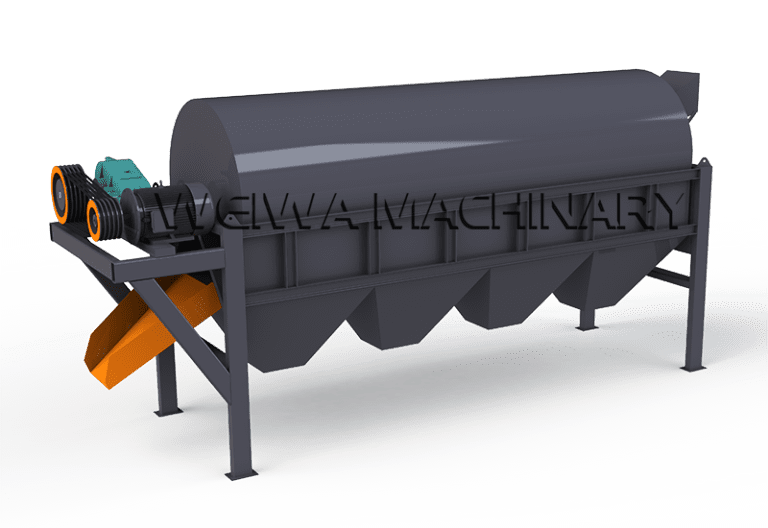
A rotary screen, also widely referred to as a drum screen or trommel screen, is a mechanical separation device that uses a slightly inclined rotating cylinder to classify materials by size. Unlike vibrating screens that rely on aggressive oscillation, the rotary screen operates with continuous low-speed rotation, allowing materials to tumble naturally as fines pass through calibrated perforations while oversized particles discharge at the drum’s lower end. For Bangladeshi operations where power stability, space constraints, and material heterogeneity are common challenges, this design minimizes structural stress, reduces noise, and handles sticky or irregular feedstock more effectively.
Weiwa Machinery has engineered rotary screen for Bangladesh applications with reinforced drum structures, anti-clogging cleaning brushes, and customizable aperture sizes ranging from 3 mm to 100 mm. Our units are frequently deployed in river sand screening near the Buriganga and Karnaphuli corridors, in agricultural seed and fertilizer grading across Rajshahi and Mymensingh, and in construction waste recycling within expanding peri-urban zones of Gazipur and Narayanganj. The versatility of the rotary screen makes it uniquely suited to Bangladesh’s mix of light industrial, agro-processing, and infrastructure-driven material flows.
Core Working Principle of a Weiwa Rotary Screen
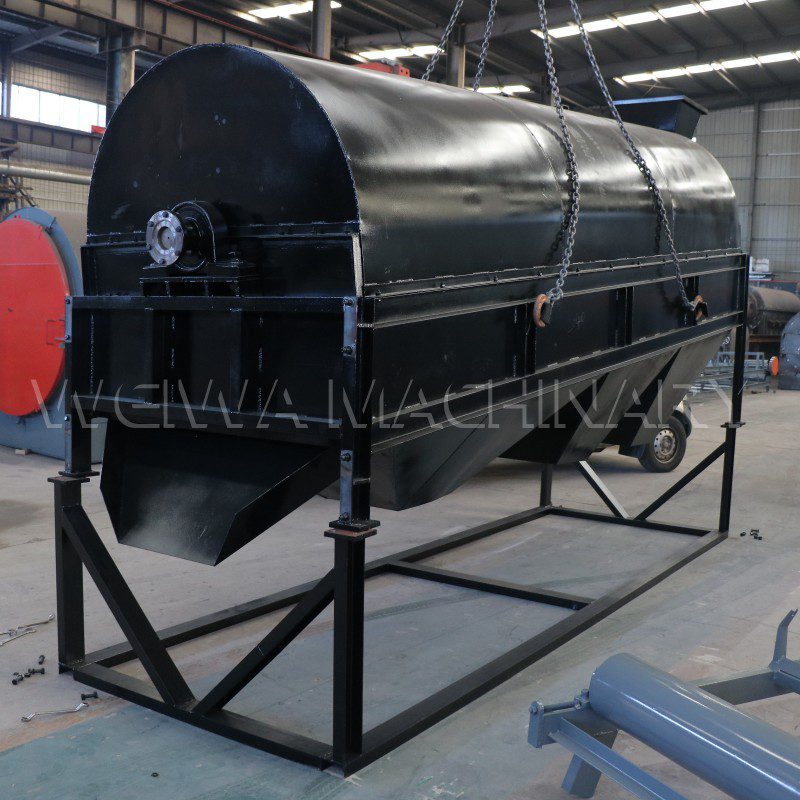
The operational logic of a rotary screen is deceptively simple yet highly effective. Bulk material is fed into the elevated end of an inclined drum, typically set at 5 to 8 degrees depending on throughput requirements. As the drum rotates—driven by an electric motor coupled with a gear reducer—materials cascade along the inner surface. Smaller particles exit through mesh or punched plate openings, while larger fractions continue forward to a dedicated discharge chute. This continuous tumbling reduces material degradation, an essential advantage when screening fragile agricultural products such as paddy, pulses, or organic compost common in Bangladesh’s rural supply chains.
At Weiwa Machinery, we calibrate drum length, diameter, rotation speed, and inclination based on the client’s target capacity and moisture profile. For instance, a rotary screen in Bangladesh processing high-moisture alluvial sand may require a longer drum with intermediate cleaning chains to prevent blinding, whereas a unit grading dry crushed stone for roadbase can operate efficiently with shorter residence time and larger apertures. These nuanced adjustments are central to the trial-phase consultations we conduct with Bangladeshi buyers prior to final commissioning.
Bangladesh Market Context for Rotary Screen Adoption
Bangladesh’s industrial trajectory is shaped by rapid urbanization, infrastructure expansion, and a resilient agricultural base. The ongoing development of special economic zones, inland container depots, and riverfront embankment projects has intensified the need for onsite material processing. Traditional manual sieving or imported vibrating decks often prove either labor-intensive or overly sensitive to uneven feed and dusty environments. In contrast, the rotary screen for Bangladesh conditions is gaining traction because it tolerates fluctuations in feed consistency, requires fewer moving components, and integrates easily with existing conveyor or hopper setups.
Moreover, the country’s growing focus on waste segregation—particularly in municipal corporations such as Dhaka North and Chattogram City Corporation—has opened new avenues for trommel-type equipment. Organic waste, construction rubble, plastics, and fine soil can be preliminarily separated using a single rotary screen, streamlining downstream composting or recycling lines. Weiwa Machinery has supported several pilot trials where our drum screens processed mixed demolition debris with moisture levels exceeding 15%, maintaining consistent undersize recovery without frequent shutdowns for cleaning.
Sector-Specific Relevance Across Bangladesh
In the construction and infrastructure sector, river sand and crushed aggregate screening represent the largest use case for a rotary screen in Bangladesh. With natural sand often containing silt, clay lumps, and organic impurities, the tumbling action of a drum screen helps expose fine contaminants while allowing calibrated sand to pass through standardized mesh. Multiple clients in the Narayanganj industrial belt reported improved sand grade uniformity after replacing improvised stationary grids with a Weiwa rotary screen equipped with segmented screen panels for easier replacement.
Agriculture remains another critical domain. Bangladesh produces substantial volumes of wheat, maize, rice, and fertilizer blends that require size classification before packaging or distribution. The low-impact motion of a rotary screen preserves seed coat integrity and avoids excessive fines generation. In trials conducted with cooperative societies in Bogura and Dinajpur, our stainless-steel contact-part models demonstrated stable performance in grading granular urea and di-ammonium phosphate without cross-contamination, an important consideration for agri-input quality assurance.
Recycling and solid waste management form the third pillar. As Bangladesh advances its National 3R Strategy (Reduce, Reuse, Recycle), material recovery facilities increasingly adopt mechanical screening. A rotary screen for Bangladesh waste applications typically features heavier gauge drums, optional spray washing sections, and discharge configurations that separate organics, fines, and oversized rejects in one pass. Feedback from trial sites indicates that drum screens reduce manual picking intensity and improve the purity of recovered soil or inert fractions destined for brick kiln or landfill cover use.
Weiwa Machinery Trial Methodology and Observed Performance in Bangladesh
Before any rotary screen is delivered to a Bangladeshi client, Weiwa Machinery conducts a multi-stage feasibility and trial process. This begins with feed material characterization—particle size distribution, bulk density, moisture content, and abrasiveness are documented either through samples shipped to our Gongyi testing center or via remote video-assisted assessment. Based on this data, we propose drum dimensions, drive power, screen type (punched plate, woven wire, or wedge wire), and support structure layout.
During onsite trials, we typically measure throughput against rated capacity, undersize yield accuracy, power consumption per ton, and downtime related to cleaning or jamming. In a recent trial for a Chittagong-based aggregates supplier, a Weiwa rotary screen with 1200 mm diameter and 4000 mm length processed approximately 28 tons per hour of sand-gravel mix with 8–12% moisture. The target separation was 5 mm cut point. Over a continuous 6-hour run, the screen maintained over 92% passage efficiency for fines and required only one intermediate brush cleaning cycle. The client noted that comparable vibrating screens previously used demanded two operators and showed accelerated wear on spring mounts within three months, whereas the rotary screen in Bangladesh trial ran with a single attendant and exhibited negligible frame vibration.
Another illustrative case involved a compost processing initiative near Savar. The feedstock contained decomposed organic matter blended with traces of plastic and grit. A two-section rotary screen for Bangladesh composting use was configured: the first 2 meters with 20 mm apertures to reject oversized debris, the second section with 10 mm mesh to refine finished compost. Trial outcomes showed consistent removal of non-biodegradable fragments and a 30% reduction in post-screen manual sorting labor. Moisture spikes during monsoon-week testing did cause minor adhesion on the lower drum quadrant, which we mitigated by adding intermittent high-pressure spray nozzles—an adaptation now standard in our tropical-climate rotary screen packages.
Key Performance Advantages Validated in Bangladeshi Trials
Across multiple deployments, several advantages of the Weiwa rotary screen have been consistently validated. First is material preservation. In agricultural grading trials, seed breakage rates remained below 1.5%, compared to reported 4–6% on aggressive linear vibratory decks. Second is acoustic and structural impact. The gentle rotation of a rotary screen in Bangladesh urban or semi-urban sites generated sound levels averaging 68–72 dB at 1 meter, well within tolerable thresholds for adjacent workshops or residential buffers.
Third is maintenance simplicity. With only two primary bearings, a central drive, and modular screen panels, routine upkeep can be performed by locally available mechanics. During a six-month follow-up after one trial installation in Khulna, the client reported only periodic greasing and one screen panel change due to abrasive sand wear—no motor or gearbox issues. For budget-conscious operations, this predictability is a decisive factor when choosing a rotary screen for Bangladesh long-term deployment.
Fourth is customization responsiveness. Weiwa Machinery routinely adapts drum coatings (epoxy, rubber-lined, or stainless steel), discharge chute geometry, and feed hopper design to site-specific constraints such as limited headroom, three-phase voltage fluctuations, or mobile skid mounting. In one riverbank sand operation near Munshiganj, we delivered a towable rotary screen with diesel-electric dual drive, enabling relocation along shifting extraction sites—a configuration increasingly requested for decentralized rotary screen in Bangladesh mining and sand quarry contexts.
Technical Considerations When Selecting a Rotary Screen for Bangladesh Operations
Choosing the appropriate rotary screen requires balancing material properties, throughput targets, site infrastructure, and regulatory expectations. Weiwa Machinery advises Bangladeshi buyers to begin with a clear definition of feed characteristics. Materials with high fines content and moisture above 10% benefit from larger-diameter drums, lower rotation speeds, and integrated cleaning systems. Abrasive inputs such as quartzitic sand or crushed stone necessitate hardened wear plates and more frequent screen media inspection.
Throughput expectations should account for realistic availability rather than peak theoretical ratings. A rotary screen for Bangladesh infrastructure projects might be specified at 40 TPH, but actual site conditions—loader cycle time, feed homogeneity, power reliability—often dictate sustainable operating rates of 70–80% of nameplate capacity. Our trial reports explicitly state both rated and observed sustainable throughput to align client expectations.
Environmental and spatial factors also matter. In densely packed industrial sheds near Dhaka or export processing zones, drum screen length may be constrained. Weiwa offers compact rotary screen variants with optimized length-to-diameter ratios and folded discharge chutes. Dust suppression, while less regulated than in some markets, is increasingly adopted voluntarily; we provide optional misting rings at the feed and discharge zones to improve worksite conditions when a rotary screen in Bangladesh operates in enclosed compounds.
Integration With Existing Workflows
A rotary screen rarely operates in isolation. In Bangladesh, common upstream equipment includes excavator-fed hoppers, belt conveyors from crushers, or manual tipping stations. Downstream, screened fractions may feed into washing units, packing lines, or stockpiles. Weiwa Machinery coordinates flange heights, chute angles, and control signals to ensure the rotary screen for Bangladesh clients integrates smoothly. In several agro-processing trials, we synchronized drum screen startup with bucket elevator conveyors to prevent surge loading—a frequent cause of premature wear in unsupervised setups.
Electrical compatibility is another integration point. Our standard rotary screen control panel supports 415V/50Hz three-phase with overload protection, but we also supply single-phase reduced-capacity units for rural cooperatives with limited grid access. In off-grid scenarios, coupling a rotary screen in Bangladesh with a diesel generator set is common; we therefore specify conservative starting currents and soft-start options where feasible to protect local power infrastructure.
Future Outlook for Rotary Screen Adoption in Bangladesh
The trajectory for rotary screen adoption in Bangladesh is strongly positive. Infrastructure spending under the Five-Year Plans, expansion of waste management mandates in city corporations, and mechanization of post-harvest agriculture all point to sustained demand for robust, mid-capacity screening solutions. Compared to imported high-end vibrating complexes, a well-engineered rotary screen for Bangladesh market conditions offers an accessible price-performance ratio, easier localization of spares, and operational familiarity for technicians already accustomed to rotating equipment such as concrete mixers or pugmills.
Weiwa Machinery anticipates increased interest in hybrid configurations—drum screens combined with scrubbers for sticky clay removal, or multi-stage trommels for three-fraction output (fines, mid-size, oversize) in single-pass recycling lines. As environmental compliance tightens, the ability of a rotary screen in Bangladesh to preprocess mixed waste before ballistic separators or optical sorters will enhance its strategic role. Our R&D team is already prototyping finer-mesh stainless drums for organic compost certification standards likely to emerge in the next planning cycle.
Digital monitoring is another frontier. While most current rotary screen units in Bangladesh operate manually, we are piloting IoT-enabled vibration and temperature sensors on drum bearings to alert operators before abnormal wear escalates. Given the growing smartphone penetration even in semi-rural industrial clusters, such retrofits could progressively professionalize maintenance practices and extend equipment life cycles across the region.
Why Weiwa Machinery Is the Preferred Rotary Screen Partner for Bangladesh?
With over 30 years of engineering expertise and equipment deployed in more than 120 countries, Weiwa Machinery combines global manufacturing standards with market-specific adaptations. Our approach to the rotary screen for Bangladesh clients is consultative rather than transactional. From initial material testing to trial supervision, spare parts planning, and operator training, we remain engaged throughout the equipment lifecycle. The rotary screen in Bangladesh market is diverse, and we do not believe in one-size-fits-all solutions; each drum screen we deliver reflects dialogue with the end-user’s realities—whether that is monsoon humidity in Chattogram, voltage dips in rural Bogura, or space limits in Dhaka’s light industrial zones.
Our Gongyi-based production base employs CNC machining, weld inspection, and dynamic drum balancing to ensure that every rotary screen leaving our facility meets structural and rotational tolerances. Export experience to South Asia means we understand documentation, ocean freight handling to Chattogram Port, and lead-time expectations. Most importantly, we treat trial performance as a mutual commitment: if a rotary screen does not meet agreed parameters during supervised commissioning, we reconfigure or replace components rather than defer responsibility. This philosophy has helped Weiwa Machinery earn repeat inquiries from Bangladeshi traders, contractors, and cooperative groups alike.
As Bangladesh continues to industrialize, the humble yet capable rotary screen will remain a quiet workhorse behind cleaner aggregates, graded agricultural inputs, and more manageable waste streams. Weiwa Machinery is proud to contribute proven technology, responsive customization, and transparent trial validation to that progress. Whether you are screening river sand along the Padma, grading fertilizer in Rajshahi, or preprocessing municipal organics in Dhaka, a properly specified rotary screen for Bangladesh conditions can elevate both productivity and predictability in equal measure.
About Weiwa Machinery
Weiwa Machinery is a leading manufacturer and exporter of industrial material processing equipment based in Gongyi City, Henan Province, China, with more than 30 years of engineering and production experience. Specializing in rotary screens, crushers, mixing plants, briquetting machines, and full flowsheet solutions for mining, construction, recycling, agriculture, and cement production, Weiwa serves over 2,000,000 customers across more than 120 countries and regions. The company emphasizes durable construction, customized engineering, and comprehensive after-sales support including spare parts supply, on-site technician assistance, installation guidance, and operator training. Weiwa Machinery’s customer service team is available 24/7 to assist global partners. For inquiries, pricing, or technical consultation, contact Weiwa Machinery at [email protected] or +86 18439853888. Learn more about rotary screen specifications and applications at https://crushmixplant.com/related-equipments/roller-screen.html