A rotary dryer is one of the most practical investments for Polish manufacturers handling bulk solids. In many European plants, the same machine is also referred to as a tumble dryer because the material is continuously tumbled inside a rotating drum. At Weiwa Machinery, we have spent more than 30 years building industrial drying systems, and over the past two years we have completed multiple rotary dryer in Poland commissioning and trial runs for grain cooperatives, biomass plants and mineral processors. This article explains how the equipment works, why it fits the Polish industrial context, and what our on-site trial data actually showed.
Why Polish Industry Needs a Reliable Rotary Dryer?
Poland is a major European hub for agriculture, coal and copper-related minerals, wood processing and fertilizer production. Each of these sectors shares one common bottleneck: moisture. Wet grain spoils in storage. Wood chips burn poorly when pelleted. Sand and limestone overload cement kilns. A well-engineered rotary dryer solves all of these problems by removing surface and bound moisture in a continuous, repeatable way.
When Polish engineers search for a tumble dryer in Poland, they are usually not looking for a laundry machine. They mean an industrial drum dryer capable of processing 1 to 60 tonnes per hour. Weiwa’s Polish clients repeatedly tell us the same three things matter most: stable discharge moisture, low fuel cost, and easy maintenance under EU emission rules.
Polish Market Drivers for Bulk Material Drying
The first driver is climate. Polish winters are cold and summers can be humid, which means harvested crops and stored biomass often arrive at the factory above safe moisture limits. The second driver is energy pricing. Natural gas and electricity costs push plants to choose dryers with heat recovery. The third driver is export quality. Grain sold to Western Europe, fertilizers shipped to Ukraine or Germany, and wood pellets sent to Scandinavia all require tight moisture specifications. A rotary dryer gives plant managers the control margin they need.
How a Rotary Dryer Works in Simple Terms?
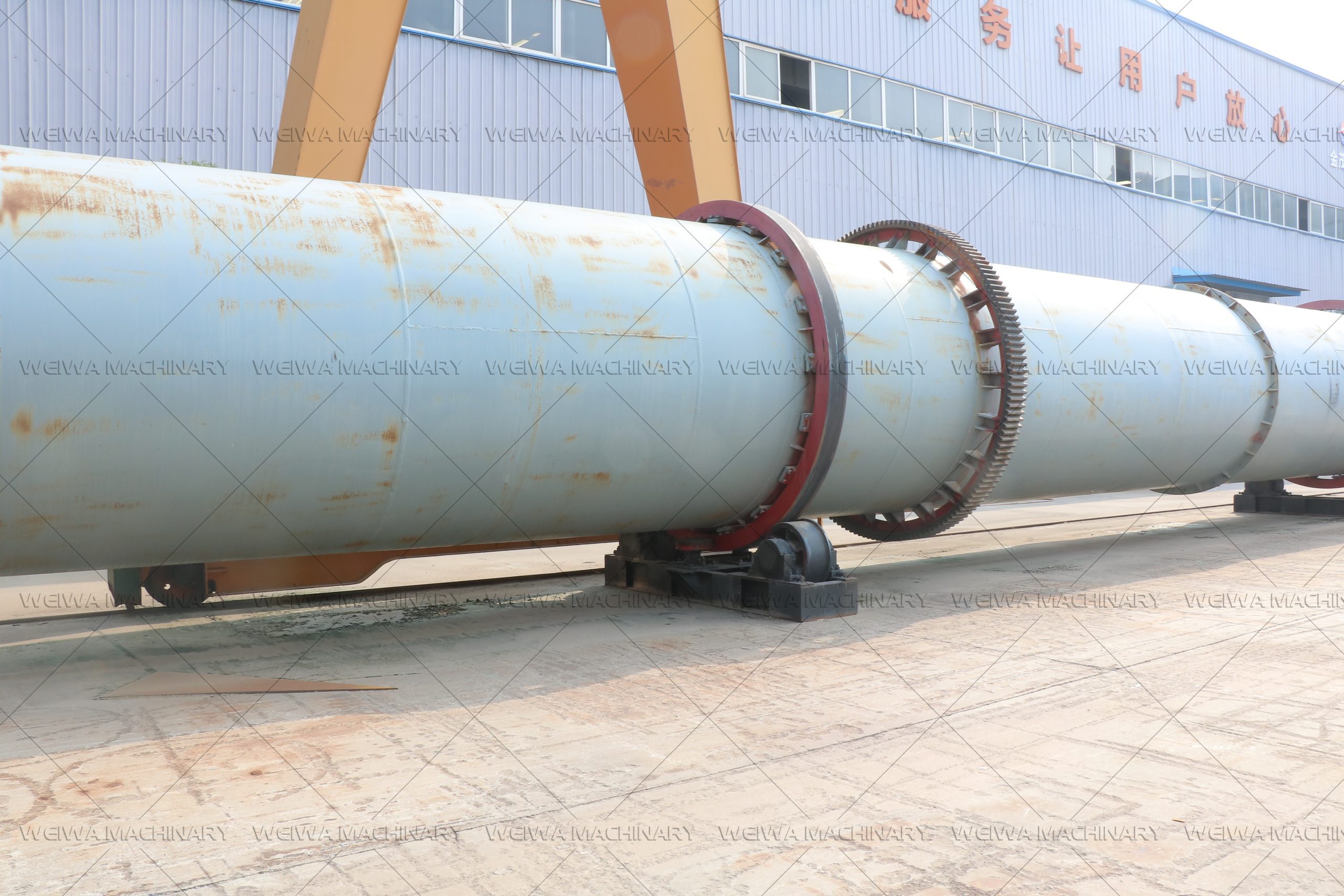
A rotary dryer is a slightly inclined rotating steel drum. Wet material enters the high end, hot gas enters from a burner or waste-heat duct, and the drum rotation lifts the material on internal flights so it showers through the hot air stream. Gravity moves the product toward the discharge end. By the time it leaves the drum, moisture has evaporated into the exhaust gas and the solids are within specification.
In Poland we usually configure the tumble dryer with a counter-current air flow for heat-sensitive grain and a co-current flow for abrasive sand or slag. Both are the same machine family; the difference is only in how the gas and material move relative to each other.
Core Components We Ship to Poland
Every Weiwa rotary dryer exported to Poland includes a high-strength steel drum with wear-resistant liner, adjustable-speed drive, engineered flight geometry, insulated shell, multi-stage cyclone or baghouse interface, and a PLC control panel with Polish/English labels. Burners can run on natural gas, biomass, or recovered kiln gas depending on the client’s utility setup.
Rotary Dryer Applications Across Polish Industries
Agriculture and Grain Drying in Poland
Poland is one of the EU’s largest grain producers. Wheat, maize, barley and rapeseed often arrive at cooperatives with 16 to 22 percent moisture. Safe storage requires 12 to 14 percent. A rotary dryer handles this continuously without batch gaps. In one Mazovia-region trial, our tumble dryer reduced wheat moisture from 19.5 percent to 13.2 percent at 8 tonnes per hour, with thermal efficiency near 71 percent using a biomass-fired furnace.
Biomass and Wood Pellet Lines
Polish pellet producers near Podlaskie and Lubusz process pine sawdust, straw and bark. Initial moisture can reach 45 percent. Our rotary dryer in Poland trial for a 4 t/h pellet line cut sawdust from 41 percent to 10.5 percent, with outlet temperature locked at 115 °C to avoid scorching lignin. The client later ordered a second drum after seeing the first unit’s fuel bill drop 17 percent versus their old belt dryer.
Mineral and Construction Material Drying
Copper concentrate from Lower Silesia, limestone from Świętokrzyskie, and foundry sand from Masovia all need drying before grinding or molding. A tumble dryer tolerates abrasive feed far better than fluid-bed alternatives. In a Silesian trial, we dried copper-flotation concentrate from 9 percent to 0.6 percent moisture at 12 t/h, using waste heat from the client’s smelter exhaust.
Fertilizer and Animal Feed
NPK granules, ammonium sulfate and DDGS all cake when moist. Polish blenders use the rotary dryer to stabilize moisture before screening and bagging. Our trials showed uniform 1.2 percent final moisture across a 6-hour run with zero product discoloration.
Weiwa Rotary Dryer Trial Process for Polish Clients
We never ship blind. Every rotary dryer in Poland project follows a three-phase validation: factory acceptance test in China using a material sample the client sends us, protected ocean freight with anti-corrosion coating, and on-site commissioning with a hot trial using the client’s real feedstock.
Phase 1: Sample Testing in Zhengzhou
Polish clients send 200 kg of their wet material. We run it in our test bay, measure retention time, flight wear, and moisture curve, then select drum diameter, length, slope and burner size. For a tumble dryer handling sticky rapeseed meal, we added extra lifting flights and a vibratory feed hopper to stop bridging.
Phase 2: Factory Acceptance Test
Before crating, the client’s engineer (or their Polish agent) joins a video FAT. We run the empty drum, check roller alignment, seal gaps, and burner modulation. All rotary dryer documents are supplied in English and Polish.
Phase 3: On-Site Hot Trial in Poland
After installation, Weiwa engineers supervise a 4 to 8 hour hot run. We record inlet/outlet moisture, gas temperature, draft pressure, power draw and dust emission at stack. Only when the client signs the acceptance report does the warranty clock start.
Real Trial Data from a Polish Grain Cooperative
A cooperative in the Kujawy region contacted us for a rotary dryer in Poland to replace two batch bins. Their wheat arrived at 18 to 20 percent moisture. We installed a Φ2.2 × 14 m drum with a 1.2 MW biomass burner.
Measured Results Over 6 Hours
Average feed moisture was 19.1 percent. Average discharge moisture was 13.0 percent. Throughput held at 9.4 t/h. Specific heat consumption was 3,250 kJ per kg water evaporated. Stack dust after the cyclone plus baghouse was 18 mg/Nm³, below the Polish limit of 30 mg/Nm³. The plant manager noted that labor dropped from three operators on the old batch system to one supervisor on the Weiwa tumble dryer.
Real Trial Data from a Polish Biomass Pellet Plant
A pellet producer in Warmia wanted to dry mixed pine and spruce sawdust. Feed moisture varied 33 to 47 percent seasonally. We supplied a Φ2.4 × 22 m rotary dryer with VFD drum drive.
Operator-Adjusted Run
During the trial, moisture jumped from 38 to 46 percent mid-shift. The operator lowered drum RPM from 4.5 to 3.1 and raised burner setpoint 40 °C. Discharge moisture stayed between 10 and 12 percent for the full 8-hour run. Thermal efficiency was 76 percent. The client told us the rotary dryer in Poland paid back its fuel saving in 11 months versus their previous supplier.
Why Poland Chooses Weiwa Rotary Dryers?
Engineered for EU Emission Expectations
Polish plants face strict dust and NOx scrutiny. Our tumble dryer ships with sealed housing, primary cyclone, optional baghouse interface, and burner flame management that avoids excess oxygen. We provide a declaration of conformity and CE-aligned documentation.
Spare Parts and Polish-Language Support
We keep riding rings, gears, seals and flight bolts in stock for 48-hour dispatch. Our manuals, HMI screens and training videos are available in Polish. When a rotary dryer in Poland needs service, the local technician can read the diagram without translation delays.
Customization, Not Catalog Guessing
We do not force Polish clients into a fixed model. Drum slope, flight angle, burner type and dust system are calculated from the client’s own material. That is why our rotary dryer trials rarely fail acceptance.
Selecting the Right Rotary Dryer Specification
If you are evaluating a tumble dryer in Poland, start with five numbers: feed moisture, target moisture, hourly tonnage, bulk density, and heat source. A 10 t/h wheat dryer is not the same as a 10 t/h sand dryer. We help Polish buyers build a one-page specification sheet before quoting.
Typical Weiwa Models Shipped to Europe
Φ1.2 × 8 m for 1.5 to 2.5 t/h pilot lines. Φ2.2 × 14 m for 8 to 12 t/h grain or biomass. Φ3.0 × 24 m for 25 to 35 t/h mineral drying. All can be adapted for a rotary dryer in Poland project with local voltage, PLC language and safety relays.
Installation, Training and After-Sales in Poland
Weiwa engineers join the site for mechanical alignment and hot commissioning. We train the Polish electrician, the burner operator and the quality controller. Remote VPN access lets our Chinese office troubleshoot the rotary dryer PLC within minutes if the local team hits a fault code.
Delivery Experience to Polish Ports
Most units go to Gdańsk or Szczecin, then by flatbed to the plant. Modular drum sections reduce crane time. A standard tumble dryer install takes 9 to 14 working days with two Weiwa engineers on site.
Common Misconceptions About Rotary Dryers in Poland
Some Polish buyers think a rotary dryer always uses huge gas volume. With heat recovery and proper insulation, our units often beat fluid-bed dryers on energy per ton. Others assume tumble dryer means only clothes drying. In industrial procurement, tumble dryer and rotary dryer are the same category; the dictionary difference does not change the machine.
Future of Industrial Drying in Poland
Polish industry is moving toward waste-heat integration, pellet export growth, and higher grain quality standards. The rotary dryer is positioned well because it accepts variable feed and pairs with biomass boilers. Weiwa is already testing AI-based moisture feedback loops on our Polish trial units so the drum speed auto-adjusts to feed humidity.
Conclusion
A rotary dryer in Poland is not a generic purchase. It is a process decision tied to moisture specs, fuel cost and EU compliance. Weiwa Machinery has proven with real grain, biomass and mineral trials that our tumble dryer design holds discharge moisture, saves fuel, and survives Polish winter startups. If your plant in Poland is fighting moisture limits, the fastest path is a sample test in our China bay followed by an on-site hot trial with your own material.
About Weiwa Machinery
Weiwa Machinery is a Chinese industrial equipment manufacturer with over 30 years of experience in crushing, drying and mineral processing systems. Our products have been exported to more than 120 countries and regions, serving mining, agriculture, biomass, cement and recycling clients. We design each rotary dryer around the client’s material, not a catalog sheet. Polish clients receive Polish-language manuals, CE-aligned documentation, spare-part stock and remote PLC support.
Contact Weiwa Machinery
Email: [email protected]
Phone: +86 18439853888
Website: https://crushmixplant.com/related-equipments/rotary-dryer.html