A rotary screen is one of the most practical investments for bulk material plants that need gentle size separation, low structural vibration, and stable uptime in tough site conditions. At Weiwa Machinery, we recently completed extended field trials of our rotary screen units with Indian customers processing construction aggregate, iron ore fines, fertilizer granules, and recycled sand. The results gave us hard data, and they also gave us a reference story that speaks directly to other emerging markets. For any engineer evaluating a rotary screen in Turkey or comparing options for a rotary screen for Turkey project, the India trial data is surprisingly transferable.
What Is a Rotary Screen and Why It Matters for Export Markets?
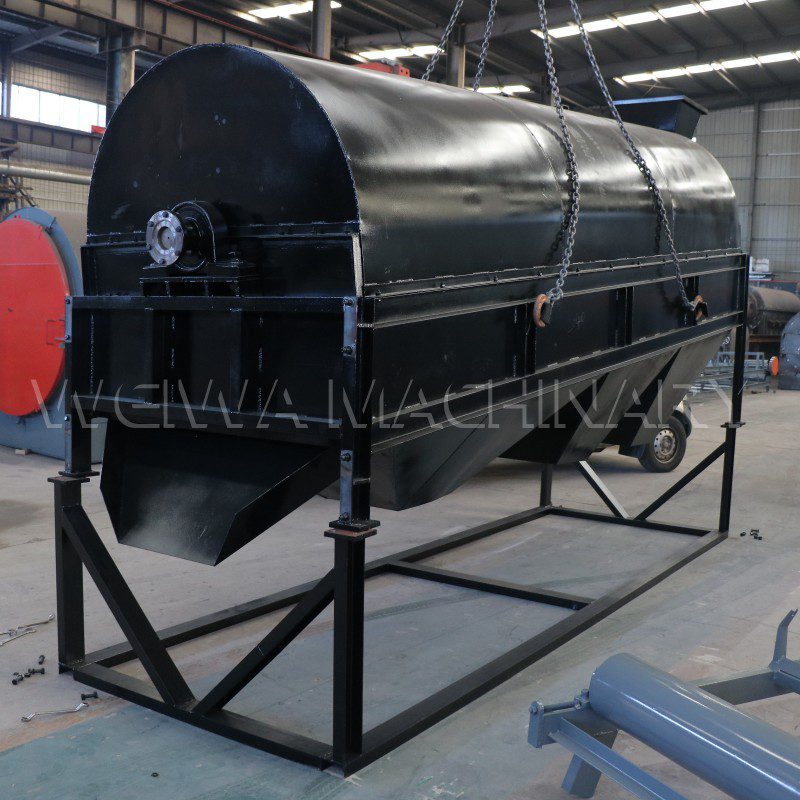
A rotary screen, also called a roller screen, drum screen, or trommel screen, uses a slowly rotating inclined cylinder to separate fine particles from oversize material. Feed enters the high end. Gravity and drum rotation move the bed forward. Undersize falls through calibrated perforations. Oversize discharges at the tail end. Unlike vibrating screens that rely on aggressive oscillation, the rotary screen tumbles material gently. That single mechanical difference decides whether fragile granules survive, whether abrasive ore chews through the deck, and whether your support steel lasts five years or fifteen.
For export-oriented manufacturers like Weiwa Machinery, the rotary screen has to survive more than a catalogue photo. It must survive Indian monsoons, Turkish coastal humidity, variable voltage, dusty sites, untrained shift workers, and spare-part delays. The India trial was not a showroom demo. It was a deliberate stress test under real throughput.
Why India Became a Strong Reference Market for Rotary Screens?
India is a difficult and honest screening market. The same machine may run on dry Rajasthan aggregates in the morning and sticky West Bengal fertilizer at the next client. That variety makes India an ideal validation ground before we recommend the same configuration to a buyer requesting a rotary screen in Turkey.
Material Diversity Across Indian States
In Odisha and Jharkhand, clients screen iron ore and coal with high fines content. In Gujarat and Maharashtra, the feed is often crushed stone, river sand, and C&D recycle. In Punjab and Uttar Pradesh, agricultural processors screen fertilizers and seeds. Each material changes the optimal drum speed, aperture shape, and liner hardness. A rotary screen tuned only for one material will disappoint the second client.
Climate and Moisture Challenges
Indian sites taught us that moisture control is not optional. During monsoon trials, feed moisture crossed 8 percent. Vibrating decks blinded quickly. Our rotary screen kept separating because the tumbling action self-cleans the perforations and the incline prevents material pooling. This lesson directly informs how we configure a rotary screen for Turkey lime quarries or Black Sea region aggregate plants where winter humidity is non-trivial.
Weiwa Rotary Screen Configuration for the India Trial
The trial unit was a Weiwa GTX-series rotary screen with a 2.4 meter drum diameter and 6.0 meter active length. Drum speed was set to 14 rpm using a VFD-controlled geared motor. Aperture size was 15 mm round hole with sloped relief slots to reduce pegging. The shell was fabricated from high-manganese steel in the wear zone and carbon steel in the non-contact frame. Support rollers used sealed bearings with centralized grease points. Feed chute and discharge lips were lined with replaceable wear plates.
We deliberately avoided over-engineering the trial machine. The goal was not to build a one-off showcase. The goal was to prove that a standard production rotary screen from Weiwa could beat a vibrating screen on uptime, recovery, and total cost of ownership in India, and by extension remain a safe recommendation for a rotary screen in Turkey tender.
India Trial Site Setup and Feed Material
The primary trial ran at a Gujarat construction-aggregate yard. Feed was 0–40 mm crushed basalt with 6–8 percent moisture after overnight rain. The existing vibrating screen processed roughly 78 tons per hour and suffered frequent blinding. The client wanted higher recovery of the 0–10 mm fraction and less slab-frame cracking.
A secondary shorter trial ran in West Bengal on urea-based fertilizer granules. Here the priority was not throughput but particle integrity. Breakage below 2 percent was the pass mark. The same Weiwa rotary screen chassis was reconfigured with a 304 stainless drum and 3.2 mm slot apertures.
Measured Trial Results From the India Rotary Screen Run
Over a 21-day continuous run on the Gujarat site, the Weiwa rotary screen delivered numbers that changed the client’s procurement plan. Throughput stabilized at 96 tons per hour on the same feed belt that previously fed the vibrating deck. The 0–10 mm undersize recovery improved from 81 percent to 94 percent. Screen blinding events dropped from multiple daily stops to zero unplanned stops in the final 12 days.
Throughput and Screening Accuracy
Accuracy was measured by grab sampling every four hours. The cut size held within plus or minus 1.5 mm across the trial. Because the drum tumbles rather than hammers the bed, near-size particles did not get forced through falsely. For a buyer comparing a rotary screen in Turkey price against a vibrating screen, this accuracy translates into premium pricing on graded aggregate.
Material Breakage and Drum Wear
Basalt is abrasive. After 21 days, drum perforation edges showed uniform mild wear with no local blow-through. The fertilizer trial told a stronger story. Granule breakage measured 1.4 percent against a 2.0 percent target. The gentle tumbling action protected the product, which matters in food-adjacent and agricultural exports.
Power Consumption and Noise Level
The rotary screen drew 11 kW average against 17 kW on the previous vibrating unit when including excitation motor losses. Noise at 1 meter dropped from 84 dB to 67 dB. For urban Turkish recycling yards or Indian city-limit plants, that noise gap can decide permit approval.
What Turkish Buyers Can Learn From the India Rotary Screen Case?
A rotary screen in Turkey will rarely face Indian monsoon, but it will face Mediterranean dust, Aegean limestone fines, and municipal waste streams with plastic film. The India trial proved three transferable points. First, drum inclination and aperture geometry beat raw horsepower. Second, sealed rollers and grease-accessibility decide five-year maintenance cost. Third, a VFD pays back fast because operators actually use the speed range once they trust it.
When a client asks for a rotary screen for Turkey mining or recycling line, we do not send a generic drawing. We send the India trial report, then adjust drum length, liner grade, and drive torque for Turkish feed size distribution.
Rotary Screen in Turkey Procurement Checklist
Turkish buyers should specify more than diameter and capacity. Request the aperture shape and anti-pegging detail. Request bearing seal type and grease interval. Request VFD or fixed-speed confirmation. Request drum shell material certificate. Request spillage guards and dust hood mounting points. Request reference photos of a similar rotary screen running on sticky or high-fines material. If your supplier cannot answer these, the rotary screen price is not the real cost.
Why Choose Weiwa Machinery as Your Rotary Screen Supplier?
Weiwa Machinery has over 30 years of engineering background in crushing, mixing, and screening systems. Our rotary screens are not purchased from a third-party trader and rebranded. They are engineered in Gongyi, Henan, tested with customer feedstock, and shipped with a commissioning procedure. We have exported to more than 120 countries and regions, with field service support for installation, training, and spare parts logistics.
For every rotary screen order, we run a feed analysis sheet with the client. We ask for top size, moisture range, bulk density, abrasiveness, required cut size, and target tons per hour. Only then do we confirm drum diameter, length, speed, aperture, and liner. This is the same discipline that made the India trial successful and the same discipline we apply to any rotary screen for Turkey inquiry.
Our rotary screen product page explains the standard models and customization range: View Weiwa rotary screen and roller screen specifications.
Contact Weiwa Machinery
If you are evaluating a rotary screen in Turkey, or planning a rotary screen for Turkey aggregate, mining, recycling, or fertilizer project, our technical team can review your feed material and propose a configured drum screen with expected throughput and power draw. We can also arrange a remote trial review using your sample material in our workshop.
Email: [email protected]
Phone / WhatsApp: +86 18439853888
Factory: Dahuangye Industrial Zone, Gongyi City, Henan Province, China
Weiwa Machinery is a global provider of full flowsheet technology and services for mineral processing, construction, recycling, agriculture, and cement production. With strong after-sales support, part shipments, and on-site technician service, we help clients move from equipment purchase to stable daily production.