Executive Summary: As Nigeria accelerates its infrastructure development and mining sector reform, the demand for efficient, durable crushing equipment has never been higher. This article explores how the Two-Stage Crusher is transforming material processing across Nigerian quarries and construction sites, backed by real-world testing data from Weiwa Machinery deployments. We examine the technical advantages, market drivers, and practical considerations for Nigerian operators seeking to optimize their crushing operations.
Nigeria stands at a pivotal moment in its industrial evolution. With the federal government’s Renewed Hope Agenda prioritizing economic diversification beyond oil, the mining and solid minerals sector has emerged as a cornerstone of national development strategy. Between January and August 2025, Nigeria’s non-oil revenue surged by 40.5%, reaching 20.59 trillion naira and the mining sector is positioned to play an increasingly central role in this transformation.
Against this backdrop, the Two-Stage Crusher has gained significant traction among Nigerian quarry operators, mining companies, and construction firms. At Weiwa Machinery, we have witnessed firsthand how this technology is reshaping the material processing landscape across Ogun, Edo, Kaduna, Kano, and Lagos States. With over thirty years of expertise in manufacturing heavy-duty industrial equipment, we have supplied high-performance Two-Stage Crushers to numerous Nigerian clients, helping them achieve higher productivity, lower operational costs, and superior material output quality.
Understanding the Nigerian Market Context
Nigeria’s Infrastructure Boom Drives Aggregate Demand
The construction sector in Nigeria is experiencing unprecedented growth, fueled by major infrastructure projects including the Lagos-Ibadan Expressway rehabilitation, new bridge constructions, urban housing developments in Abuja and Lagos, and an expanding network of rail infrastructure. These projects require vast quantities of high-quality aggregates—crushed stone, gravel, and manufactured sand—produced to exacting specifications.
Traditional crushing setups in Nigeria often rely on single-stage jaw crushers or improvised arrangements that struggle to deliver consistent particle sizes. The result is uneven output that fails to meet the stringent requirements of modern concrete production and asphalt mixing plants. This performance gap has created a strong market pull for more sophisticated crushing solutions, particularly the Two-Stage Crusher in Nigeria’s most active quarrying regions.
Mining Sector Reform Creates New Opportunities
Beyond construction aggregates, Nigeria’s mining sector is undergoing a structural transformation. The government has implemented a “use it or lose it” policy, revoking thousands of dormant mining licenses to encourage active investment. Tax breaks on mining equipment imports, streamlined licensing procedures, and the establishment of a state-owned Solid Minerals Corporation are all designed to attract responsible foreign and domestic investment into the sector.
For crushing equipment manufacturers and suppliers like Weiwa Machinery, these policy shifts translate into a growing customer base of legitimate, well-capitalized mining operators who demand reliable, high-capacity equipment capable of handling Nigeria’s diverse mineral wealth—from granite and limestone to gold-bearing ore and coal.
What Is a Two-Stage Crusher and How Does It Work?
A Two-Stage Crusher, as the name suggests, is a type of crushing equipment that performs material size reduction in two distinct phases within a single integrated system. Unlike traditional crushing processes that require multiple machines operating in sequence—first a primary crusher to break down large chunks, followed by a secondary crusher to achieve the desired final size—a Two-Stage Crusher combines these two steps into one cohesive, streamlined process.
The Two-Phase Crushing Process
The first stage typically handles the initial breakdown of larger materials. This chamber is equipped with heavy-duty crushing elements, such as high-alloy hammers mounted on rotors, designed to absorb the impact of large, irregular feed material. The primary goal here is to reduce massive rocks—often exceeding 200mm in diameter—into smaller, more manageable pieces.
After the first stage, the partially crushed material is transferred to the second stage through a carefully engineered transfer system that maintains optimal material flow and prevents blockages. The second stage refines the material to achieve the desired final size, employing finer crushing elements or a different chamber configuration to ensure that the output meets specific size requirements with exceptional uniformity.
This dual-process approach delivers several fundamental advantages over single-stage alternatives. The first-stage rotor handles the brute force work of initial fragmentation, while the second-stage rotor operates on material that has already been partially sized, allowing it to focus entirely on achieving precise final granularity. The result is a more efficient use of energy, reduced wear on individual components, and significantly better control over the final product.
Technical Specifications of Weiwa Two-Stage Crushers
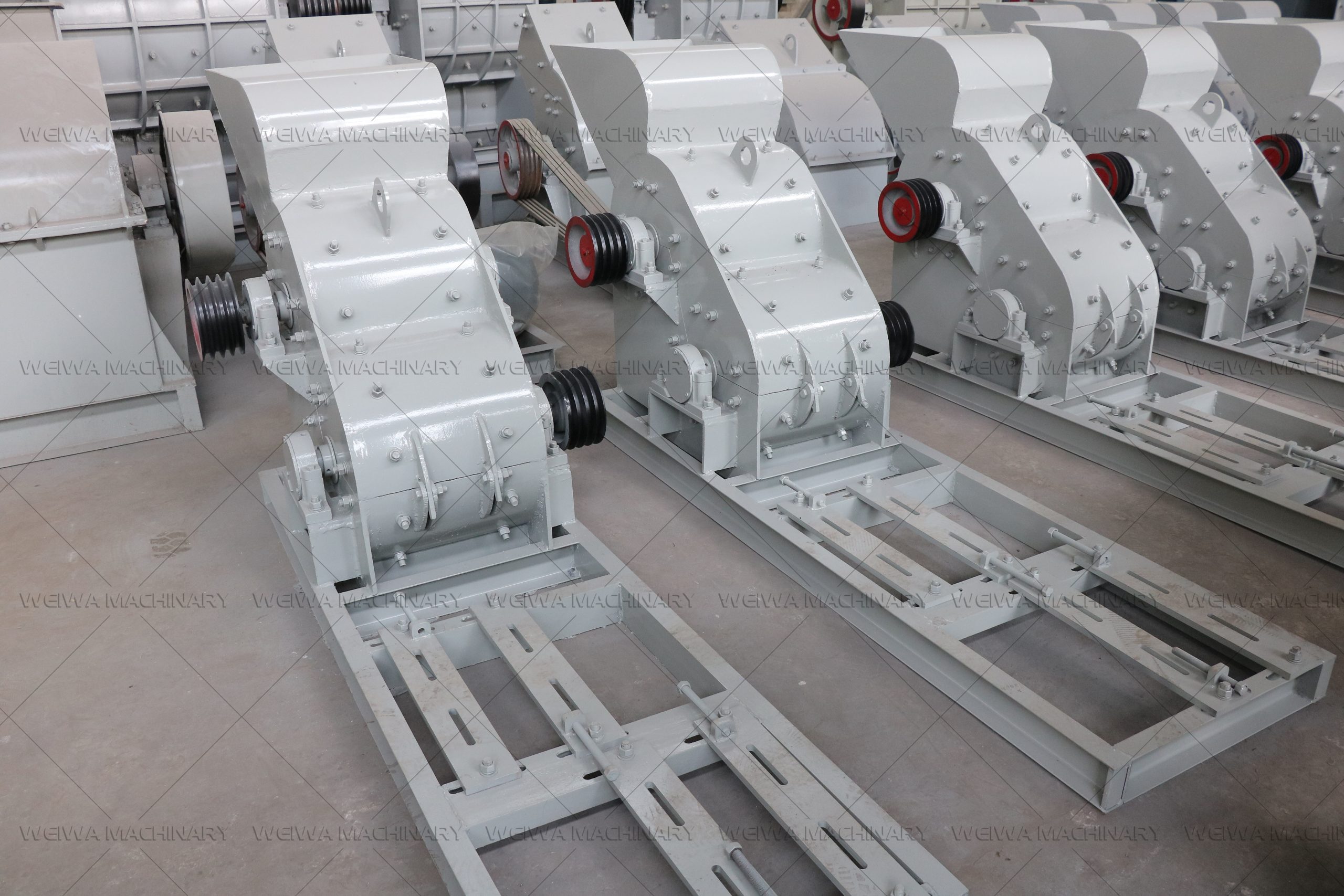
At Weiwa Machinery, we offer a comprehensive range of Two-Stage Crusher models, each engineered to meet specific operational requirements. Our machines are built with high-alloy wear-resistant hammers, robust dual-motor drive systems, and adjustable gap settings that allow operators to fine-tune output size without shutting down the equipment.
| Model | Feeding Size (mm) | Discharging Size (mm) | Capacity (t/h) | Motor Power | Overall Dimension (mm) |
|---|---|---|---|---|---|
| ZPC600×600 | ≤100 | ≤3 (Adjustable) | 20-30 | 22KW×2 | 2300×650×1680 |
| ZPC800×600 | ≤120 | ≤3 (Adjustable) | 35-55 | 45KW+55KW | 2500×870×1700 |
| ZPC1000×800 | ≤160 | ≤3 (Adjustable) | 60-90 | 55KW+75KW | 3500×870×2180 |
| ZPC1200×1000 | ≤200 | ≤3 (Adjustable) | 80-120 | 90KW+110KW | 3800×1800×2400 |
| ZPC1400×1200 | ≤200 | ≤3 (Adjustable) | 100-140 | 132KW+160KW | 4400×2300×2600 |
| ZPC1600×1400 | ≤200 | ≤3 (Adjustable) | 120-180 | 160KW+200KW | 4400×2300×2600 |
All models feature a dual-rotor design with no requirement for material moisture limitations, making them particularly well-suited for Nigeria’s tropical climate where seasonal rains can introduce significant moisture into feed materials. The adjustable hammer gap allows operators to control discharging granularity precisely, ensuring consistent output whether the application demands coarse aggregates for road base or finer material for manufactured sand production.
Why Two-Stage Crushers Are Ideally Suited for Nigeria’s Market?
Handling Nigeria’s Tough Mineral Deposits
Nigeria possesses abundant reserves of hard rock formations, particularly granite, limestone, and basalt, which are prevalent across states such as Ogun, Edo, Ondo, Kaduna, and Kano. These materials present significant challenges for conventional crushing equipment due to their high abrasiveness and compressive strength, which typically ranges from 150 to 250 MPa for Nigerian granite.
Our Two-Stage Crusher is engineered specifically to withstand the high abrasion associated with processing these tough minerals. The first-stage crushing chamber handles the initial impact and size reduction of large, irregular granite boulders, while the second stage refines the output to a uniform particle size. This two-phase approach distributes the mechanical stress across two rotors rather than concentrating it on a single crushing element, significantly extending the service life of wear components.
For Nigerian operators, this translates into tangible economic benefits: longer intervals between maintenance shutdowns, reduced consumption of wear parts, and more consistent daily throughput. In remote quarry locations where access to spare parts and technical support may be limited, the durability of the Two-Stage Crusher becomes a decisive competitive advantage.
Cost-Effectiveness and Low Maintenance Requirements
Many Nigerian quarry operations are located in areas with limited infrastructure, where every hour of downtime carries a substantial financial penalty. The Two-Stage Crusher addresses this challenge through a design philosophy that prioritizes simplicity, reliability, and ease of maintenance.
The dual-rotor configuration eliminates the need for a separate secondary crushing plant, reducing the total number of machines that must be maintained, fueled, and staffed. The high-alloy hammers are designed with a replaceable-head system, allowing operators to change only the worn hammer head while retaining the hammer handle. This not only reduces spare parts inventory costs but also shortens maintenance time significantly.
Furthermore, the absence of a grate bar device in the crushing chamber means that even materials with high moisture content—a common occurrence during Nigeria’s rainy season—will not cause blockages. The continuous crushing action through two rotors ensures smooth material flow regardless of humidity levels, eliminating one of the most frequent causes of unplanned downtime in traditional crushing setups.
Versatile Applications Across Nigerian Industries
The adaptability of the Two-Stage Crusher makes it an invaluable asset across multiple sectors of the Nigerian economy. In the mining industry, raw ore often arrives in large, irregular chunks that require substantial size reduction before beneficiation processes such as grinding, gravity separation, or flotation. The Two-Stage Crusher efficiently breaks down these materials in the first stage and refines them in the second, ensuring that the output meets the precise specifications required for downstream processing.
In the construction sector, the machine excels at producing high-quality aggregates for concrete production, road base preparation, and asphalt mixing. The uniform particle size achieved through two-stage crushing is particularly important for ready-mix concrete plants, where consistent aggregate gradation directly affects the strength, workability, and durability of the final concrete product.
The crusher also finds extensive application in processing construction and demolition waste—a growing waste stream in Nigeria’s rapidly urbanizing cities. Concrete debris, bricks, and asphalt chunks from demolished structures can be crushed into reusable aggregates, supporting circular economy principles and reducing the environmental impact of construction activities.
Real-World Testing Results: Two-Stage Crusher Performance in Nigeria
Case Study: Granite Quarry in Ogun State
One of the most compelling validations of the Two-Stage Crusher’s effectiveness in Nigeria comes from a granite quarry operation in Ogun State—often referred to as the quarrying capital of Nigeria. The operator had previously relied on a single-stage jaw crusher followed by a separate cone crusher to process granite boulders for construction aggregate production. This traditional setup presented several persistent problems: inconsistent output size, frequent clogging during the rainy season, and high energy consumption from running two separate machines.
After switching to a Weiwa Two-Stage Crusher (model ZPC1200×1000), the results were measured and documented over a three-month operational period. The throughput increased by approximately 30% compared to the previous setup, primarily due to the elimination of transfer bottlenecks between separate primary and secondary crushing stages. Energy consumption per ton of crushed material decreased by roughly 20%, as the integrated dual-rotor system operates more efficiently than two independent machines running at partial load.
Most importantly, the uniformity of the crushed output improved significantly. The particle size distribution became consistently tighter, with fewer oversized particles requiring re-circulation and fewer fines being generated unnecessarily. This improvement in product quality allowed the quarry operator to command premium pricing from ready-mix concrete customers who prioritize consistent aggregate gradation.
Key Performance Improvements Observed
Throughput Increase: Approximately 30% higher production capacity compared to traditional two-machine crushing setups.
Energy Savings: Around 20% reduction in power consumption per ton of processed material.
Product Consistency: Dramatically improved particle size uniformity, meeting strict specifications for high-grade concrete and asphalt production.
Operational Reliability: Zero blockage incidents during the rainy season, demonstrating the advantage of the grate-free chamber design.
Case Study: Construction and Demolition Waste Recycling in Lagos
In Lagos, Nigeria’s commercial and industrial hub, a construction waste recycling firm deployed a Weiwa Two-Stage Crusher to process demolition debris from urban renewal projects. The feed material was highly variable, consisting of reinforced concrete chunks, bricks, asphalt pavement fragments, and occasional mixed waste. The ability of the Two-Stage Crusher to handle this heterogeneous material stream without clogging or excessive wear proved instrumental in the success of the operation.
The first stage effectively broke down large concrete blocks and asphalt chunks, while the second stage refined the output into reusable coarse and fine aggregates. The recycled material was then incorporated into new construction projects, reducing the demand for virgin quarried stone and lowering the overall carbon footprint of the construction supply chain. For the Lagos-based operator, the Two-Stage Crusher delivered a rapid return on investment by transforming what was previously a disposal cost into a revenue-generating product stream.
Testimonial from a Nigerian Client
“We needed a crusher that could handle hard granite without frequent breakdowns, especially during the rainy months when moisture content is high. Weiwa’s Two-Stage Crusher delivered smooth, uninterrupted operation and excellent particle size control for our asphalt production. The difference in product quality and consistency is remarkable compared to our previous equipment.” — Quarry Operations Manager, Lagos-based Construction Firm.
Key Considerations for Nigerian Buyers
Choosing the Right Model for Your Operation
Selecting the appropriate Two-Stage Crusher model depends on several critical factors that Nigerian operators must carefully evaluate. The type of material being processed—its hardness, abrasiveness, and typical moisture content—is the primary consideration. For operations focused on granite and basalt, which are prevalent in Ogun and Edo States, models with higher power ratings and reinforced wear components are recommended. For limestone operations in Benue or Ogun, slightly lighter configurations may be sufficient, allowing operators to optimize their capital investment.
The required throughput capacity is another key determinant. Small to medium-sized quarries serving local construction markets may find the ZPC800×600 or ZPC1000×800 models perfectly adequate, offering capacities in the 35-90 ton per hour range. Larger operations supplying regional markets or integrated mining projects may require the ZPC1400×1200 or ZPC1600×1400 models, which can deliver up to 180 tons per hour of processed material.
Site conditions also play a crucial role in equipment selection. Nigerian quarries vary dramatically in terms of accessibility, available power infrastructure, and space constraints. Operations in remote areas may benefit from diesel-powered configurations or hybrid drive systems, while sites with reliable grid access can take full advantage of the energy efficiency offered by electric motor drives. The physical footprint of the crusher must also be considered, particularly for operations in confined spaces or urban demolition sites.
Understanding Total Cost of Ownership
When evaluating crushing equipment, Nigerian buyers should look beyond the initial purchase price to consider the total cost of ownership over the machine’s operational life. The Two-Stage Crusher offers several economic advantages in this regard. By consolidating two crushing stages into a single machine, it reduces the capital expenditure required for equipment, the space needed for installation, and the labor required for operation.
Energy efficiency is another major factor. The integrated design of the Two-Stage Crusher means that material moves seamlessly from the first crushing stage to the second without the energy losses associated with separate conveyor systems and independent drive motors. Over the course of a year, the energy savings alone can amount to a substantial reduction in operating expenses, particularly for high-volume operations running multiple shifts.
Maintenance costs, too, are optimized by the Two-Stage Crusher design. The high-alloy wear-resistant hammers have a significantly longer service life compared to conventional crusher liners, and the replaceable hammer head system minimizes the cost and downtime associated with routine maintenance. For Nigerian operators, this translates into more predictable operating budgets and fewer unexpected interruptions to production schedules.
Adapting to Nigeria’s Climate and Operating Conditions
Nigeria’s tropical climate presents unique challenges for heavy industrial equipment. High temperatures, seasonal heavy rainfall, and pervasive dust conditions can all take a toll on machinery performance. The Two-Stage Crusher is designed with these realities in mind. The robust drive system, typically consisting of dual electric motors connected to a heavy-duty gearbox, is engineered to provide consistent power and torque even under extreme heat and heavy loads.
The grate-free chamber design is particularly advantageous during the rainy season, when feed materials can become saturated with water. Traditional crushers with fixed grate bars often experience severe clogging in these conditions, forcing operators to halt production until the material dries out or the blockage can be manually cleared. The Two-Stage Crusher’s continuous-flow design eliminates this vulnerability entirely, maintaining steady output regardless of seasonal weather patterns.
Why Choose Weiwa Machinery for Your Two-Stage Crusher in Nigeria?
Thirty Years of Global Expertise
Weiwa Machinery brings over thirty years of specialized experience in designing and manufacturing industrial crushing equipment. Our engineering team has developed deep expertise in the specific challenges faced by operators in diverse global markets, from the granite quarries of West Africa to the coal processing plants of South Asia. This accumulated knowledge allows us to anticipate potential issues before they arise and to design equipment that performs reliably under real-world conditions.
Our Two-Stage Crushers are manufactured in compliance with ISO 9001, CE, and GOST international quality certifications, ensuring that every machine meets rigorous standards for performance, safety, and durability. We use only high-quality raw materials and cutting-edge manufacturing processes, from precision-machined rotors to heat-treated alloy hammers, to ensure that our equipment delivers exceptional service life even in the most demanding applications.
Comprehensive After-Sales Support
We understand that purchasing a crusher is only the beginning of a long-term partnership. That is why Weiwa Machinery is committed to providing comprehensive after-sales support to our Nigerian clients. Our customer service team is available 24/7 to address technical inquiries, troubleshoot operational issues, and provide maintenance guidance. We maintain a global logistics network capable of delivering spare parts efficiently to Nigerian ports, minimizing downtime when replacement components are needed.
For clients requiring hands-on assistance, we offer on-site field service technician support. Our experienced engineers can travel to your location to oversee installation, conduct commissioning, and provide operator training to ensure that your team can get the most out of your Two-Stage Crusher from day one. We also provide detailed operation manuals, maintenance schedules, and video training resources to support ongoing equipment management.
Customized Solutions for Unique Requirements
Every crushing operation is different, and we recognize that a one-size-fits-all approach does not serve our clients well. Whether you need a specific feed opening size, customized discharge granularity, portable mobility for multi-site operations, or integration with existing screening and conveying systems, our engineering team can work with you to develop a tailored solution that meets your exact operational requirements.
We also understand the importance of competitive pricing, particularly for operators working within tight project budgets. Our direct-from-manufacturer model eliminates unnecessary intermediaries, allowing us to offer high-quality equipment at competitive price points. Combined with the operational cost savings delivered by the Two-Stage Crusher design, this approach ensures that our Nigerian clients can achieve a strong return on their investment.
The Future of Crushing in Nigeria
As Nigeria continues to prioritize infrastructure development and mining sector reform, the demand for efficient, reliable crushing equipment will only intensify. The government’s commitment to increasing non-oil revenue, coupled with ongoing urbanization and population growth, creates a compelling long-term outlook for the aggregates and minerals processing industries.
Two-Stage Crushers are uniquely positioned to serve this expanding market. Their ability to deliver high throughput, superior product quality, and low operating costs aligns perfectly with the needs of Nigerian operators who must compete in an increasingly sophisticated marketplace. As environmental regulations become more stringent and sustainability considerations gain prominence, the energy efficiency and waste-processing capabilities of Two-Stage Crushers will become even more valuable.
At Weiwa Machinery, we are committed to supporting Nigeria’s industrial growth with crushing solutions that combine proven technology, robust engineering, and responsive customer service. Whether you are a quarry operator in Ogun State, a mining company in Zamfara, a construction firm in Lagos, or a waste recycling entrepreneur in Abuja, we have the expertise and the equipment to help you succeed.
Ready to Transform Your Crushing Operations in Nigeria?
Contact Weiwa Machinery today to discuss your specific requirements and discover how our Two-Stage Crusher can optimize your material processing workflow.
Email: [email protected]
Phone: +86 18439853888
Website: crushmixplant.com
About Weiwa Machinery
Weiwa Machinery is a leading manufacturer and exporter of heavy-duty mining and construction equipment, headquartered in Gongyi City, Henan Province, China. With over thirty years of industry experience, we have established ourselves as a trusted partner for businesses across more than 120 countries and regions worldwide.
Our comprehensive product portfolio includes stone crusher machines, sand making equipment, ore beneficiation plants, powder grinding machines, dryer machines, and complete production line solutions. We are certified to ISO 9001, CE, and GOST international standards, reflecting our unwavering commitment to quality and safety.
At Weiwa Machinery, we believe that every container shipped is more than a commercial transaction—it represents a commitment to helping our global partners achieve their operational goals. Our 24/7 customer service team, on-site technical support capabilities, and extensive spare parts network ensure that our clients receive the support they need, when they need it.
Whether you are looking for a single machine or a complete turnkey production plant, Weiwa Machinery has the expertise, the technology, and the dedication to deliver solutions that exceed your expectations. Join the more than 2,000,000 customers who have made Weiwa their first choice for industrial equipment.
Contact Information:
Email: [email protected]
Phone: +86 18439853888
Address: Dahuangye Industrial Zone, Gongyi City, Henan Province, China