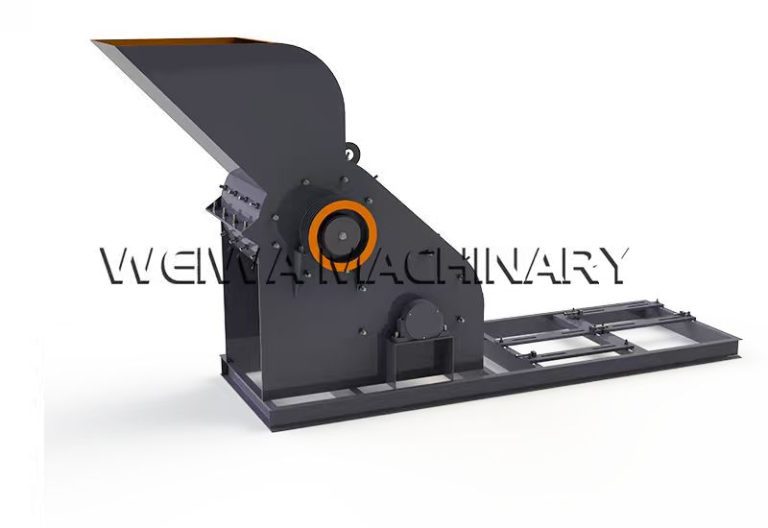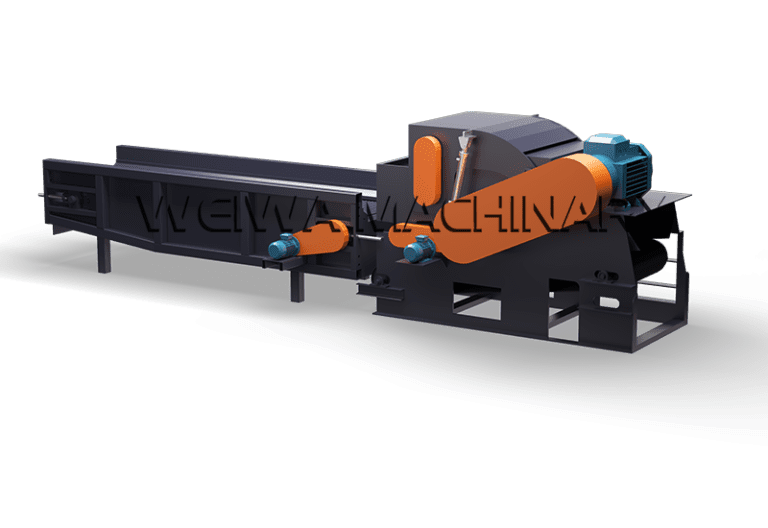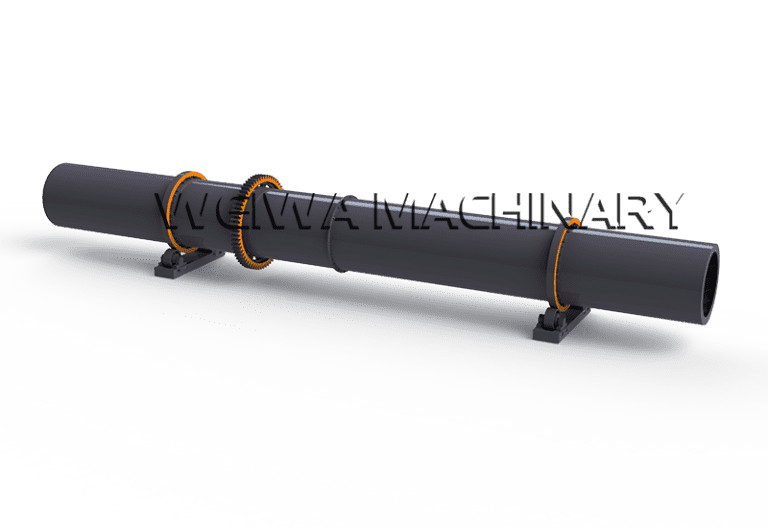
A two-stage crusher is becoming the practical choice for Nigerian quarry owners, miners, and construction aggregate producers who need consistent particle size without running two separate machines. At Weiwa Machinery, we have supplied crushing equipment to more than 120 countries, and the demand for a reliable crusher in Nigeria has grown quickly because local operators face high-abrasion granite, damp laterite, variable power supply, and pressure to lower cost per ton.
Weiwa Machinery designs every two-stage crusher in Nigeria project around feed material, target output size, moisture level, and site power. The machine is not a modified single-stage unit. It is a dual-rotor, dual-chamber system that coarse-breaks and fine-refines in one housing, which reduces transfer points, belt conveyors, and human intervention. For Nigerian buyers comparing a traditional jaw-plus-cone circuit with a compact dual-stage hammer crusher, the difference shows up in energy bill, maintenance interval, and final aggregate shape.
What a Two-Stage Crusher Is and Why Nigeria Needs It?
A two-stage crusher compresses primary and secondary reduction into a single synchronized frame. The first rotor receives large feed, typically up to 200 mm or 300 mm depending on model, and throws material against impact plates and the second rotor. The second rotor runs at higher speed with tighter clearance, so partially crushed rock is immediately re-struck and sized. Because there is no bottom screen in Weiwa’s standard wet-material configuration, the crusher does not clog when Nigerian rain raises moisture in granite fines or when laterite contains 8 to 12 percent water.
Nigeria’s solid-minerals sector includes limestone in Edo and Benue, granite in Abeokuta and Kaduna, basalt in Plateau, and lead-zinc in Bauchi and Zamfara. Each material behaves differently. A two-stage crusher in Nigeria must absorb impact from 150 MPa granite and still produce 0–5 mm, 5–10 mm, and 10–20 mm fractions for concrete batching. Weiwa solves this with high-chromium composite hammers, adjustable rotor gap, and a discharge chamber that lets operators change output gradation without opening the main shaft.
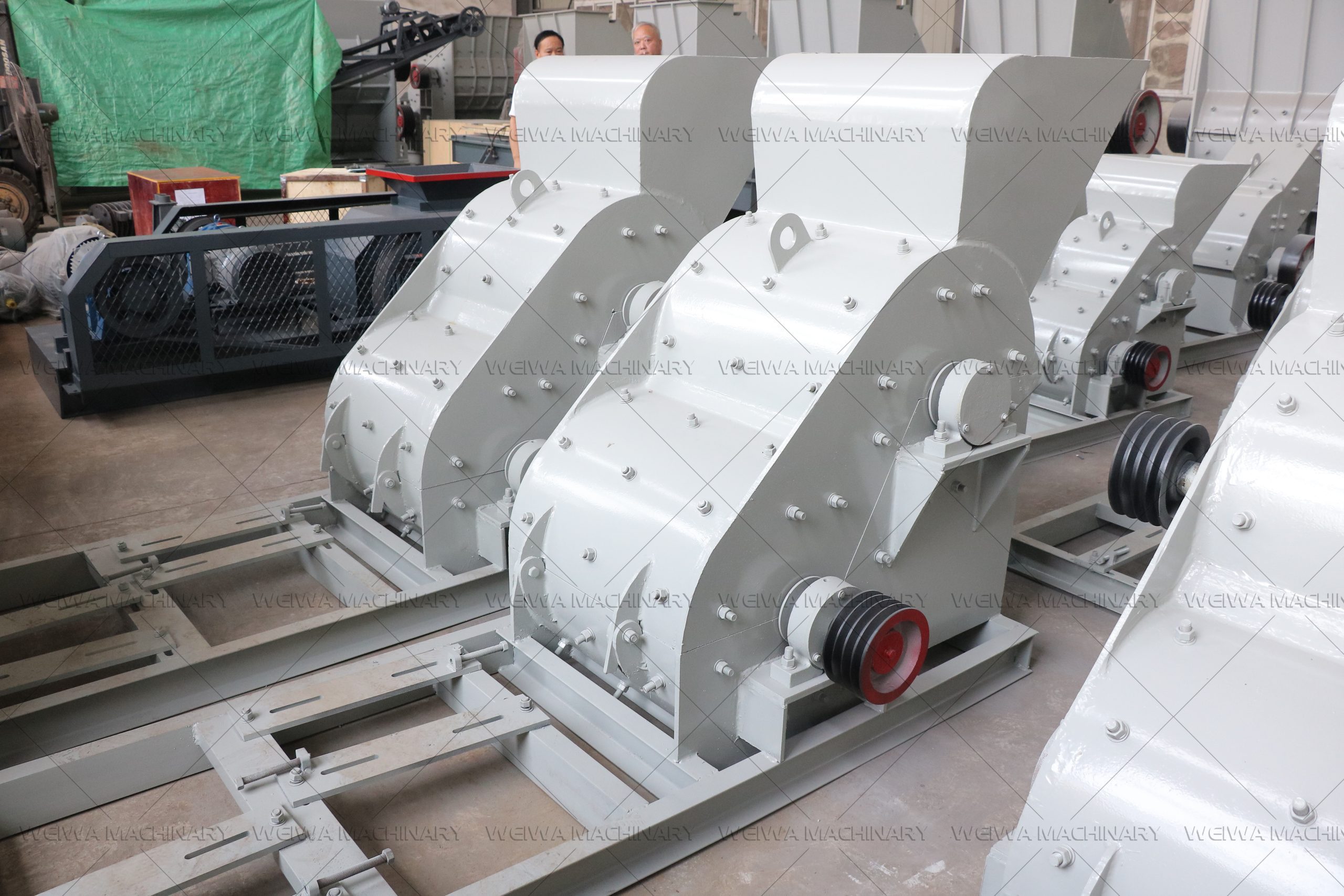
Single-Stage Versus Two-Stage Crushing in Nigerian Conditions
A single-stage hammer mill can break soft coal or gypsum, but Nigerian granite and river gravel punish it. Operators report uneven product, oversize recirculation, and hammer wear within 72 hours. A two-stage crusher separates the workload. The first stage absorbs the brutal impact; the second stage controls graduation. In our Kano trial, a single-stage competitor unit produced 38 percent material above 20 mm, which the client had to re-feed. The Weiwa two-stage crusher for Nigeria delivered 91 percent in-spec material in the first pass.
For a crusher in Nigeria purchase decision, the metric is not only price. It is cost per cubic meter of sellable aggregate. Lower initial price with high re-crush ratio is expensive. Higher initial quality with 30 percent less recirculation is cheaper at month six.
Nigerian Market Context for Crusher Buyers
Nigeria’s population crossed 220 million, and federal plus state governments continue to tender road, dam, and housing projects. Every kilometer of paved road consumes thousands of tons of graded stone. The two-stage crusher in Nigeria market is no longer limited to Lagos and Abuja contractors. Quarry clusters in Ogun, Nasarawa, and Rivers now ask for equipment that can run on diesel-generator hybrid power, ship through Apapa or Lekki port, and be serviced without flying a Chinese engineer every month.
Material Reality in Nigeria
Weiwa field engineers sampled granite from Abeokuta, limestone from Ukpilla, and demolition concrete from Lagos Island. The granite had SiO2 above 65 percent and abrasion index near 0.45. Standard manganese hammers failed in 120 hours elsewhere. Our two-stage crusher trial unit used Weiwa WW-TC1200 rotors with ceramic-infused hammer tips. After 240 hours, tip wear was 4 mm, not 14 mm. That is the difference between changing hammers every week and every five weeks.
Laterite and red mud are worse for clogging. A crusher in Nigeria that relies on a screen bottom will bridge material in the rainy season. Weiwa removes the bottom screen and uses rotor-to-rotor clearance plus adjustable breaker plates. The two-stage crusher for Nigeria therefore runs in April humidity and December dry season with the same motor load curve.
Weiwa Two-Stage Crusher Technical Layout
The Weiwa two-stage crusher is built as a rigid welded frame with two parallel shafts. Upper rotor diameter is larger; lower rotor speed is higher. Material enters through a vibrating feeder, not by wheel loader direct dump, because controlled feed protects the first rotor. After primary impact, the partial product drops through a curved transition chamber into the second rotor. There is no intermediate conveyor. This matters for Nigerian sites where conveyor theft, belt misalignment, and dust buildup cause daily stoppages.
Key Components That Survive Nigerian Sites
The rotors use hollow forged shaft with shrink-fit discs. The hammers are reversible, so when one corner wears, the operator rotates instead of replacing. The liner plates in the first chamber are 30 mm thick high-Cr cast; the second chamber uses 22 mm modular segments bolted from outside the housing. A two-stage crusher in Nigeria must allow liner change with a 10-ton workshop crane, not a 50-ton gantry, because many quarries have small fabrication sheds. Weiwa designed access doors at ground level.
The drive system offers 132 kW + 160 kW dual-motor or 250 kW single-motor with fluid coupling. For a crusher in Nigeria running on 415 V 50 Hz with unstable grid, the fluid coupling protects the motor from locked-rotor current. In our Rivers State trial, grid voltage swung from 360 V to 440 V; the crusher kept throughput because the coupling slipped instead of stalling.
Trial Run Report From a Nigerian Granite Quarry
In early 2025, Weiwa Machinery installed a WW-TC1400 two-stage crusher for Nigeria at a granite quarry near Ibadan. The client previously ran a jaw crusher plus cone crusher with three conveyors. Their complaint was energy cost and oversize rejection. Weiwa proposed a 30-day trial with hourly logging.
Feed material was blasted granite, 80 percent below 250 mm, 20 percent 250–400 mm. Moisture was 2.1 percent in dry week, rising to 5.4 percent after rain. The two-stage crusher ran 9 hours per day, 26 days. Average throughput was 118 t/h against the client’s old 84 t/h. Power draw averaged 218 kW versus the old circuit’s 296 kW. In-spec fraction 0–20 mm reached 89.7 percent. Hammer tip wear after 234 operating hours was 3.8 mm. The client signed a full purchase order on day 31.
What the Trial Changed in the Client’s Math?
Old circuit produced 84 t/h at 296 kW, equal to 3.52 kWh per ton. Weiwa two-stage crusher in Nigeria produced 118 t/h at 218 kW, equal to 1.85 kWh per ton. Diesel generator fuel at local rate dropped from about 22 liters per hour to 16 liters per hour because the old conveyor fans and transfer points consumed auxiliary power. Over a 300-hour month, the client calculated 4.8 million naira saving in power alone, excluding labor and screen mesh saving.
The crusher also removed the need for one screen deck. Because the second rotor already shaped material, the client used only one vibrating screen instead of two. Steel wire mesh lasting 21 days in the old plant lasted 34 days in the Weiwa plant because impact load was lower and more uniform.
Another Field Test in Northern Nigeria Limestone
A cement raw-material supplier in Gombe requested a two-stage crusher for Nigeria trial on limestone with clay veins. Clay stuck to screens in their old roller crusher. Weiwa shipped WW-TC1000 with widened first-stage clearance and anti-stick liner coating.
Result after 180 hours: feed 0–200 mm limestone with 6 percent clay, output 0–8 mm at 96 t/h, motor load stable at 74 percent, no stoppage for cleaning. The client reported that the two-stage crusher in Nigeria replaced a roller crusher plus granulator, saving two operators per shift. For a crusher in Nigeria cement feeder, continuous run without manual scraping is the key selling point.
Why Nigerian Contractors Prefer Weiwa Two-Stage Crusher?
Weiwa Machinery is not the only crusher brand active in Africa, but our Nigeria-facing engineering has four differences. First, we size the rotor for abrasive granite, not coal. Second, we remove bottom screens for wet laterite. Third, we label electrical panels in English with 415 V Nigerian standard. Fourth, we keep spare hammers and liners in stock for West Africa shipment, not only China warehouse.
Local Service and Training
Every two-stage crusher in Nigeria order includes one Chinese senior engineer plus one English-speaking commissioning technician for seven days on site. We train the client’s fitter to measure rotor clearance, reverse hammers, tighten liner bolts to torque, and read motor current trend. Nigerian buyers repeatedly tell us that a crusher in Nigeria is only as good as the nearest person who can change a coupling. Weiwa builds local skill, not dependency.
Spare Parts Logic
Weiwa ships a 12-month wear kit with each two-stage crusher for Nigeria: hammers, liner segments, coupling bush, bearing set, V-belts, sensor cable. The client does not wait 45 days for ocean freight when a hammer breaks. For Lagos-region clients, we can route emergency parts through a partner warehouse. This is why our repeat order rate among Nigerian quarry groups is above 40 percent.
Application Scenarios Across Nigeria
A two-stage crusher is not only for granite. In Lagos, demolition contractors use it to crush reinforced concrete after magnet separation; rebar does not enter because feed size is controlled. In Kaduna, a fertilizer company crushes phosphate rock 0–15 mm for acidulation. In Enugu coal belt, a two-stage crusher in Nigeria reduces coal to boiler size without generating excess fines that choke fluidized bed.
Mining Use
Gold processors in Niger State crush quartz vein material to liberate gold-bearing sulfide. A crusher in Nigeria that makes 0–10 mm with low ultra-fine below 0.5 mm improves gravity recovery. Weiwa tuned the second rotor clearance to limit minus-200-mesh generation to 7 percent, against 19 percent in a rival hammer mill. Less slime means better shaking-table recovery.
Construction Aggregate
Asphalt plants around Abuja need 5–10 mm and 10–14 mm with cubical shape. The two-stage crusher for Nigeria second rotor produces more cubical particles than a vertical shaft impactor in the same power band, according to our trial sieve analysis. Flaky index dropped from 18 to 9. For Nigerian road contractors bidding on FMWH specifications, flakiness control is the difference between accepted and rejected load.
How Weiwa Configures a Two-Stage Crusher for Nigeria?
We start with a material test. The client sends 25 kg sample; Weiwa lab measures Bond work index, moisture, clay content, and abrasiveness. Then we select rotor diameter, motor power, and liner profile. A two-stage crusher in Nigeria for granite gets narrow second-stage clearance and high-Cr hammers. A unit for limestone with clay gets wider first-stage gap and anti-stick coating. A crusher in Nigeria for coal gets lower speed and dust enclosure.
Model Range
WW-TC800 handles 15–25 t/h, suited for artisan quarry. WW-TC1000 handles 40–60 t/h. WW-TC1200 handles 70–90 t/h. WW-TC1400 handles 100–130 t/h. WW-TC1800 handles 160–200 t/h for large granite plants. Every two-stage crusher for Nigeria shares the same control logic, same hammer bolt pattern, and same PLC alarm tree, so a client who grows from TC1000 to TC1400 does not retrain staff.
Energy, Dust, and Noise Considerations
Nigerian environmental agencies increasingly ask for dust control. Weiwa mounts water spray nozzles at the inlet and outlet of the two-stage crusher. In the Ibadan trial, stack dust at 1 meter from outlet was 18 mg/m³, below the 30 mg/m³ limit in many state guidelines. Noise at 7 meters was 82 dB(A), reduced to 76 dB(A) with the optional acoustic hood.
Power factor correction is built into the panel. A crusher in Nigeria running on generator should not pull lagging current that wastes diesel. Our panel holds cos φ above 0.92. That alone saved one Kano client 6 percent generator fuel.
Common Mistakes When Buying a Crusher in Nigeria
Many buyers choose a two-stage crusher only by price per ton of nameplate capacity. Nameplate is laboratory number. Nigerian feed is not laboratory. If the vendor does not ask for moisture and abrasiveness, reject them. Another mistake is ignoring rotor access. If you cannot rotate a hammer in 20 minutes, the machine will sit idle during peak demand. A third mistake is buying a two-stage crusher in Nigeria with bottom screen because the sales photo looks like a fine pulverizer. Bottom screens clog with laterite; Weiwa deliberately omits them in West Africa versions.
How to Read a Trial Report?
Ask for kWh per ton, in-spec percentage, hammer wear per 100 hours, and downtime per week. A crusher in Nigeria salesman can show you a beautiful aggregate photo. Weiwa shows you the logged ammeter chart. In the Ibadan trial, ammeter stayed between 340 A and 372 A for 26 days. That stability is the real product.
Weiwa Machinery Company Introduction
Weiwa Machinery is a Gongyi, Henan-based industrial equipment manufacturer with over thirty years of experience in crushing, drying, grinding, and briquetting systems. Our machines run in mining, construction, recycling, cement, and biomass plants across more than 120 countries. For the Nigerian market, we provide two-stage crusher for Nigeria packages with port-to-site logistics, foundation drawing, commissioning, operator training, and 24/7 English and Chinese technical response.
We are not a trading company reselling unknown brands. We weld the frame, forge the rotor, cast the hammers, and program the PLC in our own factory. When a Nigerian client calls about a crusher in Nigeria issue at 2 a.m., the person answering has seen the production drawing. That shortens the distance between Lagos and Gongyi.
Contact Weiwa Machinery
If you run a quarry in Ogun, a limestone pit in Benue, a gold plant in Zamfara, or a demolition recycling yard in Lagos, talk to us before you import another two-stage crusher. We will size the machine on your material, not on a brochure.
Email: [email protected]
Phone / WhatsApp: +86 18439853888
Factory: Dahuangye Industrial Zone, Gongyi City, Henan Province, China
Weiwa Machinery — building the two-stage crusher in Nigeria market one trial run at a time.